
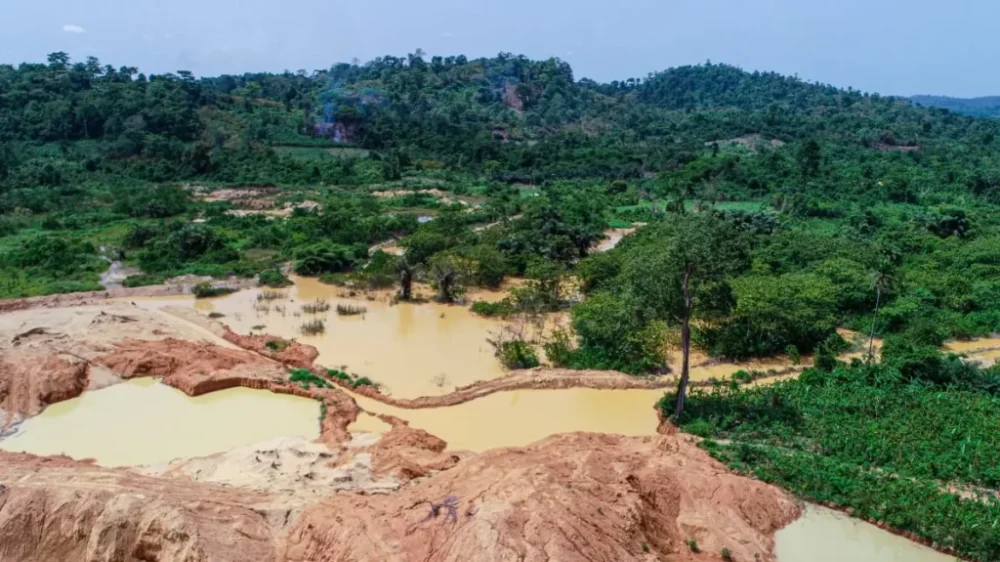
Many galamsey operations take place along Ghana’s major rivers, such as the Pra, Ankobra, and Offin. Sediment from mining clogs waterways, while chemicals from extraction poison aquatic ecosystems. This destruction undermines the natural resilience of river systems that play a role in regulating local climates. Healthy rivers and wetlands help to cool surrounding areas, maintain humidity levels, and reduce the impacts of extreme heat.
When galamsey destroys these systems, it strips the land of its natural climate buffers, making communities more vulnerable to climate change induced floods and droughts.
Riverbanks stripped of vegetation erode quickly, causing silt to flow downstream and settle in dams and reservoirs. This reduces water storage capacity and increases evaporation rates, intensifying water shortages during dry seasons. The loss of consistent water flow also disrupts irrigation systems critical for farming.
Pollution from galamsey often includes mercury and cyanide, which kill aquatic life. The disappearance of fish and other river species breaks down the natural food chain, impacting communities that rely on fishing for protein. This forces more dependence on agriculture, which in turn pressures more land and forests to be cleared—further fueling deforestation and climate change.
The temperature of river water can also rise when tree cover along the banks is removed. Warmer water holds less oxygen, making it harder for aquatic species to survive. These changes in water temperature also affect local weather patterns, sometimes reducing rainfall and altering the natural climate balance in affected areas.
Credit: Reagan Dunyo
Science Reporter (Express News Ghana)