

“The tragedy of the Bagre Dam is not that it spills, but that Ghana has failed to turn warning into protection.”
Introduction
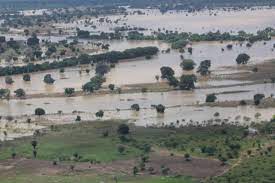
For communities in Northern Ghana, August and September mark the season of a familiar disaster: the Bagre Dam spillage. During this period, rains swell across the Sahel, turning once-thirsty rivers into torrents that burst their banks, and filling dams/dugouts to their breaking points, triggering technical safety measures like dam spillage. The spillage of the Bagre Dam, though necessary to prevent dam failure, creates humanitarian crisis in downstream communities in Northern Ghana–washing away crops and animals, destroying homes and critical infrastructure, displacing households and in some cases, loss of lives.
Background of the Dam
The Bagre Dam was designed as a multipurpose dam and constructed by Burkina Faso’s government in 1992. The dam is located on the White Volta River near Bagre, about 240 km southeast of Ouagadougou. At full capacity, the dam stands about 235 m above sea level, irrigating thousands of hectares of farmlands, generating about 16 megawatts of electricity and supporting livestock rearing and fishing.
A Yearly Ritual of Destruction
Since its completion in 1992, the dam has served as a lifeline and a flood control reservoir in upstream communities in Burkina Faso whereas its yearly spillage has brought doom for downstream communities in Ghana. The contribution of Bagre Dam to flooding in Ghana is explained by the timing of the spillage – often in August and September, the period when rainfall peaks and the White Volta River and its tributaries in Ghana are in their peak flows. Consequently, the additional water from the controlled spillage of the Bagré Dam then compounds the already fragile situation. Surely, this is why the Bagré Dam has gained notoriety as the source of flooding in Northern Ghana. Beginning from 1999, the history of the Bagre Dam spillage is one of annual disaster rituals in Northern Ghana with more destructive floods years recorded in 2007, 2010, 2014, 2018, and 2020.
Counting the Cost Due to the Spillage
Every flood disaster erodes and destroys lives, roads, bridges, schools, pushes entire communities deeper into poverty and dependency while diverting national resources away from development to emergency response. Repetitive flood disasters make it difficult for households and communities to fully recover before the next flood season, derailing poverty reduction efforts in Northern Ghana. The cost of floods to the nation is staggering. The 2007 flood disaster compelled the government of Ghana to declare a state of emergency, spending over $25 million on relief effort in 24 affected districts. Again, in 2018, NADMO distributed food, household items, roofing sheets, and essential supplies to over 57,000 flood victims.

Early Warnings Without Safety
From the transboundary to the national and local levels, a key response to the flood menace has been flood early warning systems (FEWS). The National Disaster Management Organisation (NADMO) in partnership with other stakeholders particularly the Water Resources Commission (WRC), Environmental Protection Agency (EPA) and Volta River Authority (VRA), provides flood alerts to at-risk communities using information vans, radio broadcasts, social media and door-to-door announcements. However, a recent study conducted in hotspot areas, particularly Talensi, Binduri, Builsa South, and Bawku West districts have shown that early warning rarely translates into meaningful action. The findings show that households were well-informed about the risk of floods but prioritised their belongings over their own safety. The disconnect between knowledge and action is rooted in three realities: structural constraints, poverty and cultural limitations. The structural constraints explain households fear of losing social networks and ancestral lands located within the floodplains. This creates a “nowhere to go” situation where households turn deaf ears to official warning alerts, continuing to live or work closer to floodplains. This is compounded by cultural limitations which perceives floods as divinely ordained, not humanly preventable. The fatalistic belief that only God or government can change one’s fate, weakens the motivation to adopt protective measures. Finally, in a region where poverty rates are four times the national average, efforts by households to adopt mitigation measures such as relocation or adoption of better options are greatly curtailed. For instance, although mud houses collapse easily, cost effective alternatives are unavailable, and with no money to buy fertiliser, farmlands along riverbanks are simply hard to abandon. Data from the 2018 flood disaster show that the average household requires nearly GH₵4,000 to recover, a sum considered too high for those living in deprived communities. Repeated losses due to recurring floods breed hopelessness, making self-initiated resilience nearly impossible, and increasing dependence on external aid. As experience shapes response, households often resort to survival strategies such as planting short-gestation crops, cropping and harvesting early, while ignoring costly long-term solutions.
The Need for Bold Solutions
Ghana needs to step-up its efforts beyond flood alerts to decisive interventions, integrating structural, non-structural and nature-based solutions. The need for continuous dredging and the construction of reservoirs downstream to absorb excess water from the Bagre Dam spillage have been emphasised by key stakeholders such as the Water Resources Commission (WRC) and the Volta River Authority (VRA). Infrastructure such as the Pwalugu Multipurpose Dam (PMD) could help save lives, provide and protect livelihoods.

There is equally the need to impose and strictly enforce land use regulations especially riverine buffer zones, enforce environmental laws, and adopt climate-smart agriculture to restore and maintain river-basin ecosystems. Additionally, existing flood early warning systems need upgrade to make them real-time, end-to-end (E2E), impact-based and user-centred, and depart from the current top-down, expert-driven approach. To bridge the gap between warnings and action, traditional authorities need to play a lead role in disaster preparedness due to the high trust people have in local messengers than distant officials. There are also unexplored solutions such as flood risk insurance, and just compensation as espoused in the Volta Basin Authority’s (VBA) Charter but which has yet to be implemented. Moving from the current system of relief and humanitarianism to a just and adequate compensation for flood losses is crucial for sustainable adaptation and resilience.
The journey to flood resilience must begin with the recognition that the Bagre Dam Spillage conundrum is a transboundary problem: the source of risk, Bagre Dam, is in Burkina Faso whereas the impacts are felt in Ghana. Thus, stronger cross-border collaboration is required to establish real-time data sharing platforms, coordinated schedules for the spillage, proactive diplomacy and joint river basin management sustainable flood risk management.

Concluding Remarks
The Bagre Dam spillage and the associated flood disasters highlight the limitations of the flood management system. It reveals the inadequacies of poverty reduction interventions, planning schemes, international cooperation and community resilience. The man-made elements of these disasters are quite significant. Ghana can avert or reduce flood occurrences and/or impacts by acting boldly and decisively. The cycle, this annual ritual of destruction can be broken with diligent investment in infrastructure, the empowerment of communities, enforcement of regulations/laws, and diplomacy. Investing in resilience is a matter of survival to the communities in Northern Ghana who are trapped in poverty and despair. A quote from an interview with a farmer in Sapeliga in Bawku West District says:
“…. there is no single year that we haven’t experienced a flood. Sometimes it comes early in August or September and sometimes as late as October. Whether early or late, the floods never miss.”
Indeed, the floods never miss! May our actions too never miss – together, we can turn a disaster into a resource!
Note on the Author: Atanga Raymond Aitibasa, PhD
The author holds a PhD from the School of Government, University of International Business and Economics (UIBE), Beijing, China. He is currently a Lecturer at the C.K. Tedam University of Technology and Applied Sciences, Navrongo, Ghana.