
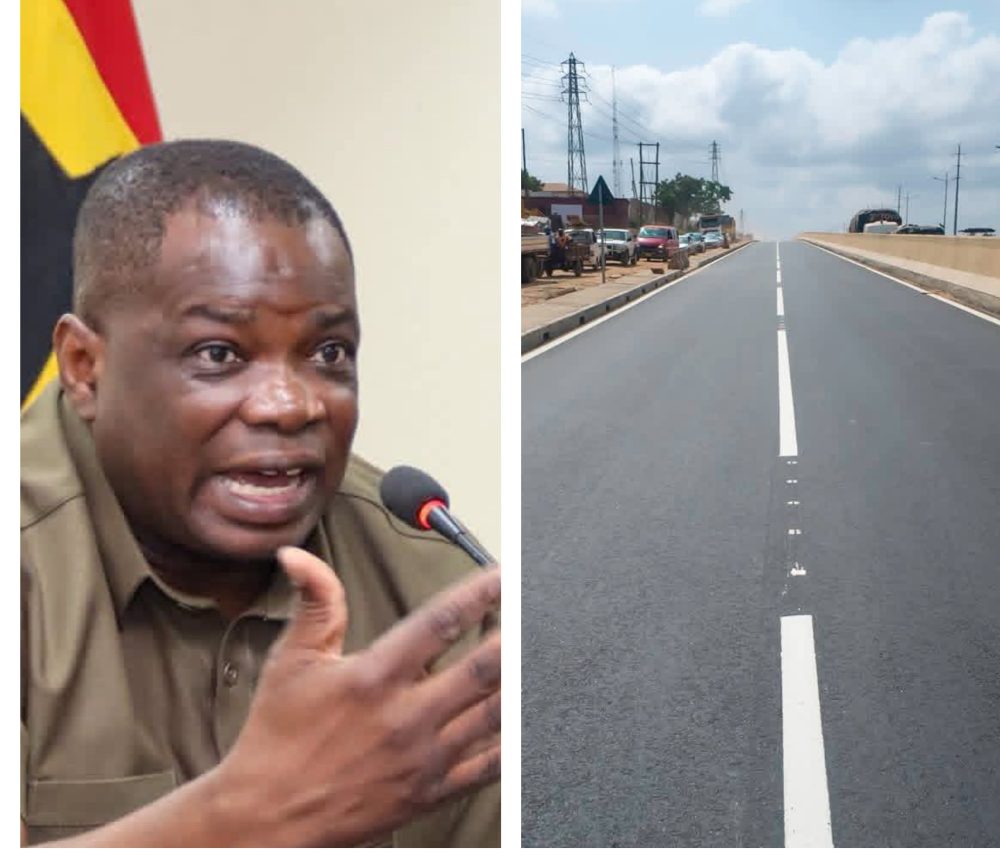
The Minister for Roads and Highways, Kwame Governs Agbodza, has mounted a forceful defence of the government’s flagship Big Push Infrastructure Programme, dismissing accusations that the initiative is being driven by widespread sole sourcing. Speaking in Parliament on Tuesday, the minister said those claims are misleading, and provided detailed figures and safeguards to demonstrate that procurement under the programme has been conducted lawfully and transparently.
Hon. Agbodza told lawmakers that the Big Push—designed to accelerate repairs and upgrades across the nation’s dilapidated road network—relies on a mix of procurement methods tailored to urgency and project complexity, all within the framework of the Public Procurement Act.
“There is no abuse of sole sourcing. It is the exception, not the norm. No procurement law has been breached, and there is no scandal,” he said.

Competing narratives: numbers and context
Central to the minister’s rebuttal was a statistical breakdown indicating that only 44 percent of major contracts were awarded through sole sourcing, while more than 400 contracts have been processed through open competitive tendering. He argued these figures undermine suggestions that the Ministry relies predominantly on non-competitive awards.
Hon. Agbodza stressed that the choice of procurement route is driven by practical considerations. Given the urgent need to arrest the deterioration of Ghana’s roads, certain procurement methods—such as restricted procedures or negotiated routes—have been used to speed up delivery and avoid the steep cost escalations that lengthy processes can trigger. “The Big Push is designed as an economic reset, and speed is a critical component of that reset,” he said, urging the public to weigh the context behind the procurement choices.
Reviving stalled projects and settling inherited arrears
A significant feature of the Big Push is the revival of stalled projects handed over from the previous administration. The minister disclosed that 23 major road projects—originally awarded but left incomplete due to lack of funding—have been absorbed into the Big Push with new financing. These projects, with a combined value of GHS 14.88 billion, include critical routes such as the Suame Interchange, the Ofankor–Nsawam Road and the Adenta–Dodowa Road.

Hon. Agbodza framed the move as both fiscally prudent and necessary for continuity. “Many of these projects would have remained stalled without the expedited approach adopted under the programme,” he told Parliament. The minister also highlighted the government’s efforts to tackle inherited liabilities, noting that over GHS 11 billion has been paid to clear part of arrears that exceeded GHS 40 billion—a settlement he described as the largest in recent history. This intervention, he said, restored contractor confidence and cleared a significant bottleneck to renewed delivery.
Design and scope: how the Big Push is structured
To enhance competition and speed execution, the Big Push focuses on 12 major economic corridors divided into 54 lots. This modular approach, the minister explained, allows for greater contractor participation and more rapid deployment of works. Currently, he reported, more than 2,000 kilometres of roads across Ghana’s 16 regions are undergoing reconstruction or upgrading under the programme.
Hon. Agbodza rejected simplified critiques that rely solely on cost-per-kilometre comparisons. He argued such metrics often fail to account for variations in scope—some lots include major interchanges, bridges, drainage works and safety enhancements that naturally elevate costs. Breaking projects into lots, he said, is intended to increase competitiveness and deliver better value by matching scopes to contractors’ capabilities.
Value-for-money measures and payment discipline
To ensure taxpayer money is well spent, the Ministry has instituted several safeguards. Initial surveys, designs and costings are being conducted in-house by state agencies—a step the minister said has saved “billions of cedis.” Contractor proposals are subjected to independent value-for-money assessments, and payments are tied to demonstrable progress on the ground.
“We have established a system where no contractor will be paid without delivering measurable work,” Hon. Agbodza told the House, noting additional collaboration with the Ghana Institution of Surveyors to strengthen independent cost verification capacity.

These controls, he said, are part of a broader regime of oversight intended to prevent waste and ensure compliance with contractual obligations.
Parliamentary oversight and professional validation
The Minister further emphasized that the Big Push is subject to continuous parliamentary scrutiny and professional validation. Regular committee engagements, ministerial questioning and independent cost validation by professional bodies, he said, all form part of the accountability architecture surrounding the programme.
That architecture, according to Hon. Agbodza, helps ensure procurement choices are defensible and that delivery adheres to expected standards. He invited continued oversight, framing the engagement with Parliament and professional bodies as a necessary check on performance and a reassurance to citizens.
Appeal to the public: weigh results, not rumours
In closing, the minister appealed to Parliament and the public to judge the Big Push by its outcomes rather than what he described as misinformation. He argued that the programme is already producing tangible benefits: improved road conditions, reduced transport costs, job creation and heightened economic activity across regions.
Hon. Agbodza called on stakeholders to support the initiative, warning that unfounded allegations risk derailing a national intervention aimed at restoring mobility and unlocking productive value in Ghana’s regions. He reiterated the government’s commitment to transparency, rule of law and timely delivery, and said the administration expects 70 percent of Big Push projects to be completed by the end of 2027.
What’s next
As Parliament and the public assess the minister’s explanations, the focus will likely shift to continued monitoring of procurement records, project milestones and independent audits. The Ministry’s next steps—publishing full contract details online, sustaining rigorous cost verification and ensuring payments remain linked to verified progress—will be key to maintaining public confidence and demonstrating that speed and due process can coexist in Ghana’s ambitious infrastructure push.


