

The painful developments unfolding in South Africa today should concern every African who understands history and the dangerous consequences of division among Black people. The growing xenophobic attacks against fellow Africans are gradually tearing apart the very fabric of unity that once brought the continent together during the dark years of apartheid.
For decades, Black South Africans suffered under racial oppression, humiliation, land dispossession, economic exclusion, and political brutality. During those difficult years, Africa and the wider international community stood firmly behind them. Countries like Ghana, Nigeria, Tanzania, Zambia and Mozambique sacrificed enormously in support of South Africa’s liberation struggle.
Leaders such as Kwame Nkrumah, Julius Nyerere and Kenneth Kaunda believed that the freedom of South Africa was tied to the dignity and liberation of all Black Africans. The United Nations and the African Union also played major roles in isolating the apartheid regime politically and economically.
These sacrifices were not made for one man alone, not even for Nelson Mandela. They were made for justice, humanity, Black dignity, and African brotherhood.

Today, however, many Africans are watching disturbing scenes on television and social media where fellow Blacks are insulted, assaulted, displaced, and told openly, “We do not need you here. Go back and build your own country.” Foreign owned shops are looted, properties destroyed, and people who legally live and work in South Africa are sometimes beaten simply because they come from another African country.
The deeper tragedy is that the bond of African solidarity that once united the continent is slowly being broken.
One must ask difficult questions.
Why are fellow Black Africans often the primary targets while many white foreigners and white owned establishments are rarely touched?
Why is the anger directed at struggling African migrants rather than at the deeper economic systems and inequalities inherited from apartheid?
Who truly benefits when Black Africans begin to hate and distrust one another?
There is a growing feeling among many Africans that powerful interests are comfortable watching Africans fight themselves while the continent becomes weaker from within. Some may not openly encourage the violence, but they certainly do not appear unhappy seeing the unity of Black Africans gradually collapse. The world may not fully see the deeper damage being caused, but the consequences are already visible. The fabric that once joined Africans together during the anti apartheid struggle is being torn apart.
South Africans must be careful.
The snake that once bit you was never completely destroyed. Its offspring are also growing. The systems and structures that benefited from apartheid did not vanish entirely. History teaches that domination does not always return through chains and colonial laws. Sometimes it returns through division, economic dependence, psychological manipulation, and internal hatred among the oppressed themselves.
The moment Black Africans become enemies to one another, Africa becomes vulnerable again.
This is not a prophecy of doom. It is simply a warning from history and from observing the direction events are taking. My fellow Blacks in South Africa must open their eyes before it becomes too late.
If South Africans continue creating hostility with sister African countries today, what happens tomorrow if they themselves face new forms of economic isolation, discrimination, or oppression?
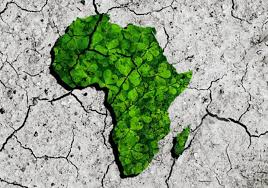
If African migrants are constantly attacked, insulted, and rejected today, should South Africans expect the same emotional, diplomatic, and continental solidarity they once received during apartheid?
If the spirit of Pan Africanism is destroyed by xenophobia, who will genuinely rise again to defend South Africa in moments of crisis?
Africa’s true enemies are not ordinary Ghanaian, Nigerian, Zimbabwean, Tanzanian, Somali, Ethiopian, or Mozambican migrants struggling honestly to survive. The real enemies are poverty, unemployment, corruption, inequality, greed, bad governance, and the forces that benefit whenever Black people are divided against themselves.
The dream of leaders like Nelson Mandela and Kwame Nkrumah was an Africa united in strength, dignity, cooperation, and mutual protection, not an Africa where fellow Blacks hunt, attack, and humiliate one another.
South Africa must not allow frustration and anger to destroy the solidarity that once helped save it from one of the darkest systems of oppression in human history.
Because once trust among Africans is completely broken, rebuilding it may take generations.
Source: Curtice Dumevor, Public Health Expert and Social Commentator
*Contact:* *0257399884*
*curticedumevor25@gmail.com*