
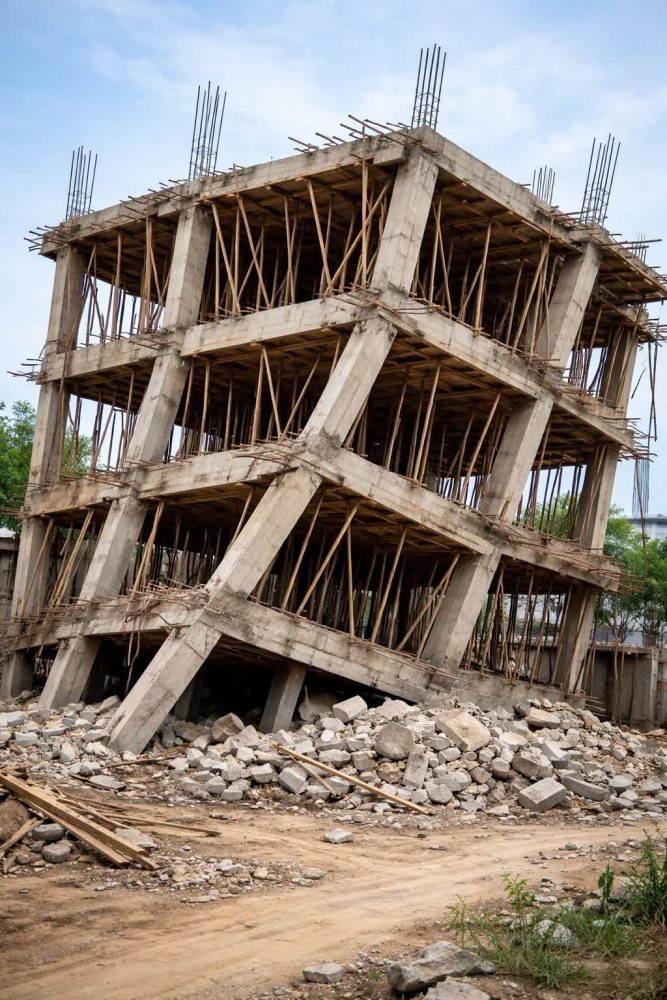
Curtice Dumevor Public Health Expert and Social Commentator
Across Ghana’s major towns and cities, a dangerous construction trend is steadily gaining ground. Faced with increasing demand for accommodation, rising land prices and limited space for expansion, many property owners are increasingly converting old single storey buildings into multi storey structures in order to accommodate more tenants and generate higher rental income.
From a purely economic point of view, the motivation is understandable. With land becoming more expensive and scarce, property owners are seeking ways to maximize the value of their limited plots. Instead of acquiring new land or undertaking complete redevelopment, many opt for vertical expansion as a faster and more profitable solution. The expectation is simple: more rooms, more tenants and ultimately higher returns.

However, beneath this economic reasoning lies a critical engineering reality that is often ignored. Most of the houses and buildings currently being converted into storey structures were never originally designed, engineered or approved as multi storey buildings. Apart from a few structures intentionally designed with future expansion in mind, the vast majority were constructed strictly as single storey buildings.
Their foundations, columns, beams, slabs and load bearing walls were designed only to support the loads of a ground floor structure. They were never intended to carry the additional weight of extra floors. Yet in many communities today, these same buildings are being altered without proper technical evaluation to determine whether they can safely support such changes.
This growing practice has quietly become one of the most serious but least visible threats to public safety. While attention is often drawn to buildings that have already collapsed, far more dangerous are the many structures that may be weakening gradually under unapproved expansions.
The recent building collapse at Adenta New Site has once again highlighted this concern. Although investigations may determine the immediate cause, the incident reflects a wider pattern of structural risk linked to unauthorized building modifications and weak enforcement of engineering standards.
To understand the danger, it is important to recognize that buildings are not random assemblies of materials. They are carefully engineered systems designed to carry specific loads throughout their lifespan. Engineers calculate both dead loads, which include the permanent weight of the structure itself, and live loads, which include occupants, furniture and other movable items.
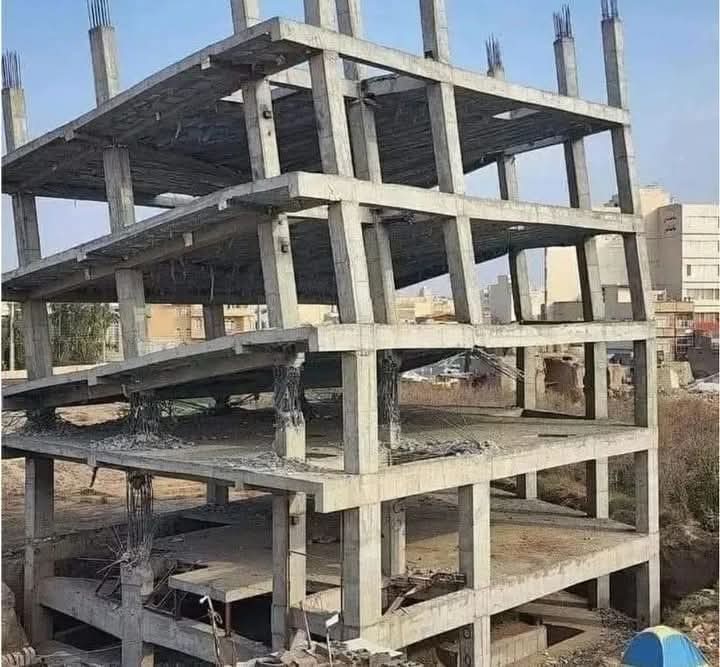
Based on these calculations, the foundation and structural framework are designed to safely transfer all loads into the ground. Therefore, when additional floors are added, the entire load system changes significantly. A structure that was designed for a single storey suddenly has to bear much greater weight than it was ever intended to support.
As a result, columns may become overstressed, beams may deflect excessively, foundations may settle unevenly and reinforcement within concrete may be subjected to forces beyond its design limits. Structural failure in such cases does not usually occur instantly. Instead, it develops gradually through visible and invisible warning signs such as cracks, uneven floors, weakened walls and foundation movement.
These warning signs are often ignored or treated as minor defects. In some cases, they are concealed with superficial repairs rather than being properly investigated. Over time, the structural condition of the building continues to deteriorate until it reaches a critical point where collapse becomes possible.
The risk becomes even greater when older buildings are involved. Many of these structures have already been exposed to years of environmental stress, material fatigue, moisture penetration, foundation movement and corrosion of reinforcement bars. Therefore, the fact that a building has stood for decades does not mean it can safely support additional storeys. In many cases, its structural capacity may have significantly reduced over time.
For this reason, structural engineers strongly insist that no building should be converted into a multi storey structure without a comprehensive structural integrity assessment. This assessment includes foundation investigations, soil bearing capacity tests, geotechnical studies, structural load analysis, concrete strength testing, reinforcement detection surveys and detailed evaluation of all structural members.
Unfortunately, many property owners bypass these essential procedures. Decisions are often based on assumptions, visual judgment or cost considerations rather than technical evidence. While this may appear to save money in the short term, it introduces significant long term risks that can endanger lives and property.
Equally important is the need to caution all landlords and property owners about the dangers of such practices. While renovation and expansion are not prohibited, they must always be guided by proper technical expertise. Any attempt to add floors to an existing building must begin with professional engineering assessment to determine whether the structure can safely support the additional load.
Where weaknesses are identified, appropriate strengthening measures such as foundation reinforcement, column jacketing, beam strengthening or full redesign must be carried out before any construction continues. Ignoring these steps exposes not only the owner’s investment but also tenants, neighbours and the wider public to serious danger.
Regulatory oversight is also a major concern. Within the Metropolitan, Municipal and District Assemblies, departments such as the Physical Planning Department, Works Department, Development Control Unit and Building Inspectorate are responsible for supervising developments and ensuring compliance with approved plans.
In many communities, warning notices are commonly displayed on sites reading STOP WORK PRODUCE PERMIT FROM THE DISTRICT ASSEMBLY. These notices are meant to halt unauthorized construction until proper approvals and technical requirements are met.
However, enforcement in practice is often inconsistent. In some situations, work stops temporarily during the day when inspections are expected, only for construction to continue at night. In other cases, property owners reportedly engage the relevant authorities after a stop work notice is issued, and shortly thereafter construction resumes. What exactly transpires during such engagements is often unknown to the public, leaving residents uncertain about whether all technical and safety concerns have truly been addressed.
This perception highlights the need for greater transparency, consistency and accountability in enforcement. Public confidence in the regulatory system depends on the assurance that construction activities are only allowed to continue after full compliance with safety and structural requirements.
Unfortunately, enforcement often appears reactive rather than preventive. Many unauthorized building modifications continue until a collapse or serious incident forces intervention. Only then do investigations begin, reports are compiled and corrective promises are made.
However, the true measure of effective regulation is not how quickly authorities respond after disaster strikes, but how effectively such disasters are prevented in the first place. Regular inspections, strict enforcement of permit conditions, mandatory structural assessments and continuous monitoring of building conversions must become standard practice.
Ultimately, while Ghana’s growing urban population requires creative and sustainable housing solutions, these solutions must not come at the expense of safety. Converting old single storey buildings into multi storey structures without proper engineering evaluation is a practice that places lives at unnecessary risk.
The pursuit of higher rental income and better land utilization is understandable, but it must always be balanced with responsibility. Buildings are not just investments; they are spaces where people live, work and build their futures.
Landlords and property owners must therefore recognize that renovation and expansion are permitted, but only when supported by qualified technical professionals and approved structural assessments. Safety must always come first, because in construction, there is no acceptable compromise when human life is involved.
Preventing a collapse will always be far less costly than investigating one.
Source: Curtice Dumevor Public Health Expert and Social Commentator*