
The recent change in leadership of the Majority Caucus, which has seen James Agalga take over from Mahama Ayariga, presents Parliament with an important opportunity to reflect on the kind of political culture it wants to promote in the coming months.
Personally, it is about time Parliament must rise above partisan confrontation and ensure that the business of the House is driven by constitutional responsibility, sound arguments and the national interest.
Parliament must not continue to degenerate into an arena of chaos, confusion, insinuation and intolerance.
The early attempts on social media to sow discord between the incoming Majority Leader and the Minority leadership, warning that allowing such narratives to flourish could be counterproductive and damaging to the sanctity of Parliament.
The new Majority Leader must not fall for what he described as needless propaganda aimed at creating divisions between the two sides of the House. Parliament is not merely an arena for political contests.
It is the institution constitutionally mandated to make laws, deepen democratic governance and scrutinise the activities of the Executive in accordance with the Standing Orders of Parliament and the 1992 Constitution.
I will called on the Rt. Hon. Speaker and the leadership of Parliament to maintain strict neutrality and ensure that proceedings are conducted in a manner that enables the House to fulfil its constitutional mandate.
A Parliament at a Critical Crossroads
The call for greater tolerance and cooperation comes at a particularly significant moment for Parliament, as the House prepares to engage with proposed amendments to the non-entrenched provisions of the 1992 Constitution, following recommendations from the Constitution Review Committee and the Government’s subsequent position paper on some of the critical areas.
Such constitutional questions, in my view is demanding a Parliament capable of rigorous debate rather than one consumed by partisan hostility.
The question is can a deeply polarised Parliament, where each caucus appears perpetually determined to challenge the other, thoroughly debate constitutional reforms with superior arguments when neither side seems willing to acknowledge merit in the position of its political opponents?

That is the fundamental question confronting the House. Constitutional amendments should not be approached merely as victories for one political party or defeats for another.
They should be assessed on their capacity to strengthen Ghana’s democratic institutions, improve governance and protect the interests of present and future generations.
Can Agalga Build a Bridge Across the House?
The new Majority Leader, James Agalga, now assumes a responsibility that extends beyond leading the Government’s business in Parliament.
As Leader of Government Business, he will have an important role to play in shaping the relationship between the two caucuses and helping Parliament move from confrontation to constructive engagement.
I believes the new Majority Leader must demonstrate leadership capable of bringing both sides of the House to the negotiating table, particularly on matters of national constitutional importance.
The objective, in my candid view should not be to secure automatic victory for one caucus, but to create the conditions for convergence, where the best constitutional options can emerge from robust debate.
This requires a departure from the familiar cycle of acrimony, intolerance and parliamentary boycotts.
Political parties may disagree—and indeed, disagreement is an essential feature of democracy—but disagreement should produce better laws rather than paralyse the institution responsible for making them.
Beyond the Social Media Showdown
One critical issue that must be a concern is about the growing influence of social media narratives in shaping perceptions of parliamentary leadership.
Frankly, social media discussions already appear to be setting the stage for a perceived “showdown” between the leaders of the two parliamentary caucuses. But Parliament must not allow itself to become hostage to social media provocations.
The strength of Parliament should not be measured by how loudly one caucus can denounce the other, how frequently proceedings are disrupted, or how effectively political actors can mobilise public opinion against their opponents.
Rather, its strength should be measured by the quality of legislation it produces, the seriousness of its scrutiny of government, the quality of debate on the floor and its ability to protect Ghana’s constitutional democracy.
Can We Legislate Beyond Partisanship?
This opinion is a question that deserves serious national consideration: Can Ghana’s Parliament legislate beyond partisanship? The answer must be yes. Parliamentary partisanship does not require the abandonment of political differences.
It requires recognising that, beyond party colours and caucus interests, Members of Parliament have a common constitutional responsibility to Ghana.
The Majority has a responsibility to advance Government business. The Minority has an equally important responsibility to scrutinise, challenge and offer alternatives.
Neither responsibility should be interpreted as a licence for intolerance. Ghana needs a Parliament where disagreement is resolved through arguments rather than insults; where constitutional questions are examined on their merits rather arty lines; and where compromise is not mistaken for weakness.
The change from Mahama Ayariga to James Agalga should therefore not simply be viewed as a change of personalities within the Majority leadership.
It should be an opportunity for a new parliamentary culture—one in which leadership is measured by the ability to build bridges, accommodate divergent views and guide the House towards decisions that serve the national interest.
As Ghana approaches potentially consequential constitutional debates, Parliament cannot afford another season of unnecessary confrontation.
The country needs its lawmakers to prove that democracy is not merely about winning arguments against opponents, but about finding the best arguments for Ghana.
The best legacy that this 9th parliament can bequeath to Ghana as she turns 70yrs next year is to leave a workable Constitution for generations .This is achievable only if our law makers will Debate constructively to converge at an amendment options that deepens our Democratic dispensation as a sovereign Nation and a beacon of hope to emerging African countries which are still structuring their economies for the needed development.
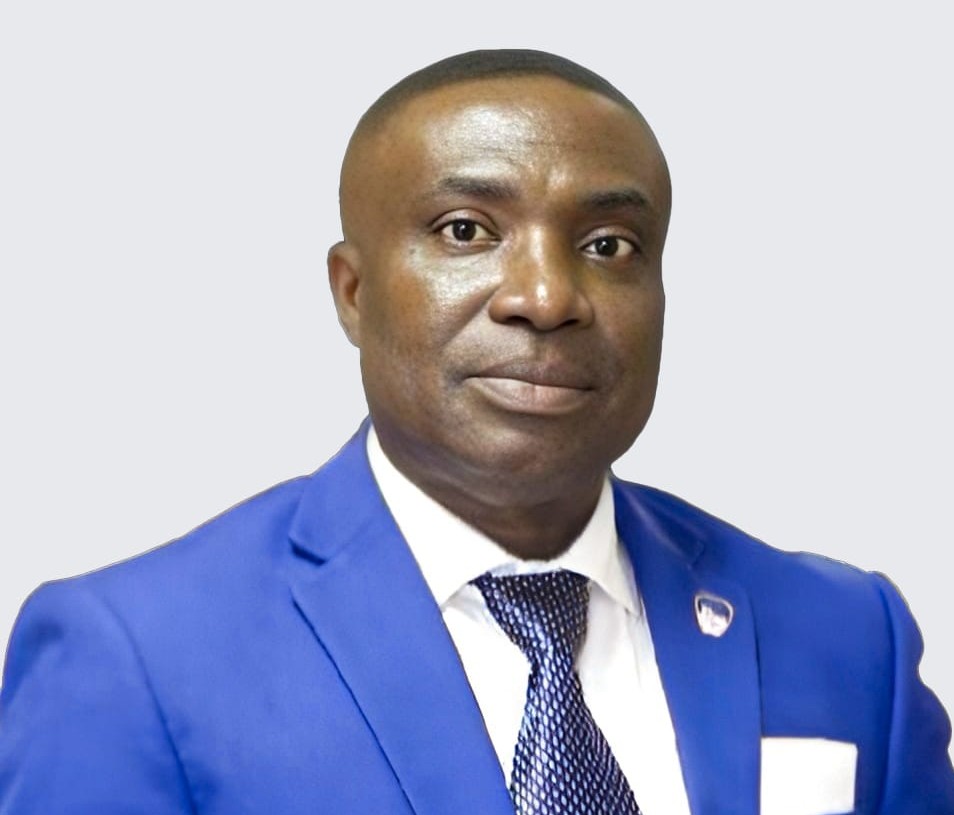
Written By Hon Alex Kofi Agyekum
Former Member of Parliament for Mpohor Western Region