
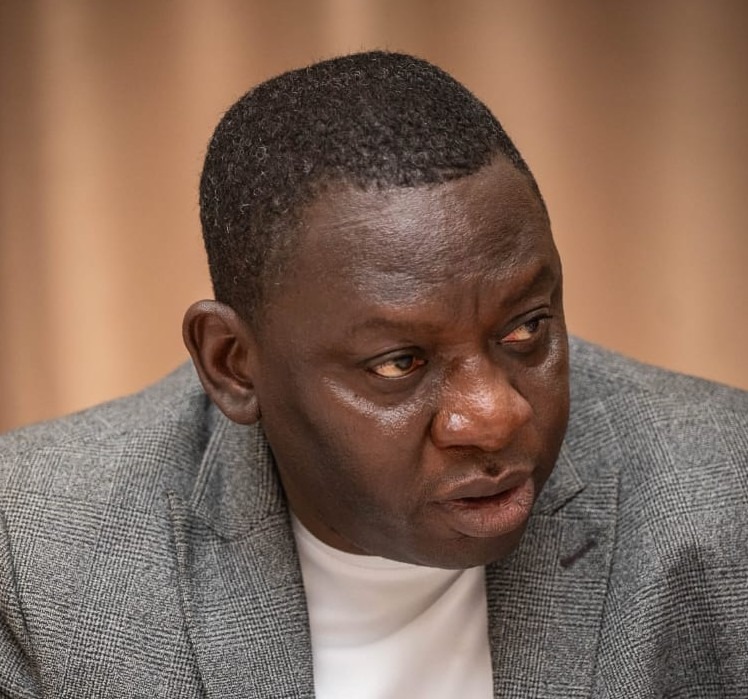
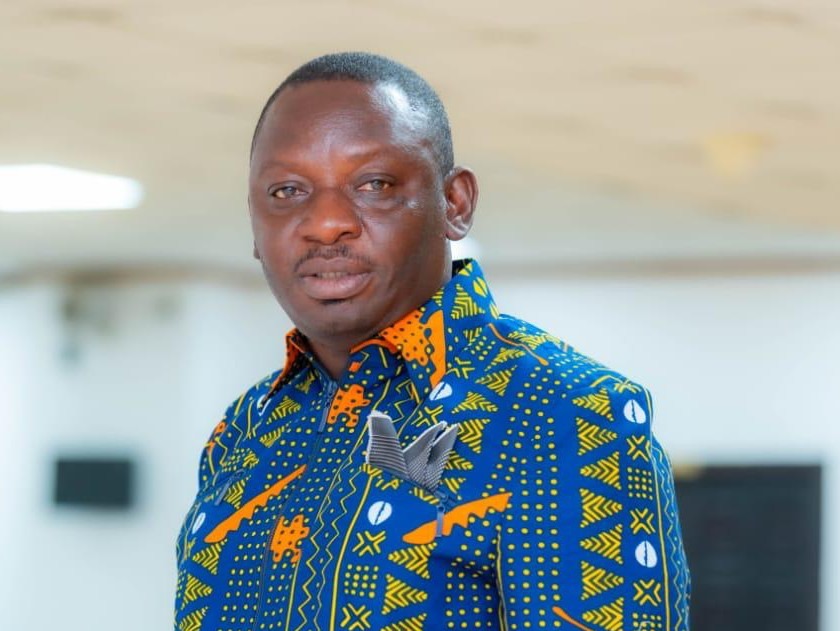
The Member of Parliament for Kintampo North, Hon. Joseph Kwame Kumah, has described the 2027 Budget Statement and Economic Policy as a major step towards Ghana’s industrialisation, job creation and economic transformation, saying the government’s new economic agenda offers renewed hope for businesses and ordinary Ghanaians.
He said the budget, presented by Finance Minister Dr Cassiel Ato Forson, demonstrated the government’s commitment to moving the country beyond economic stabilisation towards increased production, industrial expansion and sustainable economic growth.
Speaking during the parliamentary debate on the 2027 Budget on Friday, November 20, 2026, Mr Kumah praised President John Dramani Mahama for assembling what he described as a competent economic management team capable of steering the country towards prosperity.
He commended Dr Forson and his team for what he said were the positive economic developments and increased government investment in critical sectors of the economy.
Describing the government’s first budget as “Asempa Yɛtia” and the 2027 Budget as “Asempa Nkɔsoɔ”, the MP said the country was witnessing a progression from economic recovery towards development.
“The first budget presented by His Excellency John Dramani Mahama through the Finance Minister was Asempa Yɛtia. Today, this budget is Asempa Nkɔsoɔ,” he told Parliament.
Mr Kumah said the government’s performance in education, infrastructure and social interventions provided evidence that the administration was translating its promises into tangible results.
Education investment and social interventions On education, the Kintampo North MP argued that the Mahama administration had demonstrated a stronger commitment to funding the sector, particularly the Free Senior High School (Free SHS) programme.
He contrasted the expenditure under the previous New Patriotic Party (NPP) administration with that of the current government, claiming that while the previous administration spent GH¢9.9 billion on Free SHS over seven years, the current government had spent GH¢11.9 billion within approximately one year and eleven months.
He further claimed that annual spending on the programme had increased from an average of GH¢1.41 billion under the previous administration to GH¢4.2 billion under the current government.
“Today, Free SHS students are being properly fed, and that is why we are no longer hearing school heads threaten to send students home because there is no food,” he said.
He also highlighted the government’s interventions under the No Fee Stress policy, which provides financial relief to first-year tertiary students.
According to him, the number of beneficiaries had increased from approximately 151,000 at the time of the 2026 Budget presentation to 351,000, at a total expenditure of GH¢970 million.
He maintained that these investments demonstrated that the government was committing substantial resources to education rather than merely making political promises.
GH¢48bn education allocation and infrastructure development Mr Kumah’s assessment comes against the backdrop of the 2027 Budget’s allocation of GH¢48 billion to the Ministry of Education, reflecting the government’s continued investment in education and human capital development.
He also commended the government’s decision to allocate 20 per cent of the District Assemblies Common Fund (DACF) formula’s 80 per cent development component to education, describing it as an important intervention to address infrastructure deficits at the basic school level.
He recalled that he had previously raised concerns in Parliament about the concentration of resources on secondary education at the expense of basic education.
According to him, the allocation was already yielding results, with his constituency recording the construction of a kindergarten block, a basic school block, a senior high school classroom block and a junior high school block.
He argued that similar investments across the country’s 261 districts could significantly improve access to educational infrastructure.
The MP also praised the government’s decision to revive abandoned and stalled projects across the country, noting that 3,565 stalled projects had been identified and brought back into consideration, with 260 already captured for implementation.
New Economy programme and industrialisation
On the broader economic direction, Mr Kumah said the 2027 Budget provided a clear roadmap for transforming Ghana from an economy largely dependent on raw material exports into one driven by production, value addition and industrialisation.
The Finance Minister, Dr Cassiel Ato Forson, presented the 2027 Budget on November 12, 2026, under the theme “The New Economy, New Ghana, Jobs and Prosperity.”
A major feature of the budget is the US$10 billion New Economy programme, which will run from 2027 to 2030, with GH¢30 billion earmarked for its implementation in 2027 alone.
The programme is designed to stimulate domestic production, expand industrial capacity, create employment and strengthen the private sector’s contribution to economic growth.
It is anchored on eight strategic pillars: macroeconomic stability and affordable finance; commercial agriculture; energy infrastructure; critical minerals value addition; tourism, culture and creative arts; textiles and garments; pharmaceuticals and biomanufacturing; and the technology economy.
The government has also earmarked US$3 billion under the four-year programme for commercial agriculture, with plans to establish agro-industrial hubs, develop irrigation and mechanisation, strengthen food processing and reduce dependence on imported food products.
On infrastructure, the 2027 Budget provides GH¢100.4 billion for capital expenditure, alongside GH¢28 billion for the Big Push infrastructure programme, aimed at improving road networks and national connectivity.
These investments form part of the government’s broader strategy to create an enabling environment for industrial expansion, business growth and employment.
Calls for bipartisan support Mr Kumah further defended the government’s approach to infrastructure development, arguing that ongoing projects should not be abandoned because of political differences.
He said the administration had demonstrated its commitment to completing projects inherited from previous governments, regardless of which political party initiated them.
“This country must not be about NPP or NDC. Any stalled project must be considered and continued. That is the way to go,” he stressed.
He added that his personal assessment of road construction across the country suggested that more than 60 per cent of the roads promised under the government’s development agenda were at various stages of implementation.
The MP, who said he frequently travelled by road rather than air, maintained that visible construction activities across the country contradicted claims that the government was not investing in infrastructure.
He therefore urged the opposition to offer constructive criticism and support national development rather than dismissing the budget for political reasons.
“It is not about talking down everything. Let’s help one another. Whoever is in charge of government, we must all contribute to building this country,” he appealed.
Mr Kumah concluded that the 2027 Budget represented a significant opportunity for Ghana to consolidate its economic recovery, strengthen industrialisation and create sustainable opportunities for the population.

Source: Felix Nyaaba/expressnewsghana.com


