

The Ministry of Gender, Children and Social Protection (MoGCSP) has intensified its community-level engagements as part of broader efforts to tackle poverty, vulnerability, gender-based violence, child protection concerns and other social challenges confronting communities across Ghana.
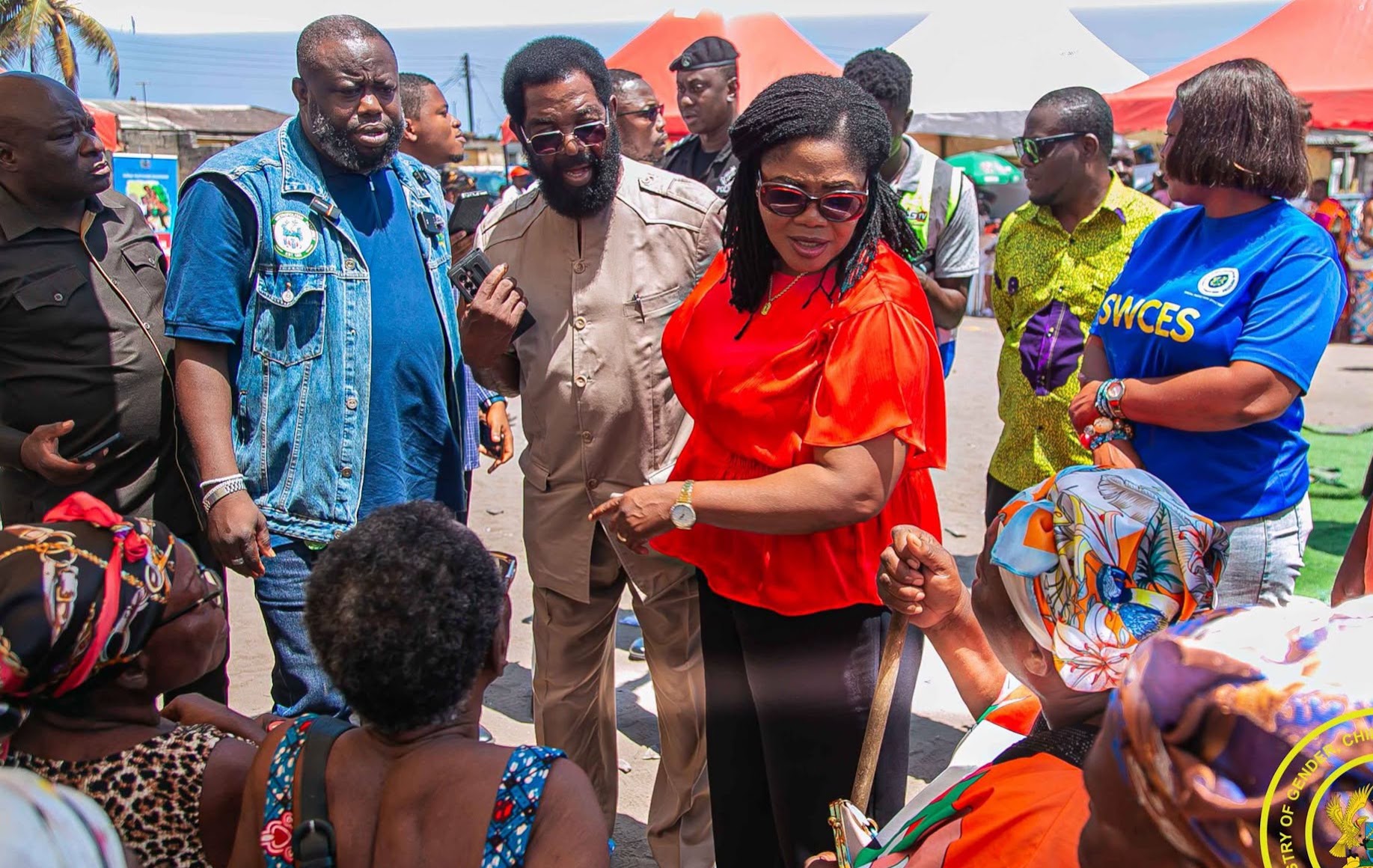
The latest engagement was held on Tuesday, September 8, 2026, in collaboration with the Office of the Head of the Local Government Service (OHLGS), as part of the Ministry’s Community Dialogue Series on Social Protection and other pertinent social issues for selected communities within the Ablekuma South Municipal Assembly.
The initiative provided residents with an opportunity to learn more about Government’s social protection programmes, access information on available support services and raise concerns affecting their communities directly with officials.
Delivering the keynote address, the Minister for Gender, Children and Social Protection, Dr Agnes Naa Momo Lartey, said the community dialogue approach was critical to ensuring that social protection interventions responded to the realities confronting vulnerable people.
She stressed that social protection must not be viewed solely as the responsibility of central government institutions but should be treated as an integral part of local development and community building.
The Minister said strengthening social protection at the grassroots was particularly important because poverty and vulnerability were often interconnected with other social challenges, including domestic violence, child marriage, teenage pregnancy, human trafficking and child protection concerns.
“Social protection is not just a matter of policy but compassion, equity, and human dignity,” the Ministry has emphasised in its community dialogue engagements, stressing the need to ensure that vulnerable persons are not left behind.
Expanding access to social protection
Dr Lartey further highlighted the collaboration between the Gender Ministry and the National Health Insurance Authority (NHIA), which has facilitated the registration and renewal of eligible vulnerable persons and persons with disabilities under the National Health Insurance Scheme.
She encouraged eligible residents to take advantage of the free registration and renewal services to improve their access to healthcare.
The Minister also announced that a free national inter-agency consultation, MAP-UL, was ongoing and available to eligible community members, with the objective of improving financial access and ensuring that vulnerable persons could obtain healthcare when needed.
The Ablekuma South engagement forms part of a broader effort by the Ministry to take social protection beyond policy formulation and into communities.
In March 2026, the Ministry organised a similar community dialogue in Ada East, where residents were educated on social protection programmes and social challenges, including gender-based violence and human trafficking. Participants were also taken through the Livelihood Empowerment against Poverty (LEAP) programme, the Ghana School Feeding Programme and the National Health Insurance Scheme.
LEAP support for vulnerable households
Over the past year, the Ministry has also continued to strengthen the LEAP programme, one of Ghana’s flagship social protection interventions for extremely poor households.
The programme provides bi-monthly cash grants to vulnerable households, with the Ministry monitoring payments across the regions to improve transparency and ensure that support reaches intended beneficiaries.
During the 97th payment cycle monitored in August 2025, LEAP was supporting more than 344,000 extremely poor households. By the 98th payment cycle in October 2025, the programme was targeting 350,580 beneficiary households, directly impacting more than 1.5 million people.
The Ministry has also undertaken emergency LEAP support for vulnerable households in response to urgent situations, reinforcing the programme’s role as a safety net for people facing extreme vulnerability.
Tackling domestic violence and violence against women
The Ministry, through its Domestic Violence Secretariat and other structures, has continued interventions aimed at preventing and responding to domestic and gender-based violence.
These efforts have included training and capacity-building programmes for professionals working with survivors, including a training programme on trauma-informed care, self-care and stress management.
The Ministry has also continued work through the Domestic Violence Management Board, which held its maiden meeting for 2026 to strengthen coordination in addressing domestic violence.
The interventions are intended not only to respond to cases after they occur but also to improve prevention, survivor support and coordination among institutions responsible for addressing violence against women and children.
Protecting children and strengthening early childhood development has also remained a major component of the Ministry’s work.
During the period, the Ministry’s Department of Social Welfare organised a workshop on the Social Welfare Information Management System (SWIMS) and the registry for residential homes for children, aimed at strengthening the management and protection of children in institutional care.
The Ministry also launched the revised Early Childhood Care and Development Policy, 2025, aimed at strengthening Ghana’s approach to early childhood development and ensuring that children receive the necessary care and protection during their formative years.
In addition, the Ministry has intervened in individual child protection cases, including efforts to ensure the safe discharge and protection of a rescued baby and engagement with the relevant security agencies over investigations.
Fighting human trafficking
The Ministry’s Human Trafficking Secretariat has also intensified capacity-building activities to improve the response to human trafficking.
A recent training programme organised by the Secretariat focused on strengthening the capacity of stakeholders to identify, prevent and respond to trafficking cases, particularly involving vulnerable groups.
The community dialogue programme similarly provides an avenue for residents to understand the dangers of human trafficking and other practices that expose children and vulnerable persons to exploitation.
Strengthening support for persons with disabilities
The Ministry has also engaged unemployed persons with disabilities as part of efforts to promote inclusion and address barriers confronting persons with disabilities.
It has further placed emphasis on inclusive social protection and access to services for vulnerable groups, including facilitating health insurance registration and renewal for eligible persons with disabilities.
Building a shock-responsive social protection system
Another major area of work has been the development of a stronger shock-responsive social protection system capable of responding quickly when vulnerable households are affected by economic, environmental or other crises.
The Ministry, with support from UNICEF Ghana, organised a national stakeholder validation workshop on the final draft of the Shock-Responsive Social Protection Strategy. The strategy is intended to enable the country to anticipate, prepare for and respond more effectively to shocks affecting vulnerable populations.
The Ministry has also continued coordination through the Social Protection Sector Working Group, which brings together stakeholders to strengthen implementation and coordination of social protection interventions.
MP calls for community participation
Speaking at the Ablekuma South engagement, the Member of Parliament for Ablekuma South, Okoe Vanderpuije, commended the Ministry for taking the dialogue directly to the communities.
He said direct engagement with residents was important because it enabled Government to better understand the challenges confronting constituents and identify practical solutions.
He urged residents to participate actively in Government programmes and ensure that their concerns were communicated to the relevant authorities.
Residents raise concerns
Officials from the Ministry and other stakeholders used the engagement to educate residents on social protection interventions and social issues, including domestic violence, child marriage, teenage pregnancy, human trafficking, child protection, the National Health Insurance Scheme and the LEAP reassessment exercise.
Residents from Chorkor and Mamprobi also had the opportunity to ask questions and provide feedback on the implementation of social protection programmes and other challenges affecting their communities.
The concerns raised are expected to help the Ministry and other stakeholders improve the accessibility, responsiveness and effectiveness of social protection interventions.
The Ministry’s growing emphasis on community dialogue reflects its broader objective of ensuring that social protection is not limited to government offices and policy documents but reaches the people who need assistance most.
As the Ministry has stated in its community engagement programme, the ultimate objective is to build a society in which social protection becomes more than a government programme and is recognised as a fundamental component of human dignity and inclusive development.
Source: Felix Nyaaba/expressnewsghana.com


