
Ghana’s cashew industry is facing a growing value-addition crisis, with industry stakeholders warning that the country risks losing millions of dollars in economic opportunities as neighbouring Côte d’Ivoire rapidly expands its capacity to process cashew locally.
Ghana produces an estimated 262,000 metric tonnes of raw cashew nuts annually, yet less than six percent is processed domestically.
The bulk of the produce is exported in its raw form to countries such as Vietnam and India, where it is processed into higher-value products for international markets.
Industry players say the situation is depriving Ghana of critical opportunities for job creation, industrial development and increased export earnings, while leaving farmers vulnerable to fluctuations in raw cashew prices.
The limited domestic processing capacity has also contributed to weak local demand for raw nuts, with farmers reportedly experiencing sharp declines in farm-gate prices in recent seasons amid market uncertainties and rising production costs.
Stakeholders argue that expanding local processing is essential to creating a reliable market for farmers and ensuring that a greater share of the wealth generated from Ghana’s cashew industry remains within the country.
While Ghana continues to grapple with the challenge, Côte d’Ivoire has emerged as a major success story in cashew production and processing, driven by sustained government support and investment in value addition.
Côte d’Ivoire’s raw cashew production has increased dramatically from about 180,000 tonnes in 2005 to approximately 1.5 million tonnes in 2025, making cashew one of the country’s major export commodities and an important source of economic activity across its northern, eastern, western and central regions.
The sector is estimated to support about three million people and covers nearly 70 percent of the country’s territory.
More significantly, Côte d’Ivoire has invested heavily in transforming its raw cashew production into a processing industry.
The country currently has 93 active cashew processing factories and has created about 20,000 direct jobs in the processing sector, with women accounting for approximately 66 percent of the workforce.
The expansion has been supported by deliberate government policies designed to attract investment and make local processing more competitive.
Since 2016, the Ivorian government has introduced measures including financial support for processors, tax exemptions on imported processing equipment and arrangements to guarantee local factories access to raw cashew nuts.
The government has also established agro-industrial zones in Korhogo, Bondoukou and Séguéla to attract investors and promote industrial-scale cashew processing.
In addition, institutions such as the Cashew Transformation Technologies Innovation Centre have been established to strengthen technical skills and improve processing technologies within the sector.
Côte d’Ivoire is now targeting even greater value addition, with plans to process between 50 and 60 percent of its raw cashew production domestically by 2030.
The country intends to process about one million tonnes of raw cashew nuts locally while promoting the growth of indigenous processing companies.
Its strategy also includes expanding storage infrastructure, improving traceability, promoting the “Origin Côte d’Ivoire” brand and developing commercial uses for cashew by-products, including cashew shells, cashew apples and cashew nut shell liquid.
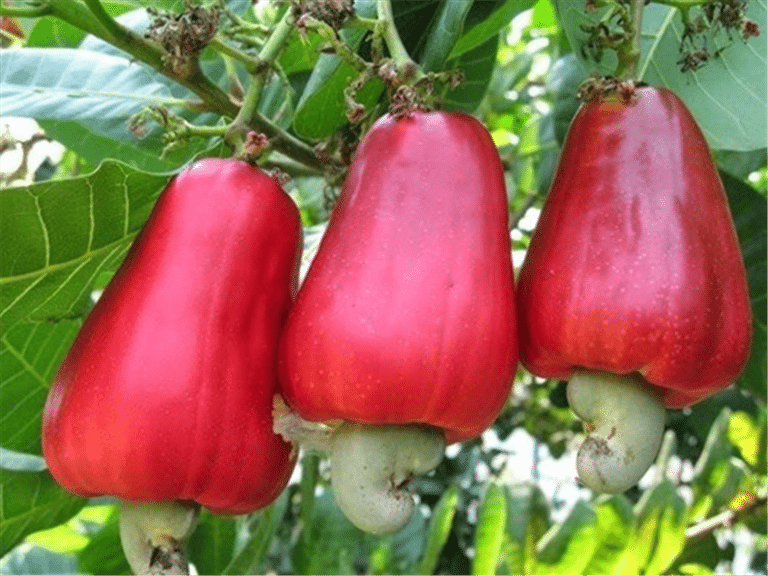
For Ghanaian industry stakeholders, the Ivorian experience demonstrates the potential that exists if greater attention is given to domestic value addition.
They are calling for increased investment in processing factories, improved access to affordable finance, better storage infrastructure and targeted incentives to attract both local and foreign investors into the sector.
Stakeholders are also advocating greater investment in the development of cashew by-products and stronger promotion of Ghanaian cashew kernels on international markets.
According to industry experts, Ghana’s challenge is no longer simply to increase cashew production but to ensure that the country captures a significantly larger share of the value created from the commodity.
“Ghana must move beyond exporting raw cashew nuts and focus on processing and value addition if the country is to maximise the economic benefits of the sector,” industry stakeholders have stressed.
They believe a stronger domestic processing industry could provide farmers with a more stable market, create thousands of jobs, boost export revenues and stimulate industrial development in cashew-producing communities.
With global demand for cashew products continuing to expand, stakeholders say Ghana has a narrow window of opportunity to strengthen its processing capacity before it falls further behind regional competitors.
As Côte d’Ivoire accelerates its ambition to become a global cashew-processing hub, the pressure is mounting on Ghana to close its processing gap and ensure that its farmers and economy capture more of the wealth generated from the country’s cashew resources.


