
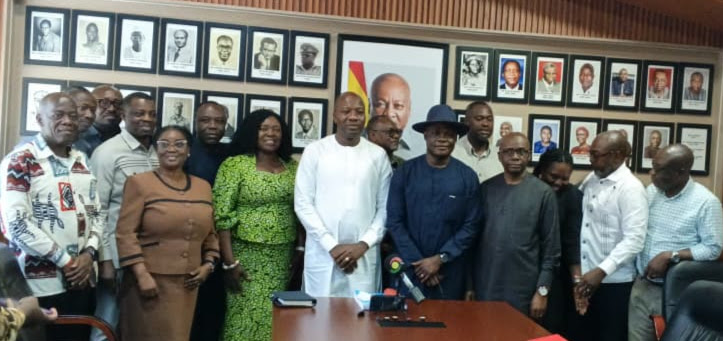
The newly appointed Minister for Local Government, Chieftaincy and Religious Affairs, Mahama Ayariga, has pledged to make Ghana’s metropolitan, municipal and district assemblies more accountable, financially disciplined and responsive to the needs of residents.
He said his immediate priority would be to strengthen local governance, improve sanitation, fix roads and drains, restore order to cities and towns, and ensure that local authorities mobilise enough internally generated funds to provide quality services.
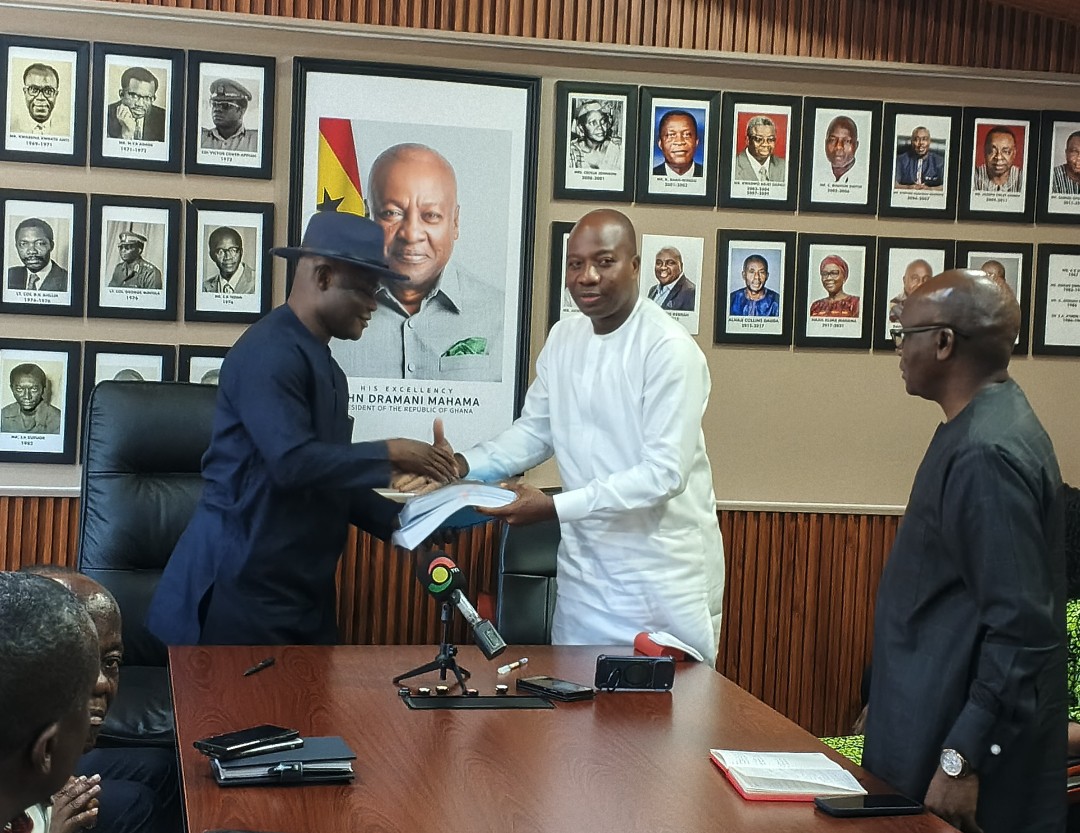
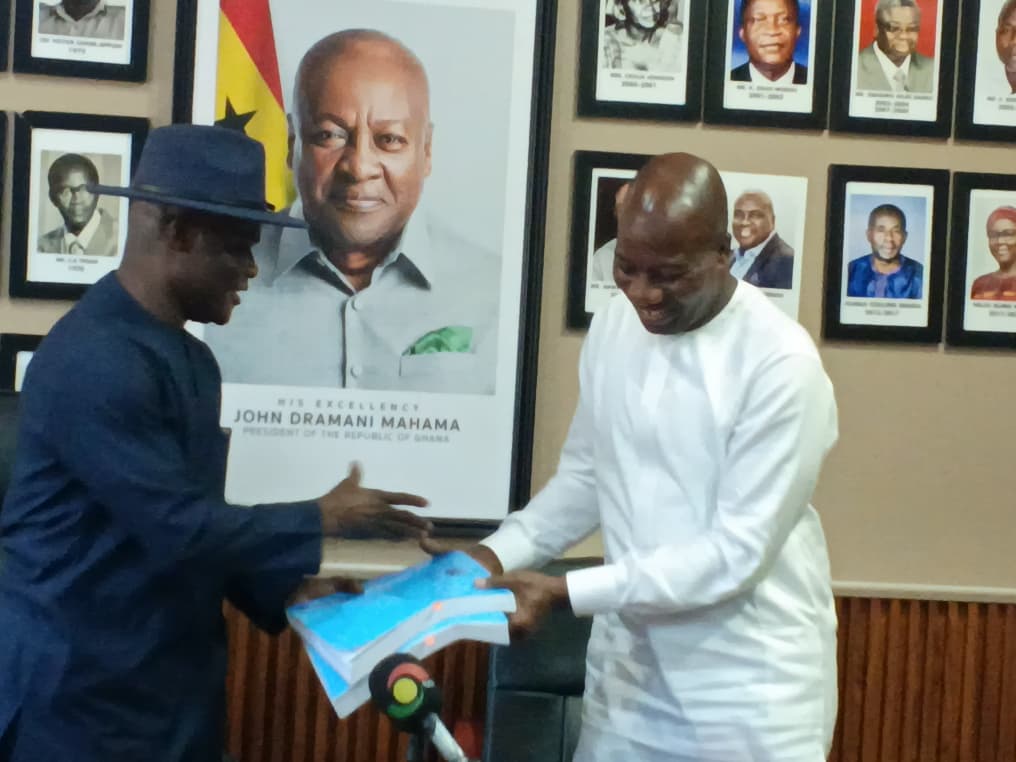
Mr Ayariga made the commitment in Accra on Tuesday, September 1, 2026, during a handing-over ceremony following his appointment to the ministry as part of President John Mahama’s ministerial reshuffle.
He said President Mahama had given him a clear mandate and that he intended to translate that mandate into practical improvements in communities across the country.
“I will do exactly what the President said to make the cities work, to make the assemblies work, to make sure that they fix the roads, they fix the drains, and we will do this to make sure that the city is clean,” he said.
According to Mr Ayariga, the challenges facing Ghana’s cities could not be solved solely through allocations from central government, stressing that metropolitan, municipal and district assemblies must take responsibility for mobilising their own revenues.
He questioned why some assemblies continued to complain about a lack of resources when they had failed to effectively collect basic rates, property rates, market tolls, business operating licences and other legally mandated revenues.
“The MCE says, ‘I don’t have money to do it.’ And I ask him, have you collected the basic rates of residents of your municipality? No. Have you collected the market tolls from the market domain? No. Have you collected the property rates of all the properties in your municipality? No,” he said.
Mr Ayariga also cited other sources of local revenue, including licences paid by entertainment operators, businesses, artisans, restaurants and other commercial establishments.
“You haven’t collected those revenues and yet you expect to be able to fix those spaces. It’s not possible. It doesn’t work that way. If you don’t raise the revenues, you cannot invest,” he stressed.
He said Ghana could learn from cities in developed countries, where local authorities relied significantly on locally generated revenue to maintain roads, parks, walkways and other public infrastructure.
“Why do you think the Germans got the money to construct nicely paved walkways? Why do you think they got the money to maintain huge parks within their cities?” he asked.
Mr Ayariga said his ministry would therefore hold Metropolitan, Municipal and District Chief Executives (MMDCEs) accountable for delivering services to residents, while also encouraging citizens to fulfil their obligations by paying the taxes, rates and levies required by law.
“As much as I’m going to hold every Metropolitan Chief Executive, Municipal Chief Executive, and District Chief Executive accountable to perform their duties to the citizens, I will also insist that Caesar gets what is due Caesar,” he said.
He called for collaboration among the media, civil society organisations, religious bodies, traditional authorities and land-owning families to support efforts to transform Ghana’s cities.
“We will need their support and their cooperation for us to be able to turn things around, to make sure that Ghana is the example for Africa and can compete with any city, any country in the world. Because that is who we are. We are a nation of excellence,” he said.
Ayariga targets sanitation crisis
Mr Ayariga said sanitation would receive particular attention under his tenure, describing a clean environment as a basic responsibility of every government.
“Cleaning a city is not rocket science. Cleaning a city is the most basic thing that you can do for the citizens of that city,” he said.
He said citizens were not demanding too much when they called for clean communities, functional drains and good roads.
“Citizens are not asking for too much if they just want a clean environment. They are not asking for too much if they want drains. They are not asking for too much if they want good roads to drive on,” he added.
Mr Ayariga disclosed that he had already begun familiarising himself with the sanitation situation in Accra, saying he visited a waste management site early Tuesday morning as his “first office”.
“My first office is a dump site across the city. And every day, every week, every month, I will be spending more time at those sites than in the office here,” he said.
He said he had instructed officials to take him around the city from 3 a.m. to assess how waste management operations were being carried out.
According to him, there were simple interventions that could significantly reduce the cost of waste management if residents paid for services and the system was properly organised.
“If everybody paid, we could fix the problem. And when we fix the problem, it will then cost everybody less to continue to enjoy the service,” he said.
Mr Ayariga said inefficiencies in the delivery of basic services ultimately increased the cost of living for ordinary citizens, citing water supply as an example.
He explained that where communities lacked reliable water systems, residents were forced to rely on tanker services, which involved fuel, drivers, maintenance, bank loans and other costs that were eventually passed on to consumers.
“If the system is working well, you will find that you might be paying just about 20 to 30 per cent of what you are actually paying today,” he said.
He said the same principle applied to other services provided by local authorities, arguing that improving efficiency could reduce the cost of living in Ghanaian cities.
‘Two and a half years is enough’ Mr Ayariga acknowledged that he had a relatively short period remaining in government but said he was confident that meaningful transformation could be achieved within the available time.
“I don’t have much time left. That is two years and I think three months or four months, two years and four months. But I take inspiration from the ministry of Jesus Christ. He was only three years or so and yet he was able to create what he has created,” he said.
“So, I believe two and a half years is enough to fix this country. And I will do exactly that,” he added.
He also rejected the politicisation of sanitation, arguing that poor sanitation affected citizens regardless of their political affiliation.
“It’s not about NDC, MPP. If there is filth in the neighbourhood, if you are an NDC man, you live in that filth. If you are an NPP man, you live in that filth,” he said.
Mr Ayariga said political parties should not have to campaign on promises to keep cities clean, describing sanitation as a basic responsibility of government.
President Maham’s Instructions
Mr Ayariga said President Mahama had given him clear instructions on what he expected from him as Minister for Local Government.
He quoted the President as charging him to ensure “reliable local roads, effective planning, and responsive public services.”
“I charge you, Honourable Minister, to make decentralisation meaningful to ordinary citizens. Metropolitan, municipal, and district assemblies must become more accountable, financially disciplined and responsive to the needs of the communities they serve,” Mr Ayariga quoted the President as saying.
The President, he said, had also directed him to restore order to Ghana’s cities and towns by addressing poor spatial planning, uncontrolled development, sanitation challenges, congestion and encroachment on public spaces.
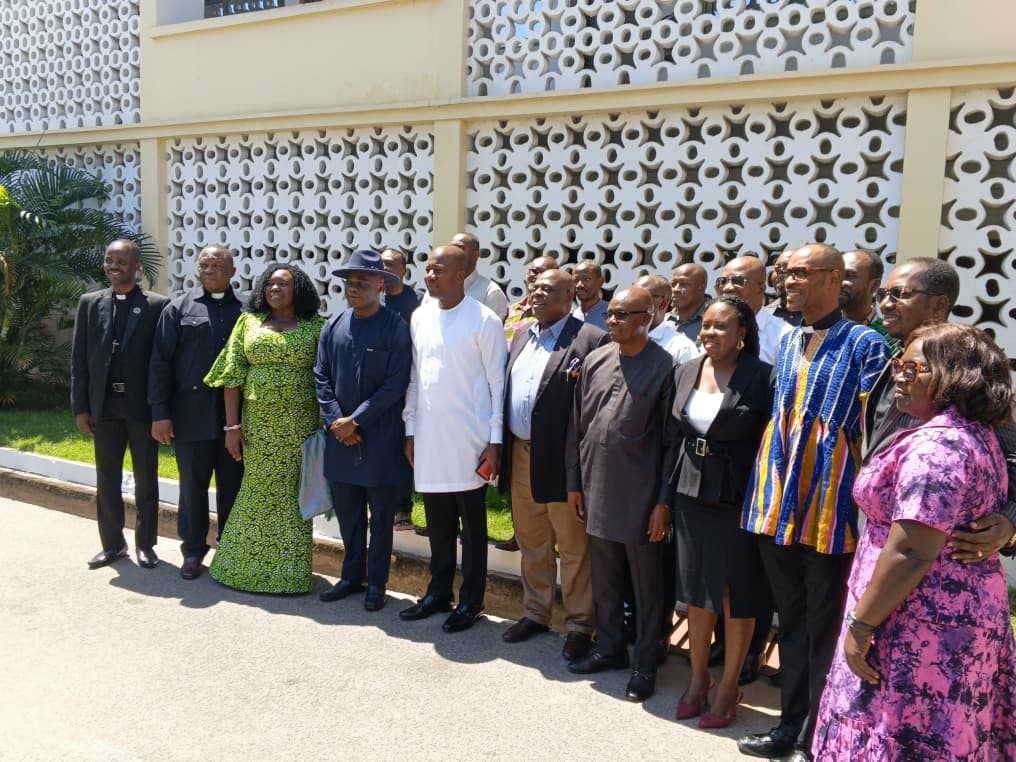
Mr Ayariga further pledged to work closely with traditional and religious authorities, describing them as important partners in national development, peace-building and social cohesion.
He said Ghana’s religious and cultural diversity must remain a source of strength and assured that freedom of worship and tolerance would be protected.
The Minister who is also the immediate past Majority Leader emphasised the importance of close collaboration with Mr Ibrahim, particularly on issues linking local government with housing, slum development and urban planning.
“I will work with my brother, who, because he had just left here and gone to work in housing, will even understand why slum abolition is important. Slum upgrading is important. Preventing the development of slums will be important,” he said.
He said inadequate housing created significant challenges for local governments and required coordinated action between the two ministries.
“Those are the areas where collaboration becomes necessary. We have to work together to advance the cause of the government,” he added.
Mr Ayariga said he was ready to take up the challenge and called on officials, citizens and stakeholders to work with him to improve local governance and transform Ghana’s cities.
Ahmed Ibrahim pledges support
The outgoing Minister for Local Government, Chieftaincy and Religious Affairs, Ahmed Ibrahim, who has been reassigned to the Ministry of Works, Housing and Water Resources, assured Mr Ayariga of his support as he assumes the new portfolio.
Mr Ibrahim said he believed Mr Ayariga had the energy and capacity to continue the work already started by his administration.
“I want to assure my brother, Minister, that whatever he started, whatever work he did with the team here, I believe I have the energy and capacity to continue,” Mr Ayariga said.
Source: Felix Nyaaba/expressnewsghana.com


