
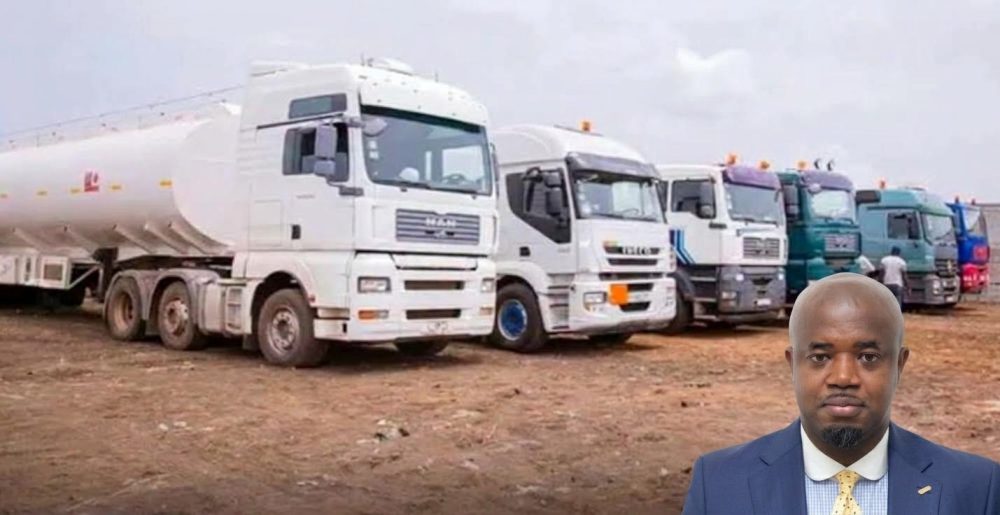
The Ghana Audit Service has uncovered major regulatory and control weaknesses in Ghana’s downstream petroleum sector, including the distribution of about 87 million litres of petrol without fuel marking in 2025, potentially exposing the Unified Petroleum Pricing Fund (UPPF) to a GH¢78.6 million loss.
The findings are contained in the Auditor-General’s Performance Audit Report on the operations of the National Petroleum Authority (NPA), which also uncovered unlicensed petroleum tankers operating in the sector, gaps in the tracking of fuel movements, discrepancies between marked and distributed petroleum products and weaknesses in monitoring fuel outlets.
The findings were disclosed by the Assistant Director of the Performance and Special Audit Department of the Ghana Audit Service, Kwabena Safoh-Sarkwa, at a media training workshop organised in Accra on Monday, September 28, 2026, by the Ghana Anti-Corruption Coalition (GACC) in partnership with the Africa Centre for Energy Policy (ACEP) and Transparency International-Ghana (TI-Ghana).
The workshop was aimed at strengthening journalists’ capacity to report on the Auditor-General’s findings and recommendations and improving public understanding of accountability issues in the petroleum sector.
Mr Safoh-Sarkwa said the Performance Audit, released in June 2026, identified weaknesses in the NPA’s systems for licensing Bulk Road Vehicles (BRVs), tracking petroleum products, marking fuel and monitoring petroleum outlets.
He said the weaknesses had implications not only for revenue collection but also for fuel quality and public safety.
87m litres unmarked
One of the most significant findings concerned discrepancies between the volumes of petroleum products marked and those eventually distributed.
Between 2023 and 2025, the Audit Service found that 15,416.8 million litres of petrol and diesel were marked, while 15,054.2 million litres were distributed, creating a variance of 362.6 million litres, representing 2.35 per cent.
The annual discrepancies stood at 83.1 million litres in 2023, 214.5 million litres in 2024 and 64.9 million litres in 2025.
For petrol alone in 2025, however, 3,011.2 million litres were marked against 3,098.6 million litres distributed, resulting in approximately 87 million litres being distributed without marking.
The auditors estimated that the discrepancy represented a potential GH¢78.6 million UPPF loss in 2025, in addition to possible tax revenue losses.
The Audit Service said the absence of fuel marking could also make it difficult to trace petroleum products through marker testing and potentially expose consumers to substandard products.
Mr Safoh-Sarkwa said the NPA’s Quality Assurance Directorate and the UPPF Secretariat conducted checks, but neither unit compared total volumes marked with the volumes distributed.
Tanker licensing gaps
The audit also uncovered significant weaknesses in the licensing of Bulk Road Vehicles used to transport petroleum products.
As of April 9, 2026, only 2,514, representing 51.3 per cent, of 4,904 petrol and diesel BRVs had valid licences.
Although BRV licences expire on December 31, operators are given a grace period until March 31. Auditors who inspected 25 BRVs at depots and fuel stations in March 2026 found that nine were operating with expired licences.
The vehicles had not been deactivated from the NPA’s electronic system because the Authority had extended the deadline, citing concerns that deactivation could disrupt fuel supplies.
The auditors, however, warned that the arrangement could allow unauthorised tankers to continue transporting petroleum products without sufficient assurance that they met the regulatory requirements designed to protect fuel quality and public safety.
48,678 trips untracked
The audit further revealed gaps in the tracking of petroleum product movements.
Of 1,092,440 trips recorded between 2023 and 2025, 1,043,753 were tracked, leaving 48,678 trips untracked.
Although untracked trips declined from 35,249 in 2023 to 8,099 in 2024 and 5,330 in 2025, the auditors noted that aviation turbine kerosene and naphtha were excluded from the tracking system because they did not attract margins under the UPPF.

The Audit Service said the exclusion was inconsistent with Legislative Instrument 2251, which requires the tracking of all petroleum products.
The report also identified 544 UPPF-margin deliveries that were missed in 2023 during the transition from the vehicle tracking system to the electronic cargo tracking system.
It further recorded 582 fuel diversions involving 9.78 million litres of petrol and diesel in 2024 and 2025.
The auditors, however, noted that all 25 BRVs inspected had functioning tracking devices and electronic seals.
GH¢648.62m payments questioned.
The Audit Service also raised concerns over GH¢648.62 million in lump-sum payments made to RASL between January 2023 and May 2026, saying there was no evidence that maintenance work associated with the payments had been verified.
The report said some broken components had remained unrepaired since the automatic tank-gauging systems were introduced.
The audit found that by March 2026, only 3,443 of the targeted 4,000 Automatic Tank Gauging Systems had been installed, leaving 557 outstanding.
Of the systems installed, only 1,813 were fully automated, while 1,630 were partially automated due to issues including missing forecourts, faulty pumps and unreliable power supplies.
Of 23 sampled outlets with installed systems, 11 were found to be non-functional because of breakdowns, power-related damage and poor configuration.
Fuel quality concerns.
The audit also documented cases in which fuel-quality concerns emerged despite existing regulatory controls.
At an outlet in Zuarungu in the Upper East Region, a marker test conducted on August 18, 2023, was passed. Six days later, however, a consumer reported water in the fuel, and the NPA subsequently confirmed about 180 litres of water in the tank.
At Kanvili in Tamale, water contamination was reported in diesel after 36,000 litres had already been sold, making it impossible to conduct a marker test.
In Fijai and Nkroful in the Western Region, a driver reportedly experienced engine failure in April 2025, after which petroleum products at both outlets failed marker tests.
The Audit Service said the NPA conducted 87,944 monitoring visits out of 88,678 planned visits between 2023 and 2025.
However, planned monitoring visits declined by 19.8 per cent during the period, while the number of licensed petroleum outlets increased by 1.3 per cent.
The auditors said the trend raised concerns about the adequacy of regulatory oversight as the number of outlets continued to grow.
Despite the findings, the Audit Service acknowledged what it described as the NPA’s “commendable corrective posture” and efforts to implement the Auditor-General’s recommendations.
Mr Safoh-Sarkwa said the audit, which was completed within two months instead of the standard nine-month period, nevertheless exposed critical weaknesses requiring attention.
The findings point to the need for stronger reconciliation of marked and distributed fuel volumes, tighter enforcement of tanker licensing requirements, comprehensive tracking of petroleum movements and more effective monitoring of fuel outlets.
The media training, organised under the “An Anti-Corruption Initiative for Enhancing Governance and Accountability” project, was intended to equip journalists to scrutinise the findings, track implementation of the recommendations and deepen public discussion on transparency and accountability in the petroleum sector.
Source: Felix Nyaaba/expressnewsghana.com


