
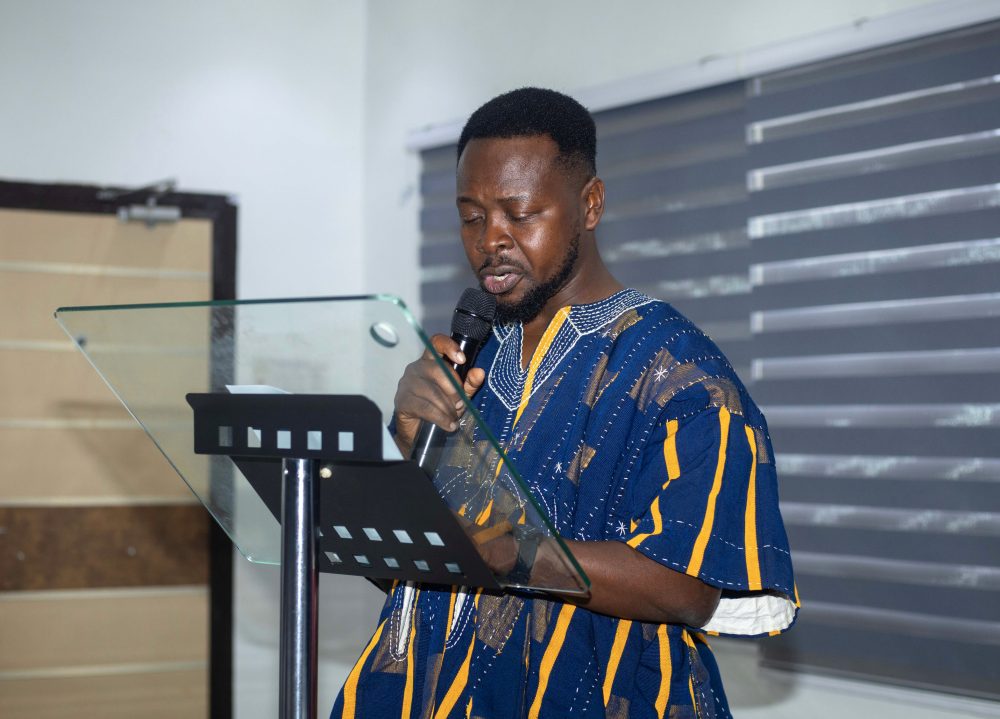
The President of the Private Newspapers and Online Publishers Association of Ghana (PRINPAG), David Tamakloe, has called on the government and state institutions to provide stronger financial, regulatory and institutional support to private media organisations, warning that the survival of the sector is critical to Ghana’s democracy.
He said private media organisations remained an essential pillar of democratic governance by informing the public, holding duty bearers accountable, exposing wrongdoing and giving voice to vulnerable groups.
Mr. Tamakloe made the call on Saturday, August 29, 2026, when he delivered the welcoming address at a capacity-building workshop on “Responsible Security Reporting” in Accra.
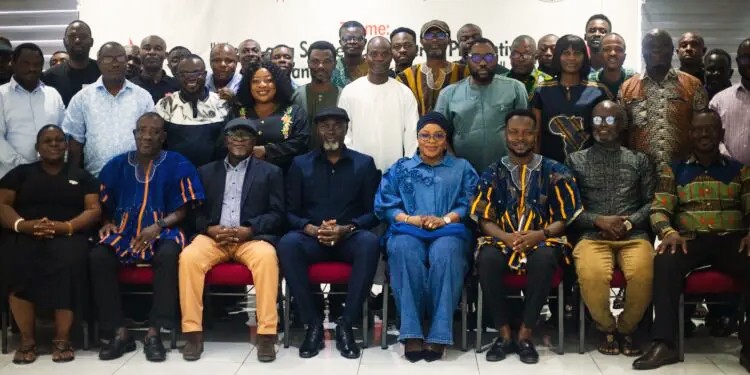
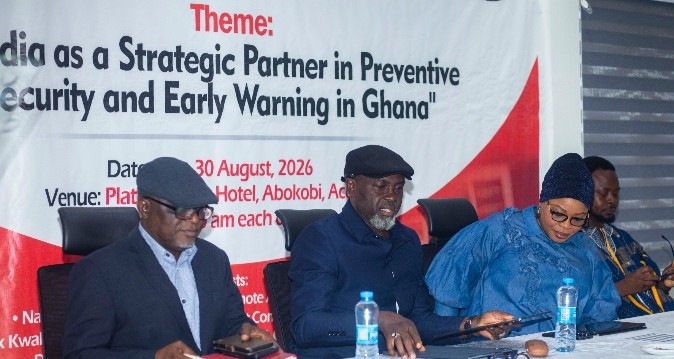
The workshop, organised by PRINPAG in collaboration with the National Security Council Secretariat under the theme “Media as a Strategic Partner in National Security,” brought together security experts, media executives, editors, publishers and journalists to enhance professional reporting on contemporary security issues.
Mr. Tamakloe cautioned against the perception that traditional media was becoming irrelevant due to the rapid growth of social media and other digital platforms.
Rather, he argued that the proliferation of social media had made professional journalism even more important, particularly in an era characterised by misinformation, disinformation and the widespread circulation of unverified content.
“The madness we witness on social media is NOT journalism,” he stressed, insisting that journalism remained a noble profession with a critical responsibility to expose wrongdoing, defend the vulnerable and preserve the history of the country.
He said Ghana could not afford to allow private newspapers and online media organisations, which had contributed significantly to the country’s democratic development over the years, to collapse under growing economic and technological pressures.
Mr. Tamakloe therefore appealed to the government, the National Security Council Secretariat and other public institutions to deepen their partnership with private media organisations and support initiatives aimed at strengthening the capacity and sustainability of the sector.
“Let us provide the ink through funding, through regulation, and through partnership,” he appealed.
According to him, a strong and independent media required an economically viable industry capable of investing in journalists, maintaining professional standards and providing the public with accurate, credible and timely information.
He further called for sustained engagement between the media and security institutions, particularly through capacity-building programmes, to equip journalists with the knowledge and skills required to report sensitive national security matters responsibly.
Workshop Focuses on Responsible Security Reporting.
The Executive Secretary of PRINPAG, Mr George Wilson Kingston, provided an overview of the programme and urged participants to take full advantage of the training to improve their professional capacity.
He explained that the workshop had been designed against the background of Ghana’s evolving security environment and the increasing need for media practitioners to develop a deeper understanding of contemporary security challenges and their implications for journalism.
According to him, the media remained an important source of information and public education during security incidents, making the quality, accuracy and context of news reports crucial to public understanding and national stability.
“The quality, accuracy and context of media reports can therefore have significant implications for public understanding and national stability,” Mr Kingston said.
He noted that the workshop was specifically designed to enhance the capacity of private newspapers and online news publishers to report accurately, responsibly and professionally on Ghana’s contemporary security challenges.
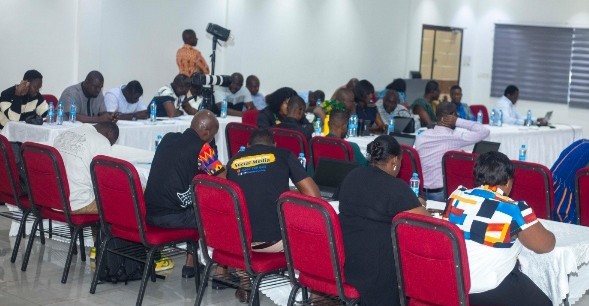
The training brought together 45 participants, comprising editors, senior reporters, news publishers and media owners from private newspapers and online media platforms that are members of PRINPAG.
Mr Kingston said the presentations and discussions had been structured around five major thematic areas, including Ghana’s national security architecture, communal conflicts and the principles of conflict-sensitive journalism.
Another session would focus on Media, National Security and Strategic Communication, with emphasis on information management during security incidents, responsible communication and the need to avoid reporting that could compromise security operations or create unnecessary public panic.
Participants would also receive an overview of the Security and Intelligence Agencies Act, 2026 (Act 1168), with particular attention to key provisions of the new legislation and their relevance to media practitioners.
The fourth thematic area would examine Cybercrime, Digital Threats and Information Warfare, including emerging cybercrime trends, online manipulation and the responsibilities of media organisations when reporting digital security threats without compromising legitimate investigations.
The final session would address Ethics, National Interest and Press Freedom, exploring the balance between constitutional press freedoms and legitimate national security considerations, with reference to case studies from Ghana and other jurisdictions.
Mr Kingston said the workshop had deliberately been structured to go beyond conventional lecture-based training.
Participants would engage security analysts, practitioners and legal experts through interactive discussions and question-and-answer sessions, while case studies, group work and scenario-based exercises would enable them to apply the lessons to practical newsroom situations.
He expressed the expectation that participants would leave the workshop with improved knowledge of Ghana’s security challenges and a better understanding of how to report on such matters with greater accuracy, depth, balance and context.
“We encourage all participants to actively engage with the presentations, discussions and practical exercises so that the knowledge gained can translate into improved reporting practices across our various newsrooms,” he said.
Mr Kingston added that the training was also expected to help reduce sensational and conflict-escalating reportage while strengthening collaboration and mutual understanding between the media and security institutions.
Mr Tamakloe concluded that strengthening Ghana’s private media was not merely an intervention for the survival of media businesses but an investment in the country’s democracy, national security and long-term development.
Source: Felix Nyaaba/expressnewsghana.com


