

Acheampong Was Not Corrupt, Died With Only His Wedding Ring – Sam Jonah Reveals Emotional Untold History
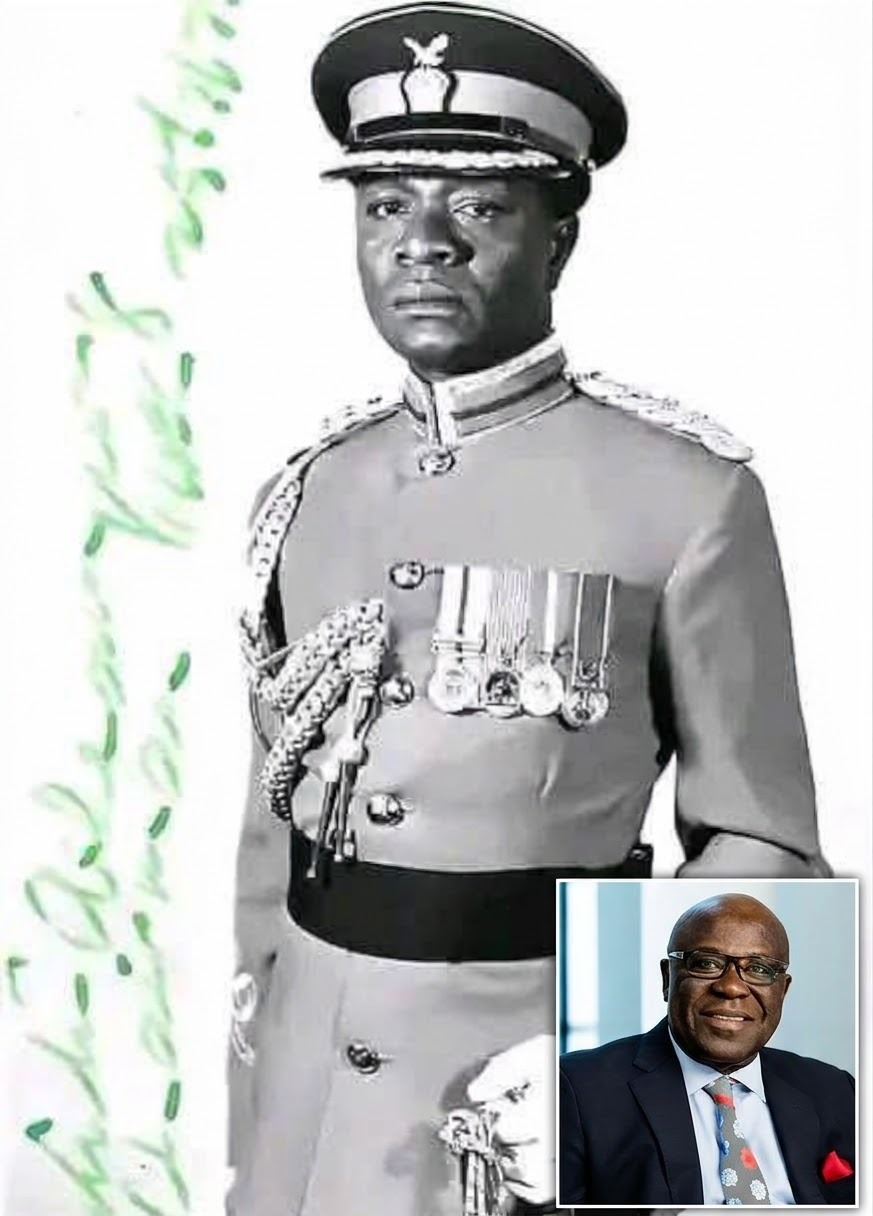
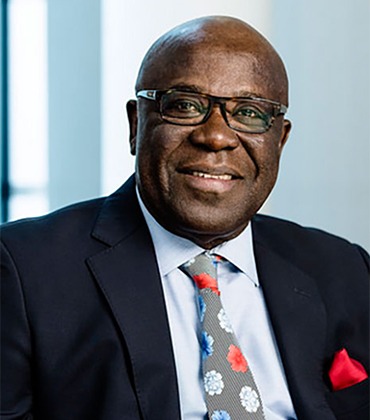
Business magnate and Chancellor of the University of Cape Coast, Sir Sam Jonah, has delivered an emotional account of the life, leadership and controversial death of former Head of State, General Ignatius Kutu Acheampong, insisting that historical records do not support the perception that the late military ruler amassed personal wealth through corruption.
Speaking at the Second General I.K. Acheampong Memorial Lecture on Friday, November 13, 2026, Sir Sam Jonah said investigations following Acheampong’s removal from power failed to uncover evidence of foreign bank accounts or substantial personal wealth, despite years of allegations surrounding his administration.
He disclosed that when Acheampong’s remains were exhumed at Nsawam in 2001, the only personal possession found on his body was his wedding ring, which was subsequently returned to his widow, Madam Faustina Acheampong.
“They searched for Swiss accounts, and found none. They searched for houses in London, and found none. What they found, in the earth at Nsawam, was a ring,” he recounted emotionally.
Delivering the lecture under the theme, “Breaking the Silence –
The Human and Political Complexities Behind the Leadership of General Kutu Acheampong,” Sir Sam Jonah called for a more balanced historical assessment of the former leader, arguing that Ghana’s political divisions had contributed to the neglect of his contributions to national development.
He acknowledged that Acheampong overthrew an elected government in January 1972, describing the coup as unacceptable, but maintained that the circumstances surrounding his rise to power should not prevent an objective examination of his achievements and failures.
“I did not believe then, and I do not believe now, that soldiers should overthrow governments. Ghanaians had chosen Dr Busia. The decision to remove him was theirs,” he said.
However, he added: “I do not ask you to admire how he came to power. I ask you to look at what he did with it. And there the record is far richer than we have allowed ourselves to remember.”
Sir Sam Jonah, who acknowledged being a beneficiary of Acheampong’s mining policies, explained that the former Head of State’s decision to increase Ghanaian participation in the mining industry opened opportunities for a generation of Ghanaian professionals.
He recalled that he joined Ashanti Goldfields Corporation in 1969 as an underground miner at Obuasi, and later rose through the ranks following the government’s 1972 decision to acquire controlling interests in major mining companies and promote Ghanaians into senior management positions.
“In due course, I was that Ghanaian. So were many others, in many companies,” he said.
He added that his eventual rise to become Chief Executive of Ashanti Goldfields and lead the first African operating company to list on the New York Stock Exchange was built partly on the foundation laid by Acheampong’s policies.
The former business executive also praised Acheampong’s Operation Feed Yourself initiative, describing it as one of the most ambitious national mobilisation programmes in Ghana’s history.
According to him, the programme significantly reduced rice imports, with imports falling to zero in 1975 and 1976, while farmers in northern Ghana reportedly exported rice and tomatoes to neighbouring Upper Volta.
He said the initiative went beyond agricultural production to inspire national pride, bringing students, civil servants, professionals and ordinary citizens into the campaign for food self-sufficiency.
“The tragedy of Operation Feed Yourself is not that it failed. It is that it worked, and we let it go,” he lamented.
On the economy, Sir Sam Jonah recalled Acheampong’s controversial 1972 decision to repudiate approximately US$90 million in suppliers’ credits considered tainted by corruption, fraud or inflated contracts.
The decision, popularly captured in the Akan expression Yentua (We will not pay), forced creditors to renegotiate Ghana’s debt obligations on more favourable terms.
Comparing the decision with Ghana’s 2022 debt default, he said the circumstances were fundamentally different.
“In 1972 the slogan was Yentua: we will not pay. In 2022 the honest slogan would have been Yentumi: we cannot,” he observed.
He further credited Acheampong with supporting indigenous Ghanaian entrepreneurs, expanding public housing, initiating the Kpong hydroelectric project and overseeing Ghana’s transition from driving on the left to the right-hand side of the road in August 1974.
However, Sir Sam Jonah did not absolve the former Head of State of responsibility for the economic and political difficulties that characterised the latter years of his administration.
He acknowledged that price controls, shortages, hoarding and the emergence of the black market contributed to the Kalabule phenomenon, which became synonymous with the period.
While maintaining that Acheampong was personally honest, he argued that the former leader failed to adequately control those who exploited the system.
“I believe Acheampong was personally honest. I also believe he was too slow to restrain the people who profited from the system he presided over,” he stated.
He also criticised the circumstances surrounding the 1978 Union Government referendum, saying a proposal intended to promote national consensus eventually became a political campaign centred on Acheampong himself, with opponents allegedly subjected to intimidation and detention.
The Chancellor further identified the Acheampong’s decision to remain in power for too long as one of his greatest political mistakes.
According to him, the former military ruler had an opportunity to leave office honourably after his initial achievements but failed to provide Ghanaians with a credible and acceptable transition to constitutional government.
“He stayed too long,” Sir Sam Jonah declared, adding that the Acheampong’s inability to relinquish power ultimately undermined his leadership and contributed to his removal by fellow military officers in July 1978.
The most emotional part of the lecture centred on Acheampong’s execution on June 16, 1979, following the overthrow of the Supreme Military Council.
Sir Sam Jonah recalled that the former Head of State was executed at the Teshie firing range alongside General Utuka without being given a trial.
He said Acheampong had been stripped of his military rank, honours and pension before his execution, raising serious questions about due process and the treatment of former military leaders.
He therefore appealed to President John Dramani Mahama, the Armed Forces Council and Parliament, where necessary, to restore Acheampong’s military rank and honour his service to Ghana.
“I am not asking anyone to pretend those years were without fault; those who suffered in them are entitled to their memory. But the case for restoring his rank does not rest on whether he was a good ruler. It rests on something simpler,” he said.
“In a nation of laws, a soldier’s rank, earned over a lifetime of service, is not removed by decree and settled by a firing squad.”
He proposed three measures: restoring the rank of General to Ignatius Kutu Acheampong, restoring his name to the rolls of the Ghana Military Academy and returning to his family the honours associated with his rank.
“Restoring a rank does not rewrite history. It completes it,” he stressed.
Sir Sam Jonah concluded that Acheampong’s legacy should be assessed through both his achievements and shortcomings, describing him as a patriot who made significant contributions to Ghana but also committed grave political mistakes.
He said the country must learn from the former leader’s experience, particularly the need to combine development with democratic consent, personal integrity with strong institutions, and leadership with the willingness to relinquish power at the appropriate time.
“When a Ghanaian sits at the head of the table in a company that mines our gold, remember the decree of 1972 that said the head office would be in Accra and the deputy’s chair would go to one of us. I know. I sat in it,” he said.
In a poignant appeal to the nation, he recalled that Acheampong’s government had also facilitated the return of Ghana’s first President, Kwame Nkrumah, from exile in 1972, asking whether Ghana could now restore the former military ruler’s name.
“He gave Nkrumah back to Ghana. Is it too much to ask that Ghana give him back his name?” he asked.
Addressing Acheampong’s widow, Madam Faustina Acheampong, who was present at the lecture, he made a final emotional appeal:
“Madam Acheampong, in 2001 they placed his ring back in your hands. It is time this nation placed his rank back beside his name.”
He ended with a call for a fair historical hearing for the late General, saying: “Let us give him in death the one thing he was denied in life: a fair hearing before the conscience of his country.”
“Damirifa due, General. May your soul, and the souls of all who died with you, and of all who suffered in those years, rest in peace.”
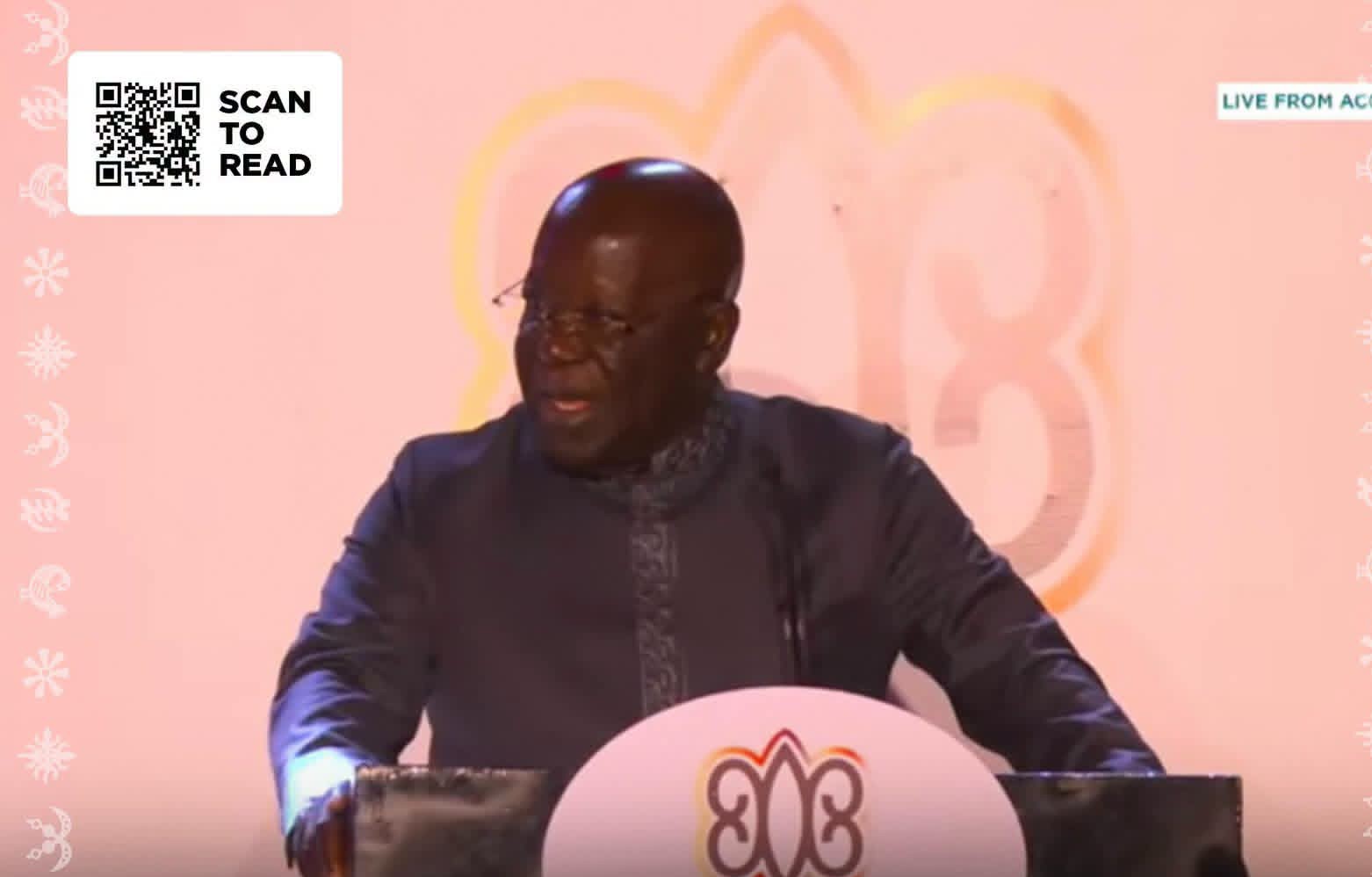
Source :Felix Nyaaba/expressnewsghana.com
About Author