Return to the Negotiating Table’— Prez Mahama Calls for Urgent Talks to End Middle East Crisis
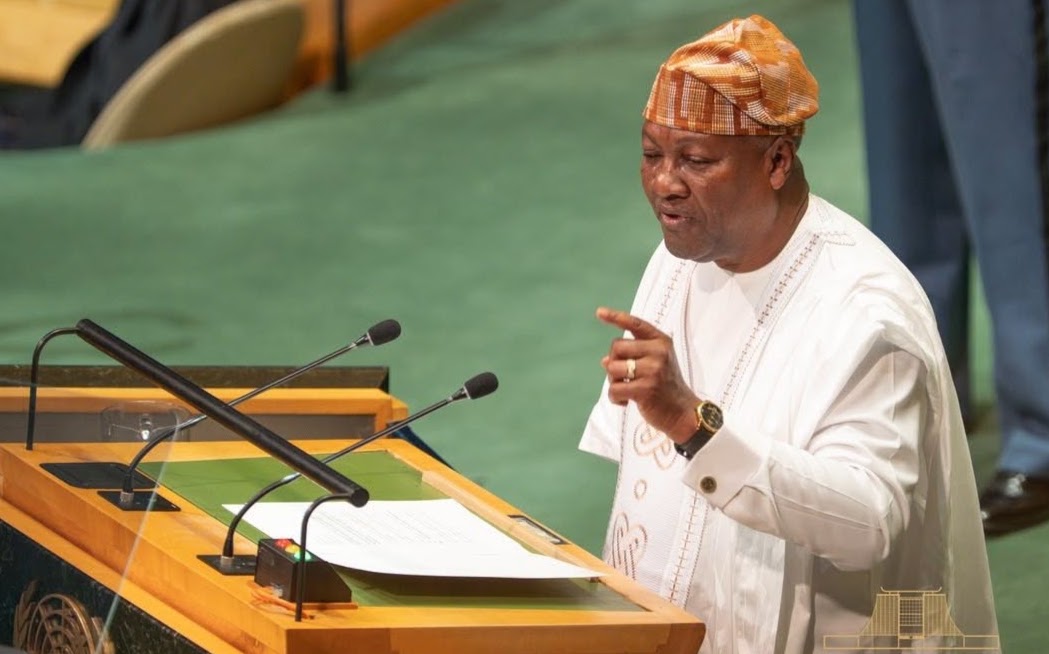
President John Dramani Mahama has called on all parties to the ongoing conflicts in the Middle East to return to the negotiating table, warning that continued warfare is deepening humanitarian suffering and creating damaging ripple effects across the global economy.
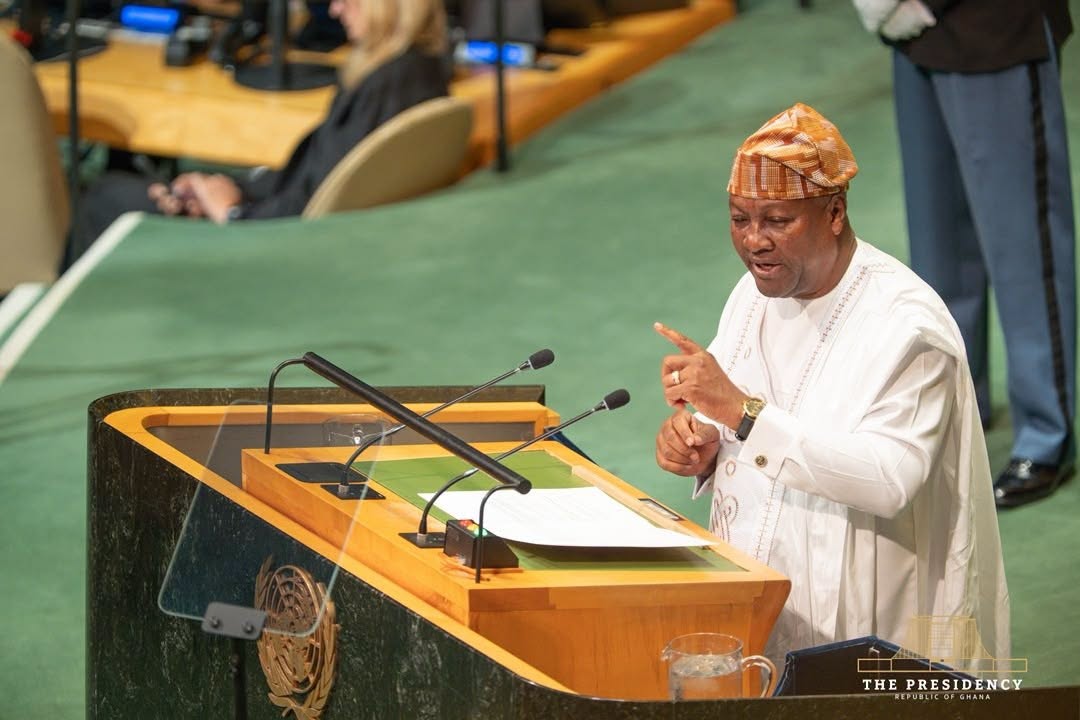
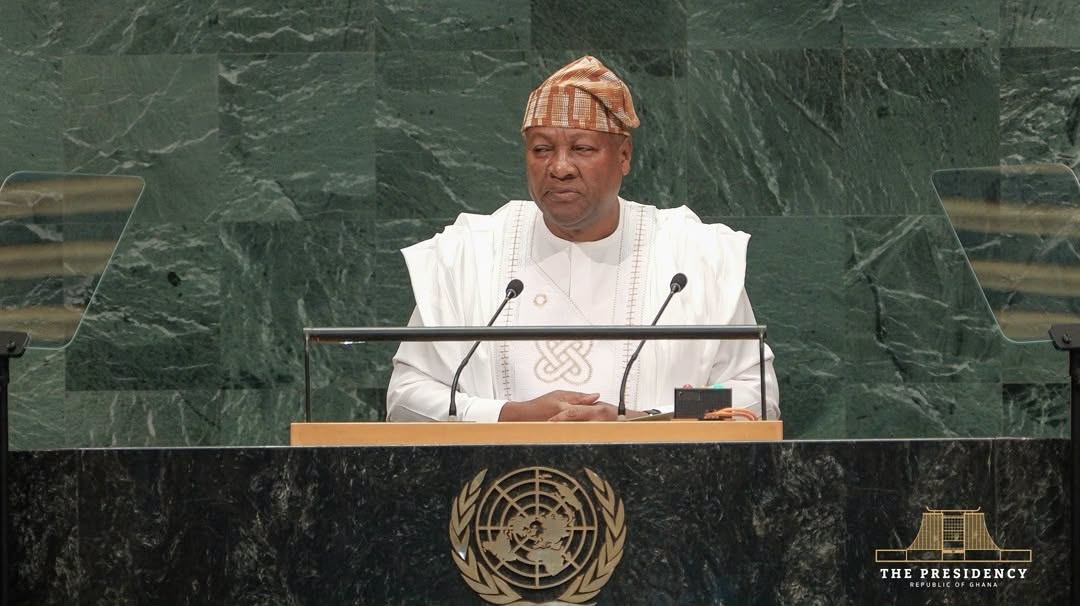
Addressing the 81st Session of the United Nations General Assembly in New York on Thursday, September 24, 2026, President Mahama said dialogue remained the most credible path to resolving even the most difficult conflicts.
“The current Middle East crisis is having a deleterious effect on the world economy,” he said, stressing the need for all sides to abandon continued confrontation and embrace negotiations.
“We call for a return to the negotiating table,” President Mahama declared.
He said the international community must apply a consistent standard to conflicts across the world by respecting the sovereignty of states, protecting civilians, ensuring unhindered humanitarian access and holding perpetrators of war crimes accountable.
President Mahama also expressed deep concern over the humanitarian situation in Gaza, the West Bank and the occupied Palestinian territories, calling for an end to what he described as the use of diplomatic euphemisms to conceal the scale of human suffering.
“We must stop using diplomatic euphemisms to veil the human carnage taking place in Gaza,” he said, questioning how many more innocent lives must be lost before the world takes decisive action.
He reaffirmed Ghana’s recognition of the sovereign State of Palestine and its support for a viable two-state solution under which Israel and Palestine would coexist peacefully with security and guaranteed borders.
At the same time, President Mahama condemned acts of terrorism by Hamas and called on all parties to respect international humanitarian law.
“Our moral standards cannot be selective,” he said.
The President said the principles of international law and human solidarity must also guide the world’s response to other conflicts, including the war in Sudan and insecurity affecting countries in the Sahel.
He argued that the crises confronting the world were being compounded by a wider breakdown in the multilateral order, warning against the growing influence of unilateralism and the erosion of international norms.
“The UN Charter must reign supreme over the cynical doctrine that ‘might makes right’,” President Mahama said, adding that the veto power of the UN Security Council must never become “a license for impunity.”
Africa demands greater voice
President Mahama used the UN platform to renew Ghana’s call for permanent African representation on the UN Security Council, arguing that the continent’s exclusion from the permanent membership structure was inconsistent with the principle of sovereign equality.
“Africa must be granted permanent representation on the UN Security Council, complete with all the rights, responsibilities, and veto powers of such membership,” he said.
He said reform of the global governance system was necessary to restore the legitimacy and credibility of the United Nations.
“Security Council reform is not a favour to Africa; it is an imperative for the legitimacy, credibility, and survival of the United Nations,” he added.
President Mahama also called for reforms to the international financial architecture, saying developing countries often borrow at significantly higher interest rates than industrialised nations.
He demanded long-term, affordable and accessible concessional financing to enable developing economies to invest in human capital, industrialisation and climate adaptation.
“Africa does not seek charity. Africa seeks equal partnership anchored in mutual respect,” he said.
Climate justice
Turning to climate change, President Mahama warned that Africa was bearing a disproportionate share of the consequences of a crisis to which the continent has contributed relatively little.
“Climate change is the ultimate test of global equity,” he said, noting that Africa contributes less than four per cent of global greenhouse gas emissions while facing severe flooding, coastal erosion, erratic rainfall and desertification.
He called on developed countries to honour their climate-financing commitments, particularly through predictable grants rather than loans that could further burden vulnerable economies.
President Mahama also highlighted Ghana’s experience with extreme weather, citing the heavy rains that struck coastal West Africa on June 29, 2026, resulting in 39 deaths and leaving one person missing, according to his address.
Ghana’s economic reset
The President also outlined what he described as progress under his government’s “Resetting Ghana Agenda”, including macroeconomic stabilisation, infrastructure development, the 24-Hour Economy, and the expansion of social protection and healthcare.
He said multilateral financial institutions and international credit-rating agencies had validated Ghana’s economic recovery, while stressing that economic growth must translate into tangible improvements in citizens’ lives.
“Economic growth must have a human face,” President Mahama said, linking the government’s infrastructure programme to efforts to bridge the rural-urban divide and expand access to basic services.
He also highlighted the Free Primary Health Care Programme and the Ghana Medical Trust Fund, popularly known as MahamaCare, as key components of the government’s social protection agenda.
‘Belonging’ and global solidarity
A central theme of President Mahama’s address was the concept of “belonging”, which he said should unite rather than divide humanity.
He warned that identity, when exploited for political purposes, could fuel nativism, xenophobia, discrimination, displacement and conflict.
“No race is superior. No nation is inferior. No child’s life is worth less because of the language they speak, the faith they profess, the colour of their skin, or the land of their birth,” he said.
He urged the international community to recognise refugees, migrants, children affected by war, indigenous communities and vulnerable populations as part of one human family.
“The freedom of any nation is insecure unless it is linked to the freedom of all humanity. Our national prosperity is fragile unless it is shared,” President Mahama said.
He, however, urged world leaders to speak truth with humility, act with courage and pursue a global order anchored in justice, human dignity and solidarity.
Source: Felix Nyaaba/expressnewsghana.com
About Author