

NACOC Set for Tougher Drug War as Govt Boosts Detection, Forensics — Hon Agalga
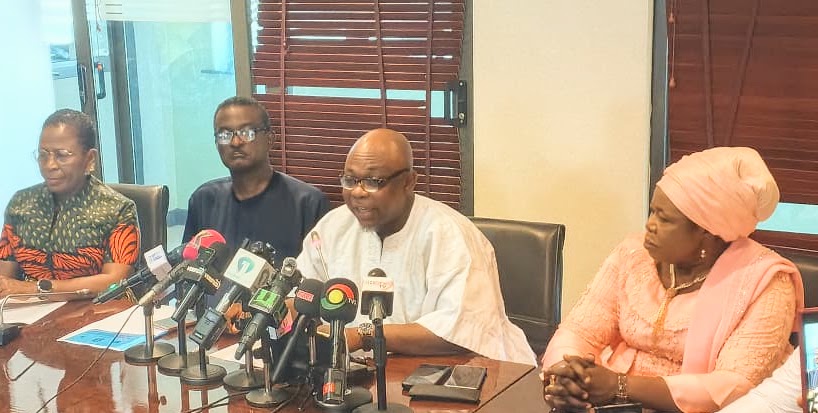
Majority Leader of Parliament, Hon James Agalga, has said the Narcotics Control Commission (NACOC) is being equipped with enhanced detection, investigative and forensic capabilities to intensify the fight against drug trafficking in Ghana.
According to him, the measures being rolled out, coupled with stronger collaboration among security and law-enforcement agencies, would lead to increased detection, interception, arrests and prosecution of persons involved in the illicit drug trade.
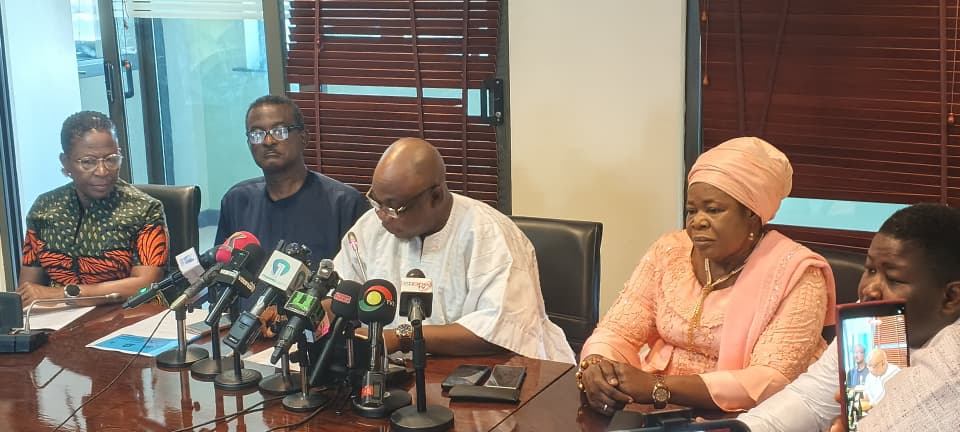
Mr Agalga disclosed this at a press briefing in Parliament on Thursday, September 24, 2026, said the country should expect more arrests as the capacity of NACOC and other agencies to detect narcotics trafficking improves.
“How might we have to force the drug law enforcement agencies, in this case NACOC, to carry out these operations?” he asked, stressing that measures had already been outlined to make the Commission more effective.
“In the coming days we should expect more arrests because with increased detection capabilities, the drug traffickers and lords definitely are going to be on the run. They will be detected, they will be interdicted, and they will be arrested and prosecuted promptly,” he said.
He said the establishment of a specialised court for narcotics-related cases would further strengthen prosecution and ensure that arrests translate into convictions.
“I remember back in the days when the Accra Regional Tribunal was operational… we used to defend people before that particular court. A specialisation was narcotics-related cases and that court achieved so much. So I am very happy that, first of all, the tribunals are coming back,” Mr Agalga said.
He explained that while arrests were fundamental to the fight against narcotics, they must be supported by thorough investigations, strong evidence and effective prosecution.
“Arrests must be effected. When arrests are effected, you are able to sometimes gather intelligence in the course of interrogating the suspects. And interrogating suspects can sometimes lead you to effect more arrests,” he said.
“But if you are arrested but cannot secure convictions, you haven’t really achieved much. So yes, we would affect the arrests. But we must also develop the means and capacity to carry out thorough investigations, build prosecutable dockets, which would eventually lead to convictions.”
Mr Agalga said the establishment of forensic laboratories within NACOC would be critical to strengthening investigations and ensuring that scientific evidence could be properly linked to suspects and substances seized.
He noted that in the past, narcotics-related analysis relied on other institutions, including the Ghana Standards Authority, a situation he said sometimes created challenges during prosecution.
“Today, we’re saying that NACOC must have their own facilities such as forensic laboratories to be able to conduct its own investigations in real time and also to keep in confidence some of the information that must not be out there,” he said.
According to him, limiting the number of agencies handling sensitive investigative information would also help protect prosecutions and prevent critical intelligence from reaching the public domain prematurely.
Mr Agalga further called for seamless collaboration between NACOC and other institutions, including the Ghana Police Service, Customs Division of the Ghana Revenue Authority, Ghana Ports and Harbours Authority and the Ghana Maritime Authority.
“There has to be more interagency collaboration,” he stressed. “NACOC should be able to collaborate seamlessly with the police, customs, Ghana Ports and Harbours Authority and the Maritime Authority.”
He said the objective was to ensure that all relevant institutions worked towards a common goal of eliminating the narcotics menace from Ghana.
The Majority Leader also disclosed that President John Dramani Mahama had already brought the relevant security agencies together and directed them to develop a coordinated strategy for tackling narcotics trafficking.
He said the President had given the agencies timelines to submit a joint working plan for his review and approval.
“The President in his wisdom held a meeting, a joint meeting with all the relevant security agencies and gave them his marching orders that they must come out with a blueprint, a strategy for interagency collaboration so far as the fight against narcotics is concerned,” Mr Agalga said.
He said the increased cooperation would also extend beyond Ghana’s borders, with local law-enforcement agencies working with their counterparts in other jurisdictions to track international drug-trafficking networks.
Mr Agalga explained that one of the tactics used by law-enforcement agencies internationally was “controlled delivery”, in which authorities may allow a consignment to proceed under surveillance to identify and apprehend other members of a trafficking network.
“They are constantly interacting. Sometimes they will deliberately allow you to leave with your catch of narcotics substances. They call that controlled delivery, so that the entire network can be mapped,” he said.
He said the interception of large quantities of narcotics should therefore not necessarily be interpreted as evidence that trafficking was increasing, but could reflect improved detection capabilities.
“Let nobody mislead you when you begin to hear that huge kilograms of cocaine have been intercepted. It means that the searchlight is now brighter than before,” he said.
Mr Agalga also dismissed the suggestion that arrests alone would solve the narcotics problem, insisting that professional investigations, forensic evidence and successful prosecutions must form part of the broader strategy.
He said President Mahama’s interventions, combined with enhanced institutional capacity and interagency cooperation, would produce significant changes in the country’s fight against drug trafficking.
“Are we going to have a good story to tell after President John Mahama’s tenure? Yes,” he said. “Given all the interventions that I have alluded to, I have no doubt whatsoever in my mind that by the time President Mahama has served the mandate given to him to its fullest, you would see a lot of change. We are already seeing changes.
Source: Felix Nyaaba/expressnewsghana.com
About Author