
Upper East Woos South Korean Investors for Drone Technology, Modern Agriculture and Agro-Processing
The Upper East Regional Minister, Hon. Donatus Akamugri Atanga, has called for stronger investment partnerships between the Upper East Region and South Korea, with a particular focus on modernising agriculture, expanding dry-season farming, improving livestock production and revitalising abandoned agro-industrial facilities.
He said the region had the natural resources, agricultural potential, human capital and development framework needed to attract technology-driven investments that could transform its economy and create employment opportunities for the growing youth population.
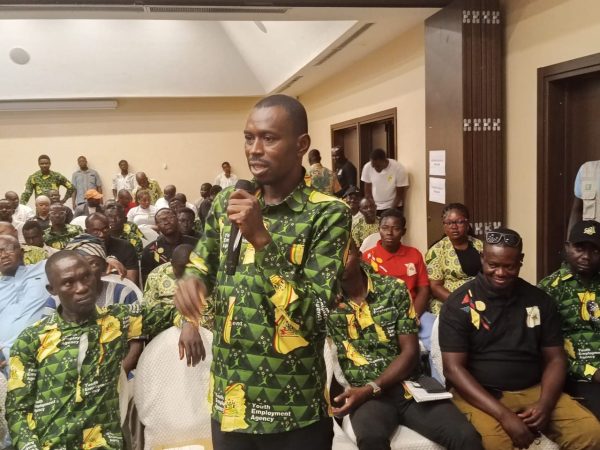
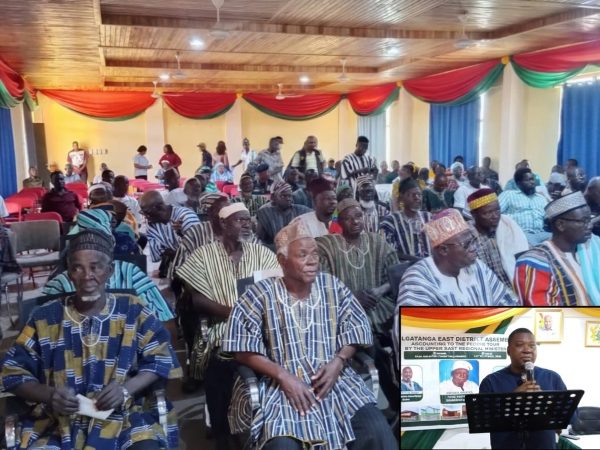
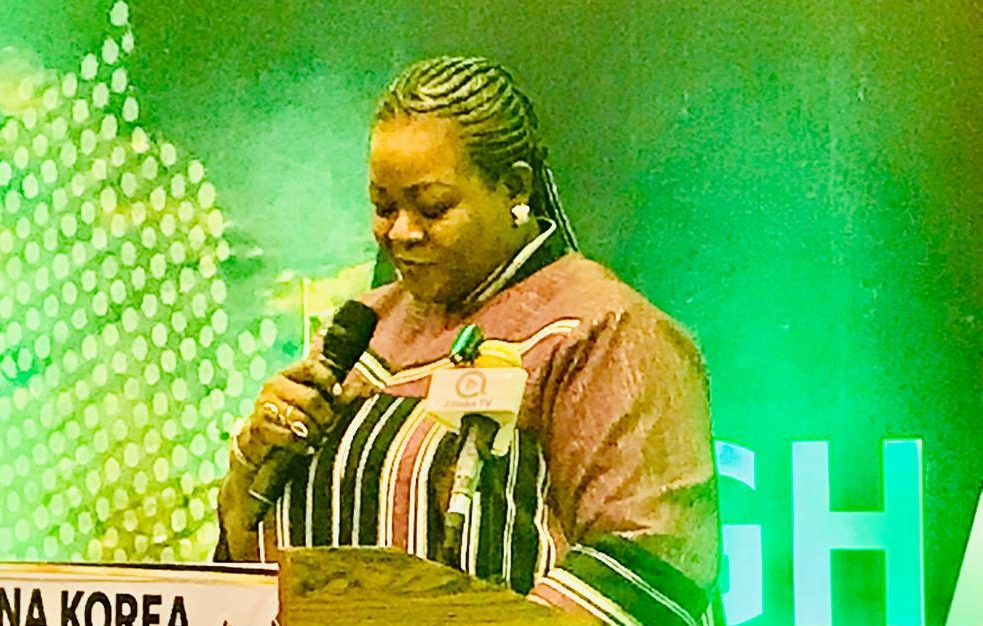
The Regional Minister appealed in a speech delivered on his behalf by Ms Anne Anatu Bogobiri at the Ghana–Korea Business Forum 2026.
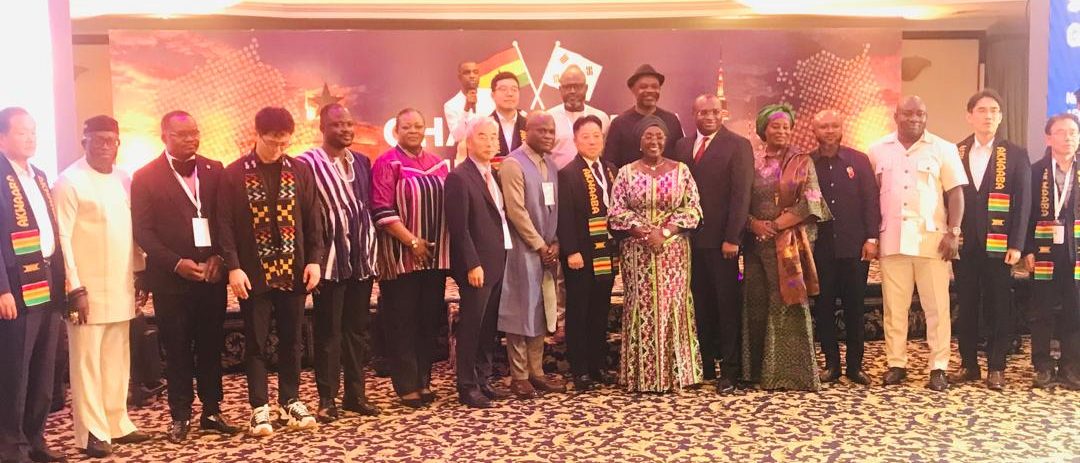
Addressing the Korean delegation, government officials, business executives and technology partners, Ms. Bogobiri said the Upper East Region was prepared to move beyond discussions towards practical investment partnerships with South Korean companies.
“The Regional Minister asked me to carry one simple message: The Upper East Region is not only open to Korean partnership, but it is also ready for a Korean partnership!” she declared.
She expressed appreciation to Mr. Cheol Soo Lee, Chief Executive Officer of A-Tech Group Korea, the Daejeon Defence Industry Cooperative Association (DICA) and Digital Eye Africa Limited for facilitating the engagement and bringing the Korean delegation to Ghana.
According to her, the Upper East Regional Coordinating Council and A-Tech Group Korea had, over the past year, developed a framework of cooperation covering drone and satellite technology, skills development, academic exchange and the revival of the region’s agro-industrial facilities.
She disclosed that the discussions had been consolidated into a Memorandum of Understanding (MoU) between the Upper East Region and the Korean team, subject to approval by the relevant authorities.

A major component of the proposed partnership is a programme with Bolgatanga Technical University (BTU) to introduce drone and satellite remote-sensing capabilities to northern Ghana, with the University of Technology and Applied Sciences (UTAS) in Navrongo also identified as an academic partner.
PEARL Framework Offers Investment Opportunities
Ms. Bogobiri said the region’s investment drive was anchored in the PEARL Framework 2026–2035, which stands for Prosperity through Enterprise, Agriculture and Regional Livelihoods.
She described PEARL as a 10-year development blueprint estimated at GH¢8.6 billion, covering all 15 districts and municipalities, eight sectors and 23 flagship projects.
The framework, she explained, was developed to harness the region’s economic potential, address infrastructure and agricultural challenges, promote private-sector investment and improve livelihoods.
She noted that the plan had been validated through consultations with traditional authorities, district assemblies, farmers, women’s groups, traders and private-sector stakeholders in Bolgatanga.
According to her, the Upper East Region possessed significant investment assets, including the Tono, Vea and Tamne irrigation schemes, which provide opportunities for year-round agricultural production.
She also identified the Pwalugu Tomato Factory, Zuarungu Meat Factory, Pusu-Namongo Cotton Ginnery and Bolgatanga rice mills as agro-industrial facilities with potential for rehabilitation and renewed production.
Other investment opportunities include the region’s established livestock and guinea fowl production, gold resources around Talensi and the strategic Paga border corridor, which provides access to markets in the Sahel.
“The Upper East has the land, we have the people and now the plan. What we seek from Korea is the know-how and partnership to move faster,” she stated.
Region Targets Korean Technology for Agricultural Transformation
The Regional Minister identified precision agriculture, drone technology, satellite applications, geospatial mapping, water management and industrial cooperation as key areas where South Korean expertise could make a significant difference.
She explained that farmers in the region continued to suffer crop losses due to drought, flooding and fall armyworm infestations, often because threats were detected too late.
She said the adoption of drones and satellite-based monitoring systems could provide early warnings, map farmlands, monitor crop conditions and guide the application of fertilisers and agrochemicals.
The proposed intervention, she noted, could begin with the Tono, Vea and Tamne irrigation schemes, where the benefits of precision agriculture could be demonstrated and subsequently extended to other farming communities.
On geospatial technology, she said accurate mapping of land, settlements and properties would strengthen district-level planning, improve revenue mobilisation and support the monitoring of water resources and land restoration activities, particularly in mining communities.
Water management was another priority, with the region seeking Korean expertise in water treatment, small-scale purification systems and efficient irrigation technologies to address the needs of households and farmers.
BTU, UTAS to Benefit from Technology and Skills Transfer
The Regional Minister also stressed the importance of skills development and technology transfer, arguing that sustainable investment must empower local people to operate, maintain and manage the technologies introduced.
She therefore called on Korean technology companies and institutions to collaborate with Bolgatanga Technical University, UTAS and other technical institutions to train young people in drone operation, equipment maintenance, Geographic Information Systems (GIS), cybersecurity and coding.
“Technology only lasts when local people can run and repair it,” she emphasised, urging investors to prioritise local capacity development and employment creation.
She further invited Korean companies to explore opportunities in agro-industrial processing, particularly the revival of tomato, rice, meat and cotton processing facilities.
According to her, these facilities already have land, buildings and community support, making them attractive opportunities for investors willing to partner with the region to restore their productive capacity.
She added that drone and geospatial technologies could also support national security agencies in addressing security challenges in the region’s border communities, subject to Ghana’s laws and in collaboration with the relevant national authorities.
Upper East Pledges Accountability to Investors
To assure prospective investors of a conducive partnership environment, the Regional Minister outlined the region’s commitment to providing a clear development plan, a coordinated investment process and transparent accountability mechanisms.
She said the Regional Coordinating Council would serve as the single point of contact for Korean investors, facilitating engagements with district assemblies, traditional authorities and relevant national institutions.
She also disclosed plans to establish an independent PEARL Fund to mobilise development resources, with a Board of Trustees, a citizens’ oversight committee and published accounts to promote transparency and accountability.
She stressed that the region wanted partnerships that would deliver lasting benefits through technology transfer, environmental protection, local employment and institutional capacity building.
“We want projects that will still be running long after the ribbon is cut. We want legacy!” she declared.
Five Proposals Presented to Korean Delegation
As part of efforts to translate the business forum into concrete development outcomes, the Regional Minister proposed five areas of immediate collaboration.
These include establishing a drone and precision-agriculture pilot project on at least one irrigation scheme, beginning with either Vea or Tono in the next farming season, and setting up a technology and skills training centre at Bolgatanga Technical University, with UTAS as a partner.
He also proposed a community water-treatment demonstration project in at least one district, a visit by a Korean business delegation to Bolgatanga to assess the region’s irrigation schemes and agro-industrial facilities, and the establishment of a joint working group involving the Regional Coordinating Council, A-Tech Group Korea and the two universities.
The proposed working group, she explained, would help translate the business-to-business discussions into concrete project agreements.
She identified Dr. Bishop A. Kolgo as the region’s focal person for follow-up engagements and encouraged participating companies to submit their contact details to facilitate further discussions.
Regional Minister Invites Korean Investors to Bolgatanga
The Regional Minister reiterated the region’s readiness to work with South Korean investors, describing the proposed partnership as an opportunity for both sides to benefit from their respective strengths.
“In the Upper East, we have a saying that one hand cannot tie a bundle. In this instance, Korea brings technology and experience, while the Upper East Region brings land, water, people and a plan. Together, we can tie this bundle,” she said.
The Regional Minister expressed his anticipation of welcoming the Korean delegation to Bolgatanga to explore investment opportunities and advance discussions into projects that would directly improve the lives of residents.
He commended A-Tech Group Korea, DICA and Digital Eye Africa Limited for their commitment to strengthening Ghana–Korea business relations and wished participants a successful forum.
Source: Felix Nyaaba/expressnewsghana.com
About Author