2027 Budget Will Drive Industrialisation, Create Jobs and Strengthen Ghana’s Economy – Alamzy

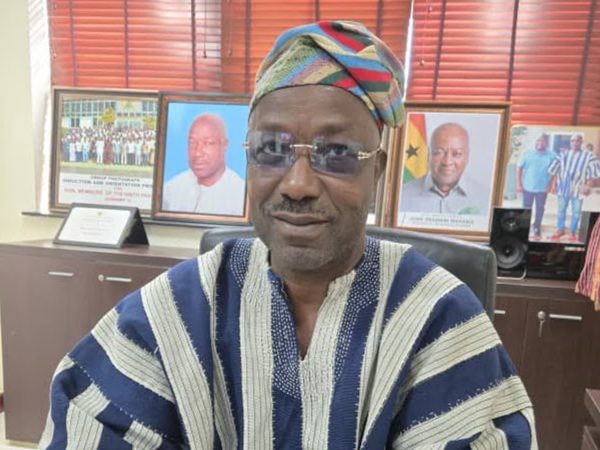
The Member of Parliament for Chiana-Paga, Hon. Nikyema Billa Alamzy, has described the 2027 Budget Statement and Economic Policy as an innovative and unprecedented roadmap for Ghana’s economic transformation, industrialisation and job creation.
He said the budget, presented to Parliament by the Minister for Finance, Dr. Cassiel Ato Forson, was strategically designed to strengthen the economy, expand critical infrastructure and create employment opportunities through investments in key productive sectors.
Contributing to the parliamentary debate on Thursday, November 19, 2026, Mr. Alamzy dismissed criticisms by the Minority that the budget was empty, arguing that its policies and allocations demonstrated a clear commitment to national development.
“Mr. Speaker, this budget is a cream of the crop. This budget is very unprecedented. This budget is very innovative,” he declared.
According to him, the 2027 Budget is anchored on eight strategic pillars, all supporting one overarching objective: jobs, jobs and jobs.
He identified stability, agriculture, energy, critical minerals, tourism and culture, textiles, medicine and technology as key areas expected to drive the country’s economic growth.
24-hour economy and the New Economy are complementary
Mr. Alamzy also rejected suggestions that the government was abandoning its flagship 24-hour economy policy in favour of the newly introduced New Economy initiative.
He explained that the two programmes were distinct in their operational approaches, financing arrangements and objectives, insisting that they were designed to complement Ghana’s broader development agenda.
He described the 24-hour economy as a private-sector-driven, incentive-based initiative intended to encourage businesses to operate across multiple shifts, increase production and create employment.
He cited incentives, including the proposed waiver of import duties on machinery for qualifying businesses, as measures intended to encourage private-sector participation and industrial expansion.
In contrast, he explained that the New Economy was a government-led intervention focused on financing and developing critical public infrastructure to support economic transformation.
He referenced the government’s planned GH¢10 billion investment in core public infrastructure, describing it as a major component of the New Economy agenda.
The 24-hour economy is a private-sector network
It is about incentive-based initiatives. It is focused on shift operations and the creation of jobs. The New Economy, on the other hand, is a public-sector network. It is a government-driven programme,” he explained.
He further argued that the New Economy had defined implementation timelines, whereas the 24-hour economy was intended to operate as a continuing framework for expanding production and employment.
GH¢48 billion education allocation hailed
Turning to education, the Chiana-Paga MP commended the government for what he described as a historic allocation of GH¢48 billion to the education sector in the 2027 Budget.
He said the allocation would support infrastructure expansion, improve access to education and accelerate efforts to end the double-track system in senior high schools.
According to him, GH¢1.37 billion had been earmarked for interventions aimed at ending the double-track system, while GH¢11.2 billion would support the construction and upgrading of infrastructure across educational institutions.
He also highlighted allocations of GH¢537 million for the No-Fees-Stress policy, GH¢227 million for teacher trainee allowances and GH¢169 million for basic education fees.
Additionally, he cited GH¢50 million allocated to special schools and GH¢1.6 million for capital grants, arguing that the budget demonstrated attention to different levels and categories of education.
Mr. Alamzy maintained that the allocations reflected the government’s determination to address infrastructure deficits and improve the quality of education, rather than concentrating resources on only secondary and tertiary institutions.
He particularly welcomed the planned investment in ending the double-track system, which he blamed on the previous administration’s handling of the Free Senior High School policy.
He urged the Minority to acknowledge the government’s education interventions instead of dismissing the entire budget as empty.
Challenges Minority over galamsey criticism
The MP also took a swipe at the Minority over its criticism of the government’s efforts to combat illegal mining, popularly known as galamsey.
He questioned the approach adopted by the previous administration in tackling the menace, recalling what he described as political theatrics rather than effective action.
Mr. Alamzy insisted that the 2027 Budget should be assessed on the strength of its policies, financial commitments and potential to deliver tangible development outcomes.
He urged Parliament to support the government’s economic programme, arguing that the investments outlined in the budget would provide the foundation for industrial growth, infrastructure development and sustainable job creation.
The 2027 Budget Statement, presented by Finance Minister Dr. Cassiel Ato Forson, is expected to guide the government’s fiscal and economic priorities for the coming year, with emphasis on macroeconomic stability, productive-sector expansion, infrastructure development and employment generation.
Source: Felix Nyaaba/expressnewsghana.com
About Author