

India-Ghana Agricultural MoU to Boost Food Security and Deepen Africa-India Ties
Five-year pact targets tomato production, cassava and yam processing, technology transfer and agricultural research
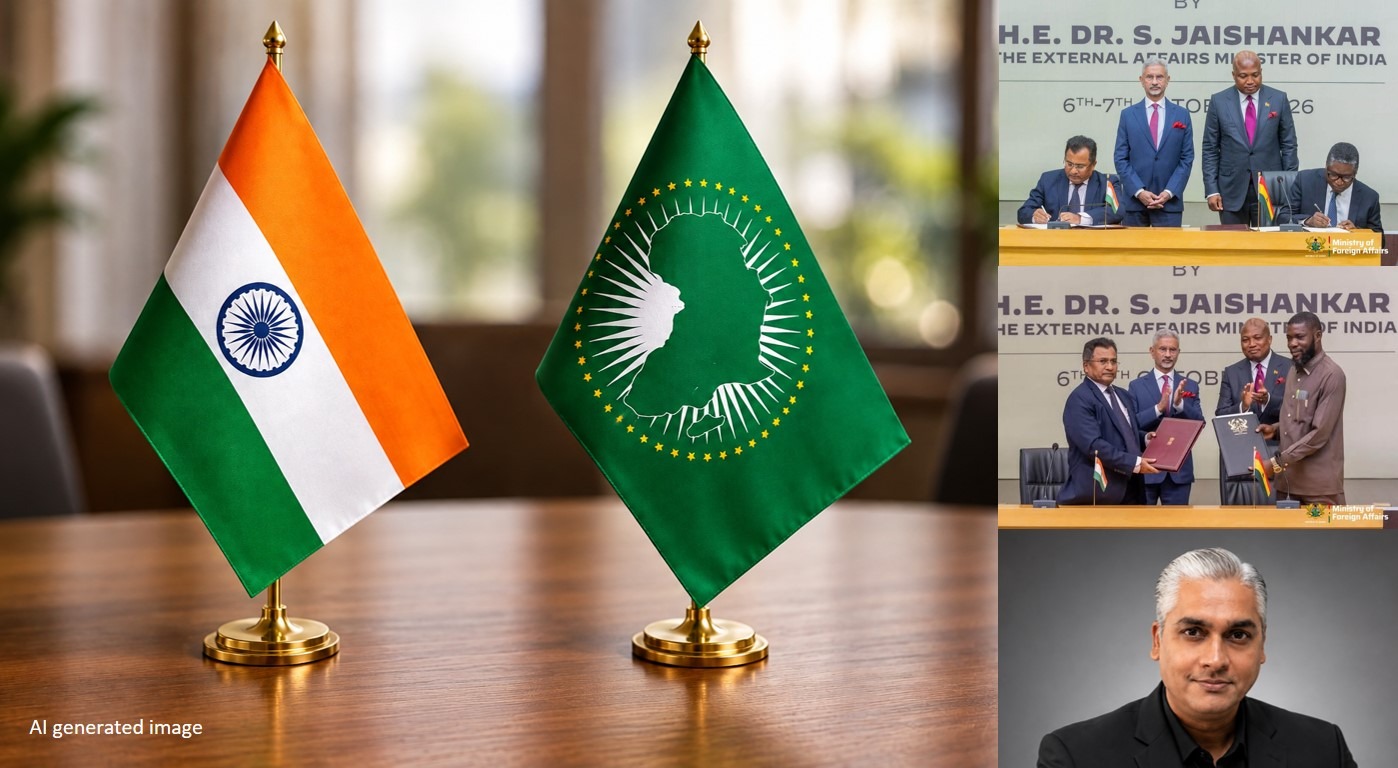
India and Ghana have signed a five-year Memorandum of Understanding (MoU) to strengthen agricultural research, education and technology transfer, in a move expected to boost food production, improve post-harvest management and deepen cooperation between Africa and India.
The agreement, signed on October 10, 2026, between the Indian Council of Agricultural Research (ICAR), New Delhi, and Ghana’s Crops Research Institute (CSIR-CRI), Accra, seeks to promote scientific collaboration and the adoption of improved agricultural technologies to support Ghana’s agricultural development.
The signing took place in the presence of India’s External Affairs Minister, Dr S. Jaishankar, and Ghana’s Foreign Affairs Minister, Samuel Okudzeto Ablakwa.
The partnership will initially focus on vegetable crop research, particularly tomato production, alongside cassava and yam processing, value addition and improved post-harvest management.
Under the arrangement, ICAR will support the introduction and adoption of high-yielding tomato varieties and proven agricultural technologies to strengthen domestic production and help address challenges within Ghana’s agricultural value chain.
Facilitated by Ghanaian agricultural enterprise Arima Farms Ltd., the collaboration will also promote joint research projects, scientific exchanges, capacity building and institutional cooperation between the two countries.
The initiative is expected to contribute to reducing post-harvest losses, improving agricultural productivity and creating opportunities for knowledge sharing that could benefit farmers, researchers, and agribusinesses.
Commenting on the agreement, Gautam Karve, Editor-in-Chief of the World Media Organisation, said the partnership reflected the longstanding relationship between India and Africa and the potential of practical cooperation to deliver benefits to citizens.
“India and Africa share deep-rooted historical ties built on trust, solidarity and mutual respect,” Mr Karve said.
He noted that partnerships focused on research, technology, and knowledge exchange could help both regions address shared development challenges, particularly food security and economic growth.
“Partnerships such as the India–Ghana agricultural MoU demonstrate how cooperation in research, technology, and knowledge exchange can create practical benefits for people,” he stated.
Mr Karve added that stronger India-Africa relations could support employment generation, agricultural development and greater self-reliance across both regions.
“Stronger India–Africa relations will contribute to food security, economic growth, employment generation and a more self-reliant future for both regions,” he said.
The five-year agreement represents an opportunity for Ghana and India to strengthen agricultural institutions, share expertise and explore practical solutions to production and processing challenges.
As implementation progresses, the partnership’s impact will depend on the effective transfer of technology, sustained institutional collaboration and the ability to translate research findings into tangible benefits for farmers and the wider agricultural sector.
Gautam Karve Editor-in-Chief, World Media Organisation
About Author