ECOWAS Must Unite Against Climate Change, Mining Destruction — Gambia MP Billay Tunkara
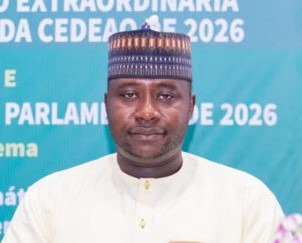
The Leader of the Gambian Parliamentary Delegation to the ECOWAS Parliament and Majority Leader of the Gambia National Assembly, Hon. Billay G. Tunkara, has called for a collective West African response to climate change. He warns that the region cannot afford fragmented national efforts in confronting worsening environmental challenges.
According to him, although West African countries contribute relatively little to global carbon emissions, they are among the regions bearing the brunt of climate change through extreme heat, changing rainfall patterns, flooding, erosion, environmental degradation and displacement.
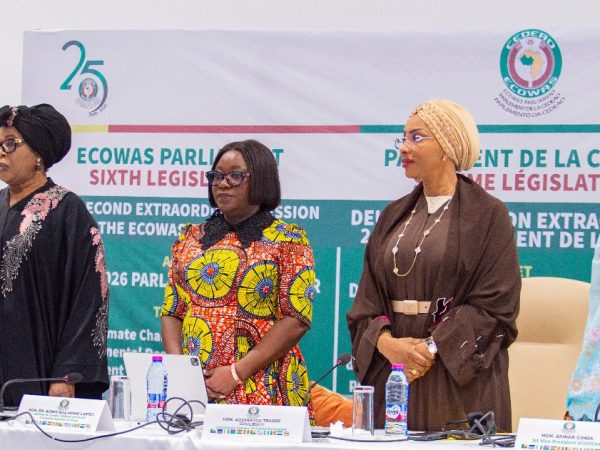
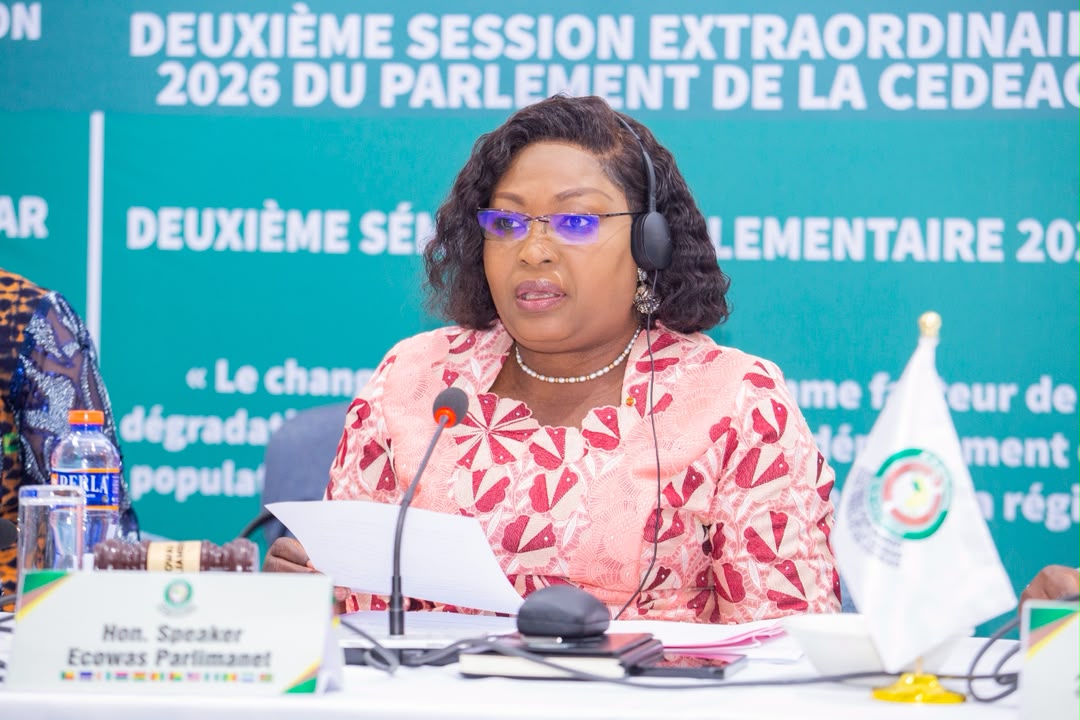
Speaking in an interview with ExpressNewsGhana after the ECOWAS Parliamentary Seminar and Legislative meeting in Accra, Mr. Tunkara said the discussions had reinforced the need for ECOWAS member states to develop coordinated policies and commit domestic resources to climate financing.
“Climate change is a living reality, whether we know it or not. It is a reality, and we must live with it,” he said.
He said the seminar had demonstrated that climate financing could no longer be left solely to international organisations and donor agencies, stressing that national governments must begin making meaningful allocations towards climate-related interventions in their budgets.
“Climate finance should not be left in the hands of donor agencies and international organisations. As parliamentarians, we should also prioritise it in our national budgets so that we can appropriate funds specifically geared towards climate financing,” he stated.
Mr. Tunkara said parliamentarians across the ECOWAS region had a responsibility to take the lessons from the seminar back to their respective countries and push for stronger measures to address the effects of climate change.
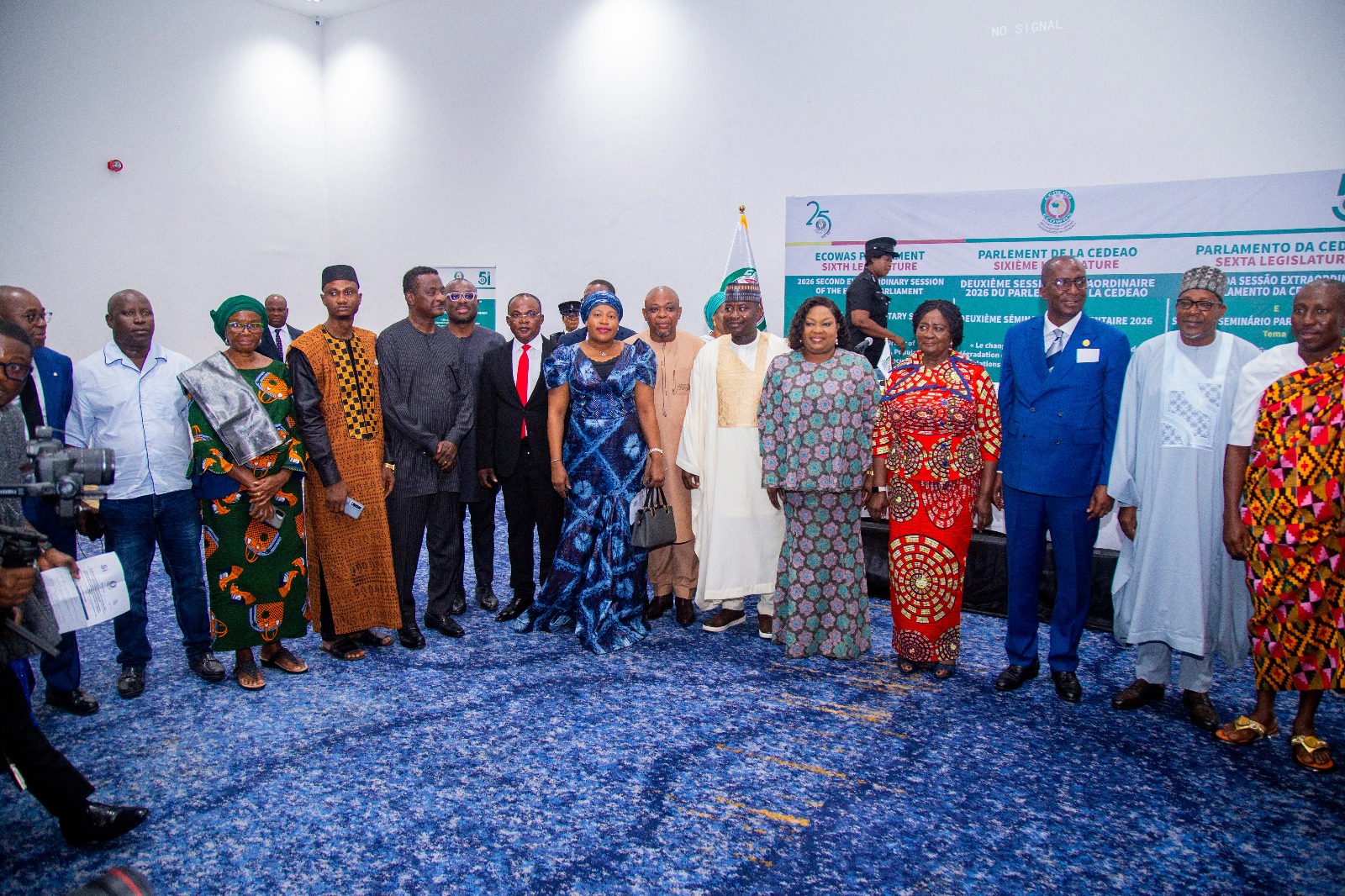
He particularly called for greater policy harmonisation among ECOWAS member states, arguing that environmental challenges do not respect national borders and therefore require coordinated regional action.
“How do we come together? We have to fight it collectively,” he stressed.
He pointed to the changing rainfall patterns, heatwaves, erosion and flooding as clear evidence that climate change was already affecting communities across the region.
He also raised concerns about the environmental consequences of mining activities, particularly where abandoned mining sites are left without adequate reclamation.
Mr. Tunkara questioned how governments could allow environmentally sensitive areas to be degraded through mining and subsequently fail to restore the land.
“Man and his environment really need to interact. We need to interact positively to make sure that we make this planet safer for people or generations yet unborn,” he said.
The Gambian legislator also challenged governments to demonstrate greater political commitment to environmental protection, arguing that signing international agreements and declarations would have little impact without concrete action at the national level.
He cited the Paris Agreement and other international commitments, saying governments must back such commitments with domestic resources and political will.
Laws are not the problem
On whether West African countries have sufficiently strong legal frameworks to combat climate change, Mr. Tunkara said the region already had adequate laws and legal instruments, but implementation remained the major challenge.
“Our legal regimes are very strong. We have very good legal instruments, but the devil lies in implementation,” he said.
He attributed the implementation gap partly to political considerations, particularly when governments become reluctant to enforce environmental regulations against powerful business interests.
He said political parties often campaign on environmental protection while in opposition, but the challenge arises when they assume power and are confronted with competing economic and political interests.
“We can have the best law, but if the leadership is not willing politically to have that political will to ensure that we go by the dictates of the laws and the instruments, we don’t go anywhere,” he cautioned.
Mr Tunkara therefore called for stronger political leadership and courage to enforce environmental laws irrespective of the interests involved.
Africa must stop exporting raw materials
The Gambian Majority Leader also criticised Africa’s continued dependence on the export of unprocessed mineral resources, particularly gold, arguing that the continent must move beyond extracting raw materials and exporting them for processing elsewhere.
He said Africa’s inability to fully integrate the primary, secondary and tertiary stages of production could be traced partly to the legacy of colonial economic structures.
According to him, African countries must develop industries capable of refining and adding value to their natural resources before exporting them.
“The primary stage is where you go out and explore the raw material. The secondary stage is where you refine and process and add value. The third stage of production is distribution and marketing. These stages have to have that interlinkage,” he explained.
Mr. Tunkara said African countries had for too long remained focused on extracting raw materials while allowing other countries to undertake the more profitable stages of processing, refining, and manufacturing.
He urged African leaders to develop what he described as an “industrial mind” capable of transforming the continent’s enormous natural resource wealth into sustainable economic development.
He identified affordable and reliable electricity as a critical foundation for industrialisation, stressing that no country could successfully transition from raw material production to manufacturing without solving its energy challenges.
“No country will develop in Africa if you don’t have a solution to your energy situation that is electricity. Once you have electricity at affordable rates, then you can talk about industrialisation,” he said.
Dual Parliamentary Role a Major Challenge
Asked about his personal challenges as both a member of the Gambian Parliament and the ECOWAS Parliament, Mr. Tunkara identified time and the duality of responsibilities as his greatest difficulties.
He explained that his responsibilities as Majority Leader of the Gambian National Assembly, coupled with his role as a Deputy Speaker of the ECOWAS Parliament and Chairman of the ECOWAS Parliament’s Budget Committee, placed significant demands on his time.
He said he was currently championing discussions on enhancing the powers of the ECOWAS Parliament and introducing direct elections for its members.
According to him, representatives should be directly elected by citizens to serve in the regional parliament, with a clearly defined mandate focused on advancing regional integration.
He argued that the current arrangement creates competing responsibilities for legislators who must simultaneously serve national and regional parliamentary obligations.
“The duality of my membership really causes constraints and challenges. It is mind-draining, time-consuming and difficult,” he said.
Mr. Tunkara said a stronger ECOWAS Parliament would also be better positioned to help ensure the implementation of key regional protocols, including the ECOWAS Trade Liberalisation Scheme (ETLS), Interstate Road Transit (ISRT) and the ECOWAS Brown Card Scheme.
He maintained that the ECOWAS integration agenda could only succeed if regional institutions were empowered to translate agreed protocols into enforceable measures within member states.
He said the ultimate objective should be to strengthen regional integration, promote free movement of people and goods, deepen intra-regional trade and enable West African countries to collectively confront challenges such as climate change, environmental degradation and economic dependency.

Source: Felix Nyaaba/expressnewsghana.com
About Author