
President Mahama Assent 24-Hour Economy bill to Law
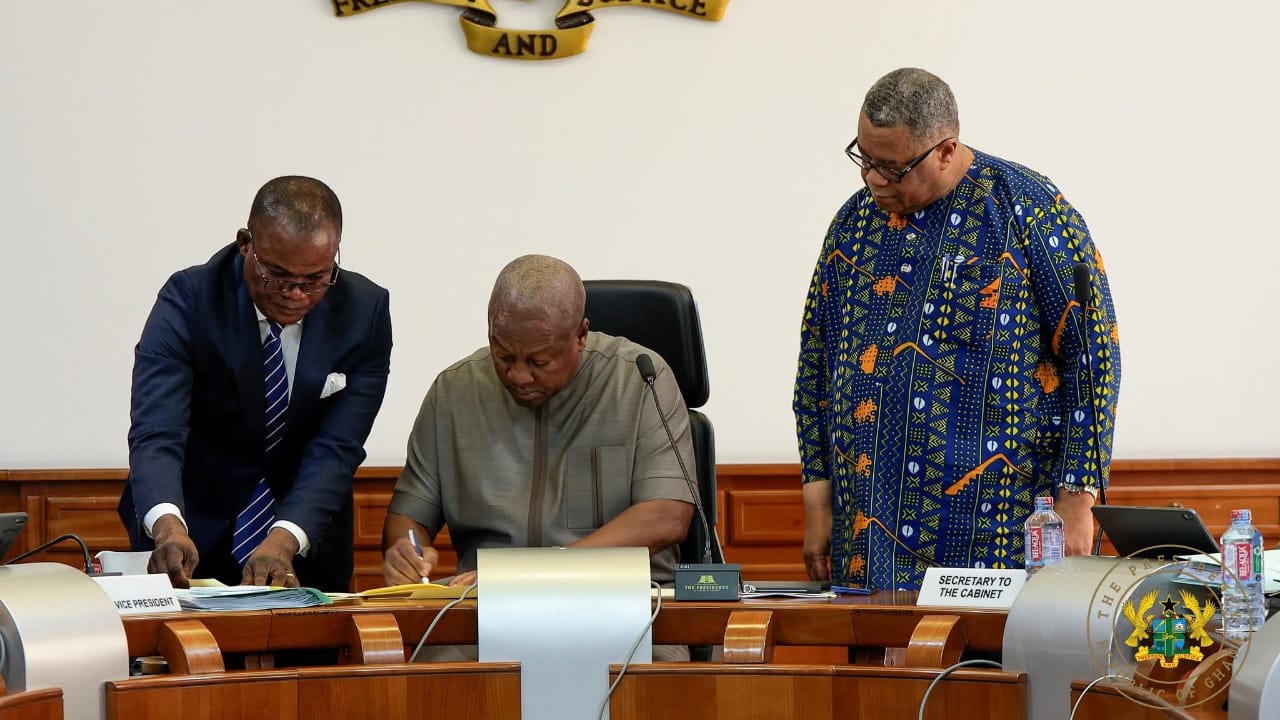
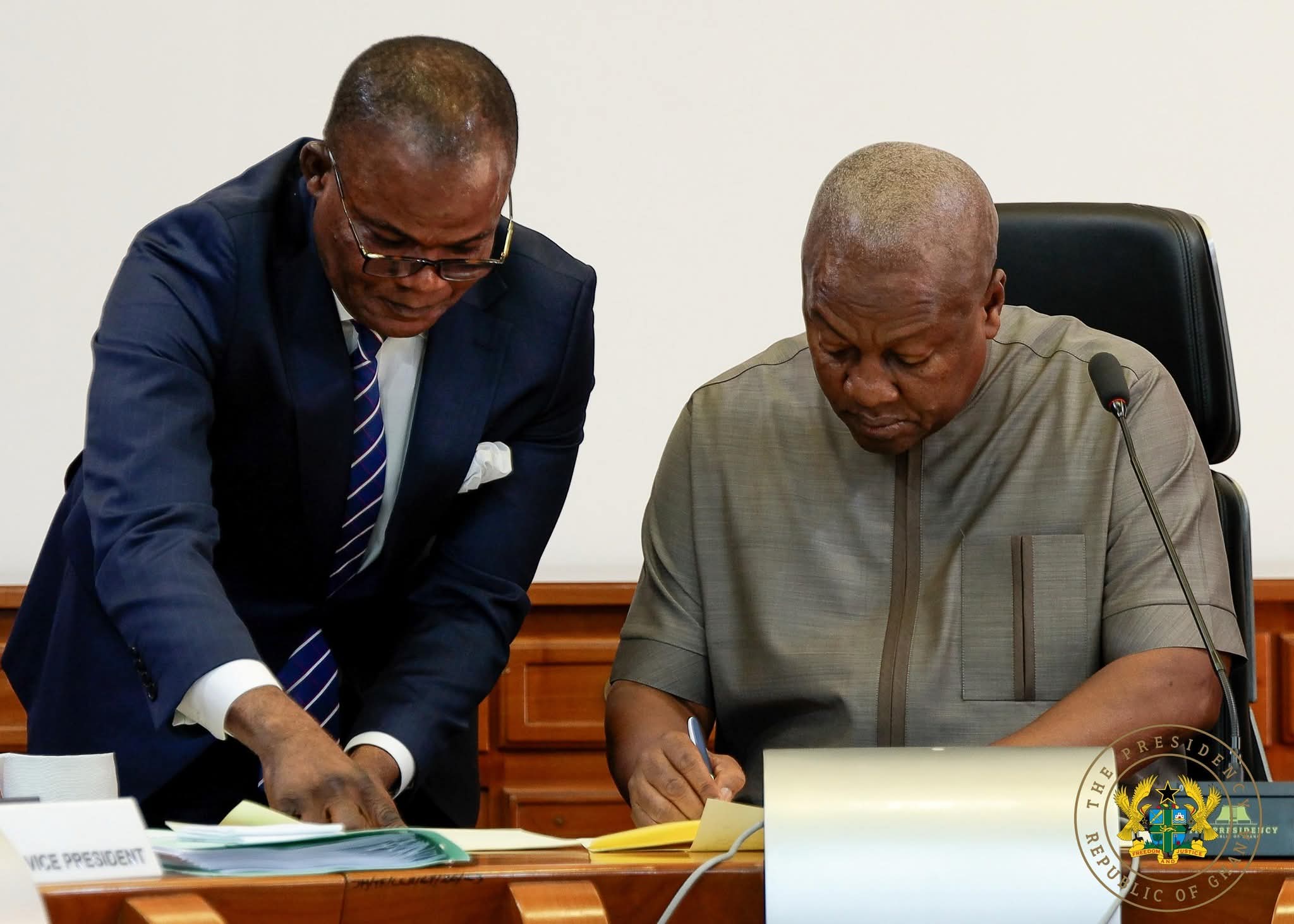
President John Dramani Mahama on Thursday, February 19, 2026, assented to the 24-Hour Economy Authority Bill, 2025, during a brief ceremony held ahead of the 13th Cabinet meeting in Accra.
Speaking after signing the bill into law, President Mahama described the legislation as a major pillar of his administration’s economic transformation agenda.
He noted that the 24-hour economy policy had been one of the most anticipated initiatives by Ghanaians and formed a central part of his government’s strategy to drive inclusive growth, industrial expansion, and sustainable job creation.
According to him, the process leading to the passage of the bill required careful consultations and due diligence to ensure that the policy was backed by a strong legal and institutional framework capable of delivering long-term results.
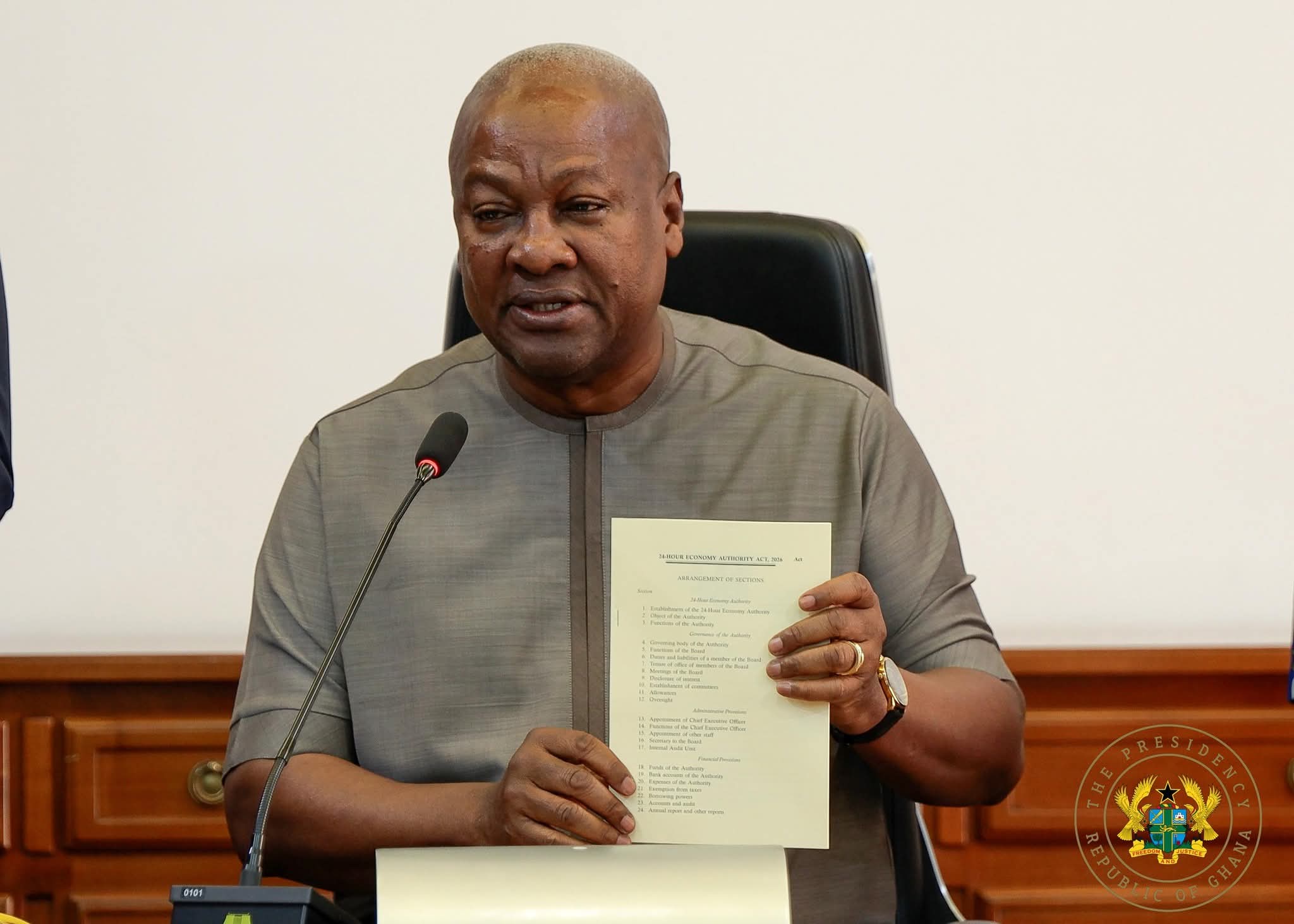
The new law establishes a 24-Hour Economy Authority as the central coordinating body responsible for implementing and overseeing the policy nationwide.
The Authority is mandated to align public and private sector efforts, remove regulatory and bureaucratic bottlenecks, and create the enabling environment necessary for businesses to operate beyond the traditional eight-hour work structure.
It will work closely with key ministries, local government authorities, financial institutions, and industry players to ensure smooth coordination and effective rollout.
The legislation provides for the development of targeted incentive packages to encourage businesses to adopt round-the-clock operations.
These incentives are expected to include tax breaks, access to affordable financing, regulatory reforms, and infrastructural support.
The policy also prioritises strategic sectors such as manufacturing, agro-processing, healthcare, logistics, tourism, ICT, and other high-employment industries that can sustain shift-based systems.
President Mahama emphasised that with the legal framework now in place, the focus must shift from planning to implementation.
He stressed that both local and foreign investors were eager to see concrete measures that would make the policy attractive and viable.
The initiative aims to maximise the use of national infrastructure, improve productivity, enhance export competitiveness, and significantly reduce unemployment, particularly among young people.
The 24-hour economy concept is designed to stimulate continuous economic activity by ensuring adequate power supply, security, transport systems, and digital infrastructure to support extended business hours.
Analysts believe that if effectively executed, the policy could broaden Ghana’s production base, strengthen value chains, and position the country as a leading industrial and services hub in the West African sub-region.
With presidential assent secured, the next phase will involve operationalising the Authority, issuing detailed implementation guidelines, and engaging stakeholders to ensure the smooth and timely rollout of the policy across the country.
Source: Felix Nyaaba/expressnewsghana.com
About Author