
Parliamentary Press Trained to Strengthen Reporting on Public Finance

Members of the Parliamentary Press Corps (PPC) have received specialised training aimed at strengthening their capacity to report accurately on Ghana’s public financial management system and national budget processes.
The three day training workshop, organised under the auspices of the Parliament of Ghana with support from the World Bank and the United Kingdom’s Foreign, Commonwealth and Development Office (FCDO), was held at Koforidua in the Eastern Region, from March 13 to March 16, 2026.
The programme was designed to equip the parliamentary reporters with the technical knowledge required to interpret complex financial data and translate it into clear, accessible information for the public, thereby enhancing transparency and accountability in governance.
Speaking during a presentation on Ghana’s public financial management framework, former Director at the Ministry of Finance, Ms Eva Mends, emphasised the importance of fiscal discipline and coordinated economic policymaking in safeguarding Ghana’s macroeconomic stability.

She cautioned that while there are often strong calls for increased government spending to address development challenges, such demands must be balanced carefully against broader economic considerations.
According to her, expanding the fiscal deficit through excessive borrowing could undermine economic stability by triggering higher inflation, rising interest rates and other adverse macroeconomic outcomes.
“If the pressure mounts and government decides to increase the deficit and borrow more just to satisfy demands, all the indicators will shift,” she warned.
Ms. Mends explained that positive macroeconomic indicators, such as a stronger cedi and lower inflation, often depend on strict control of government expenditure.
“When the cedi gains strength, everybody is happy. When inflation falls, everybody is happy. But you cannot at the same time ask for increased expenditure,” she said.
She noted that maintaining fiscal discipline frequently requires difficult policy choices between expanding public spending and protecting the overall stability of the economy.

Highlighting the role of the Finance Minister in managing the nation’s finances, she said the position demands strong leadership to ensure that government spending aligns with the broader macroeconomic framework.
According to her, ministers and Members of Parliament often advocate for increased funding for projects within their sectors, which is legitimate.
However, she stressed that the Finance Minister must ensure that overall spending remains within sustainable limits, with the support of the President.
Ms. Mends also warned against state institutions and state-owned enterprises making financial commitments outside the approved national budget framework, explaining that such decisions can destabilise government finances.
She noted that unexpected obligations frequently force government to divert resources from planned programmes to settle commitments that were not properly captured in the budget.
She further explained that economists assess the health of an economy using internationally recognised indicators such as inflation, interest rates, economic growth and fiscal discipline.
Lower interest rates, she added, allow businesses in the private sector to borrow more affordably and invest in productive activities that support economic growth.

However, she acknowledged that economic management in developing countries such as Ghana remains challenging because governments must respond to numerous development needs with limited financial resources.
“When government spends in developed countries, the money circulates within their economies. But in our case, much of the increased demand goes into imports, so we do not get the full multiplier effect,” she explained.
She added that the rapid spread of technology and social media has also raised public expectations for development, as citizens are constantly exposed to the lifestyles and infrastructure available in advanced economies.
“We see lifestyles in developed countries every day on our phones and we want the same things, but we do not yet have the resources to provide them,” she noted.
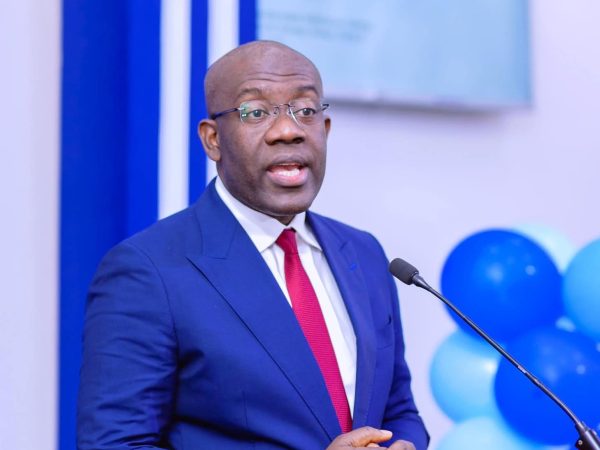
Director of Media Relations at Parliament, David Sebastian Damoah, also addressed the workshop and urged parliamentary reporters to deepen their understanding of public financial management to strengthen democratic accountability.
He explained that the effectiveness of Parliament is closely tied to how well its work is communicated to the public.

According to him, debates and decisions within the legislative chamber only become meaningful to citizens when journalists interpret them accurately and present them in ways that people can easily understand.
Mr. Damoah said the responsibility of parliamentary journalists goes beyond simply reporting proceedings, noting that it requires a deeper understanding of how state resources are mobilised, allocated and spent.
“It is a fundamental pillar of democratic accountability that requires a sophisticated grasp of how state resources are mobilised and spent,” he said.
He observed that parliamentary oversight of national budgets and public expenditure often involves highly technical processes that can appear complex to ordinary citizens.
He therefore stressed that journalists must play a critical role in demystifying these processes so that citizens can better hold government accountable for the management of public funds.
The training programme includes sessions on Ghana’s Public Financial Management framework, techniques for analysing national budgets, and understanding the auditing lifecycle.
Participants are also being introduced to the role of the Ghana Audit Service in ensuring that public funds are used for their intended purposes without financial leakages.

Mr. Damoah further encouraged journalists to balance speed with accuracy in their reporting to prevent misinformation about the nation’s economic situation.
He expressed appreciation to development partners, including the World Bank and the FCDO, for supporting the capacity-building programme.
Dean of the Parliamentary Press Corps, Simon Agianab, also underscored the critical role parliamentary journalists play in bridging the gap between complex policy decisions and public understanding.
He said effective parliamentary reporting is central to promoting transparency, accountability and democratic governance in Ghana.

According to him, journalists covering Parliament have the responsibility not only to report proceedings but also to interpret complex legislative and economic issues in ways that ordinary citizens can understand.
“In today’s fast-evolving governance and economic environment, policies and fiscal decisions are often communicated in technical language that can be difficult for ordinary citizens to understand,” he said.
Mr. Agianab noted that the workshop provides an opportunity for members of the Parliamentary Press Corps to deepen their understanding of key economic issues frequently discussed in Parliament, including public debt management, the national budget statement, the Medium-Term Expenditure Framework and reports from the Auditor-General.
He expressed confidence that the knowledge gained during the programme would enhance the quality, accuracy and depth of parliamentary reporting in Ghana.
Mr. Agianab also expressed appreciation on behalf of the press for the World Bank, the FCDO and other development partners for supporting the initiative, noting that investing in the capacity of the media ultimately strengthens transparency, accountability and democratic governance in the country.
Source: Felix NYAABA//expressnewsghana.com
About Author