

THE RISE OF UNQUALIFIED NUTRITION COMMENTARY AND SCIENTIFIC CONFUSION IN PUBLIC HEALTH EDUCATION
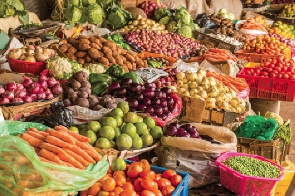
The growing popularity of nutrition discussions on radio, television, social media and community platforms has helped increase public awareness about food, diet and healthy living.
However, an assessment by Express News Ghana has uncovered growing concerns among health professionals about the quality, accuracy and scientific credibility of some nutrition information being shared with the public.
The assessment found that while many individuals genuinely seek to educate people about healthy eating, some lack the academic training and professional qualifications required to accurately interpret and communicate nutrition science. Health experts warn that this trend has the potential to create confusion, spread misinformation and influence dietary choices that may not be supported by scientific evidence.
To better understand the implications of this growing concern, Express News Ghana spoke with Curtice Dumevor, a Public Health Nutrition Expert and Social Commentator, who provided further insight into the issue.
According to Mr. Dumevor, one of the major challenges is the increasing oversimplification of nutrition science in public discussions.
“Nutrition is a scientific discipline built on principles of biochemistry, physiology and public health. When complex nutritional concepts are simplified beyond recognition or presented without scientific context, people are likely to misunderstand important health messages,” he explained.
Mr. Dumevor noted that dietary fats are among the most misunderstood nutrients in public discussions. He explained that fats, scientifically known as lipids, consist of different compounds including triglycerides, phospholipids and cholesterol. These compounds perform important functions in the body and should not all be treated the same.
He further explained that cholesterol is transported in the bloodstream by lipoproteins. Low density lipoproteins, commonly known as LDL, transport cholesterol to body tissues and can increase the risk of cardiovascular disease when levels become excessive. High density lipoproteins, known as HDL, help remove excess cholesterol from tissues and return it to the liver, providing a protective effect against heart disease.
According to him, public discussions often fail to distinguish between saturated fats, unsaturated fats and trans fats, leading many people to believe that all fats are harmful.
“Such generalizations prevent people from making informed dietary choices and create unnecessary fear about foods that can be part of a balanced and healthy diet,” he said.
Mr. Dumevor also highlighted widespread misconceptions about carbohydrates. He explained that carbohydrates are not simply sugars, as many people assume, but include a broad range of nutrients that serve as the body’s primary source of energy.
He noted that staple foods such as cassava, maize, rice, yam and plantain contain complex carbohydrates that play an important role in human nutrition.
“These foods are not inherently unhealthy. Their effects on health depend on factors such as portion sizes, preparation methods and overall dietary patterns,” he stated.
The nutrition expert further pointed to misunderstandings surrounding vitamins and micronutrients. He explained that vitamins are classified into fat soluble and water soluble groups, each serving essential functions that support growth, immunity, metabolism and overall health.
He emphasized that many locally available foods including vegetables, fruits, legumes, fish, eggs and whole grains provide important nutrients required for healthy living.
Another concern raised by Mr. Dumevor is the increasing promotion of ultra processed foods and highly refined packaged products as alternatives to traditional diets.
According to him, scientific evidence continues to show that excessive consumption of ultra processed foods is associated with obesity, hypertension, type 2 diabetes, cardiovascular disease and other non communicable diseases.
“In many cases, traditional diets based on whole and minimally processed foods provide significant nutritional benefits and should not be dismissed simply because they are considered old fashioned,” he noted.
On measures needed to address the situation, Mr. Dumevor called for stronger regulatory oversight to ensure that nutrition education is guided by qualified professionals.
He recommended that professional and regulatory bodies strengthen monitoring and enforcement measures to prevent the misuse of professional titles and reduce the spread of inaccurate nutrition information.
He also urged media organizations to verify the credentials of individuals invited to discuss nutrition and health matters before providing them with public platforms.
In addition, he advocated the creation of a national registry of certified nutrition and dietetics professionals to make it easier for media houses and the public to identify qualified experts.
Mr. Dumevor further called for the development of standardized national nutrition communication guidelines to promote consistency and scientific accuracy in public health messaging.
He stressed the importance of strengthening public health education through schools, healthcare facilities and community outreach programmes while also improving media literacy so that citizens can better evaluate health information and distinguish evidence based advice from personal opinion.
In conclusion, Mr. Dumevor emphasized that protecting the integrity of nutrition communication is essential for improving public health outcomes and reducing the growing burden of diet related diseases.
“Nutrition education must be guided by science, professional competence and evidence based practice. Accurate information empowers people to make healthier decisions and contributes to a healthier society,” he concluded.
About Author