

Finance Minister Distort Economic Data to Discredit NPP achievements – Minority

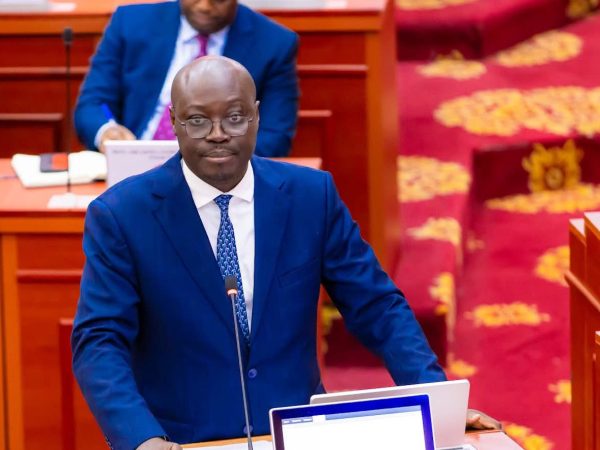
The Minority in Parliament has launched a scathing attack on Finance Minister Dr. Cassiel Ato Forson, accusing him of manipulating economic data and taking undue credit for gains stemming from debt restructuring initiatives spearheaded by the previous New Patriotic Party (NPP) administration.
Speaking at a press conference in Parliament on Tuesday, the Minority described the recently presented 2025 Mid-Year Budget Review as “deceptive, misleading, and laced with propaganda economics.”
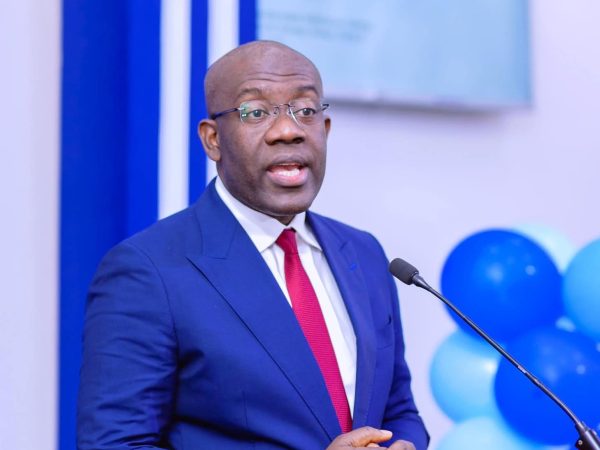
The press briefing was led by former Finance Minister and MP for Karaga, Dr. Mohammed Amin Adam, and supported by MPs Kojo Oppong Nkrumah and Dr Gideon Boako.
Dr. Amin Adam challenged Dr. Forson’s claims of progress in key economic indicators, particularly Ghana’s debt-to-GDP ratio, which the Finance Minister stated had declined from 61.8% in December 2024 to 43.8% by June 2025.
“The reality is that this government is reaping where it did not sow. the $5 billion debt cancellation and $4.7 billion in debt service savings came from restructuring agreements secured by the Akufo-Addo administration,” Dr. Amin Adam asserted.
He further accused Dr. Forson of hypocrisy, highlighting that he had previously dismissed the debt restructuring programme initiated under President Akufo-Addo, only to now tout its benefits.
The Minority also questioned the Minister’s reference to Ghana’s improved credit rating by Fitch Ratings in June 2025, which upgraded the country’s status from ‘Restricted Default’ to ‘B-‘.
According to Dr. Amin Adam, the credit upgrade was a direct result of agreements concluded in October 2024, before the current administration assumed office.
“To claim credit for a Fitch upgrade that clearly references a $13.1 billion Eurobond restructuring secured by the previous government is dishonest,” he said.
The Minority also accused Dr. Forson of presenting inaccurate data regarding the performance of the cedi.
They challenged his claim that the local currency had appreciated from GH¢17 to GH¢10.4 to the dollar, insisting the cedi never reached GH¢17 under the NPP administration.
Kojo Oppong Nkrumah, MP for Ofoase-Ayirebi, argued that the Minister’s own budget document indicated a 42.6% appreciation, implying a prior exchange rate of approximately GH¢14.7—not GH¢17 as claimed.

Beyond the figures, the Minority called attention to what they described as worsening economic conditions for ordinary Ghanaians, citing rising costs of basic commodities such as cement (from GH¢90 to GH¢130), bread (GH¢18 to GH¢45), deodorant (GH¢35 to GH¢70), and kenkey (GH¢3–5 to GH¢5–7).
“These are the real economic indicators,” said Oppong Nkrumah. “Ask the traders at Malata Market or the residents of Techiman and Chorkor, life is getting harder, not better.”
The Minority also criticized the government’s revenue strategy, pointing to a GH¢3 billion shortfall despite the introduction of eight new taxes, including a 3% Growth and Sustainability Levy and a 21.9% VAT on non-life insurance.
They condemned the recent hikes in utility tariffs, including a 139.3% increase in electricity prices reported by the Ghana Statistical Service, and opposed the new Fishing Levy on marine gas oil.
“A fiscal strategy that relies heavily on taxing struggling Ghanaians is not reform—it’s extortion,” the MPs said.
While acknowledging the continuation of some beneficial NPP-era policies such as the Gold Purchase Programme and tight monetary policy, the Minority urged the government to adopt better currency management strategies, promote public-private partnerships, and withdraw burdensome taxes to combat inflation and ease the pressure on households.

They also called on the Bank of Ghana to disclose details of its monetary financing activities, particularly in relation to the financing of Goldbod, warning that any lack of transparency could breach Ghana’s obligations under the IMF programme.
“We urge the Finance Minister to show humility, acknowledge the solid economic foundation laid by the previous administration, and prioritize measures that bring real relief to Ghanaians,” Dr. Amin Adam concluded.
Source: Felix Nyaaba/expressnewsghana.com
About Author