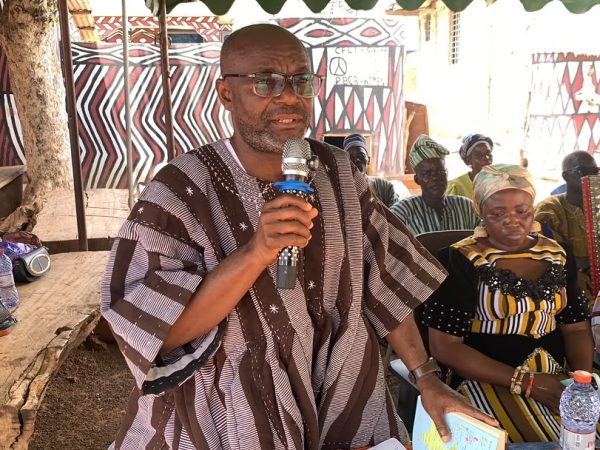

World Fisheries Day: Wa East MP Demands Bold Investment to Save Ghana’s Fisheries

The Chairman of Parliament’s Food and Agriculture Committee, Dr. Godfred Seidu Jasaw, has called on government and stakeholders in Ghana’s fishing industry to take decisive steps to secure the future of the sector.
He made the call during a statement to Parliament to mark World Fisheries Day 2025, celebrated under the theme: “Resetting Fisheries: Chief Fishermen and Fishmongers as Guardians and Partners in Sustainable Fisheries Management.”
Dr. Jasaw described the theme as a timely call to action, reflection, and reimagining of Ghana’s fisheries—not as a sector in crisis, but as one with the potential to drive prosperity and ecological balance.
Established in 1998, World Fisheries Day honours fishers whose work sustains communities and contributes significantly to national development.
According to the MP, Ghana’s fisheries sector is at a critical crossroads.
He highlighted major challenges, including declining fish stocks caused by overfishing, illegal and unregulated fishing, and climate change; degradation of marine ecosystems; and increasing economic vulnerability among artisanal fishers and fishmongers—particularly women who dominate post-harvest activities.
“If we do not act decisively, we risk not only the collapse of a vital industry but the erosion of a way of life,” he warned.
Dr. Jasaw stressed that Ghana is currently in a “reset phase,” requiring a renewed and responsible relationship with marine resources.
This, he said, involves rebuilding fish stocks based on scientific data, investing in value-added and cold storage facilities, improving market access, and recognizing traditional leaders and fishmongers as key partners in sustainable fisheries Management.

He noted that chief fishermen play crucial roles in coastal communities by regulating access to fishing grounds, mediating disputes, and safeguarding indigenous knowledge.
However, their authority has weakened due to poor integration into formal governance, encroachment by industrial trawlers, and inadequate legal and logistical support. He urged the government to restore and strengthen its role by formalizing its responsibilities in fisheries legislation.
Turning attention to fishmongers, predominantly women, Dr. Jasaw commended their contributions to processing, transporting, and marketing fish nationwide.
He said their work sustains local economies but is constrained by limited access to credit, lack of cold-chain infrastructure, and inconsistent markets. He called for the establishment of cooperatives and revolving funds tailored to their needs, noting a potential partnership with the Women’s Bank.
“When we empower fishmongers, we empower families, markets, and the nation,” he emphasized.
Outlining necessary reforms, Dr. Jasaw urged the full operationalization of the new Fisheries Act (Act 1146), which places strong emphasis on aquaculture.
He recommended the promotion of household aquaculture supported by traditional authorities and local knowledge, expansion of the Canoe Identification and Monitoring System to curb illegal fishing, and establishment of additional Marine Protected Areas co-managed with communities.
He further called for integration of climate resilience measures, including mangrove restoration and early warning systems and public–private partnerships to improve landing sites, cold storage, and value chains.
He also called for a multi-sectoral policy framework, strengthened coordination between national and regional agencies, and investment in data systems to support evidence-based decision-making.
Dr. Jasaw concluded by urging Ghana to lead by example in sustainable fisheries management.
“Let this World Fisheries Day 2025 be remembered not just as a commemoration, but as a turning point,” he said. “Let us reset, rebuild, and transform our fisheries for national transformation.
Source: Felix Nyaaba/expressnewsghana.com
About Author