

MP for Afram Plains North Hails Okada Legalization as Jobs Boost for Youth, Stresses Safety Regulation

The Member of Parliament for Afram Plains North, Hon. Worlase Kpeli, has expressed strong confidence that the legalization of commercial motorcycle and tricycle operations (commonly known as Okada and Pragya) will significantly boost youth employment across the country, especially in rural areas where they are a primary mode of transport.
The MP’s statement follows Parliament’s passing of the Road Traffic Amendment Bill, on Thursday, December 11, 2025, which provides the legal backing for the commercial operation of these motor vehicles.
Road Traffic Amendment Details
While the specific Act number is debated, the legislative changes are aimed at amending the Road Traffic Act, 2004 (Act 683) and subsequent amendments, such as the Road Traffic (Amendment) Act, 2020 (Act 1054), to create a legal framework for commercial use of motorcycles and tricycles for passenger services.
Key regulatory steps being pursued by the Ministry of Transport to formalize these operations include:
Mandatory Training and Licensing: Operators will be required to undergo formal training and obtain commercial riding licences from the Driver and Vehicle Licensing Authority (DVLA) before offering fare-paying services.
Safety and Enforcement: The new regulations are intended to improve road safety, reduce accident rates, and allow authorities to better enforce traffic laws, addressing the high number of motorbike-related accidents currently reported in hospitals.
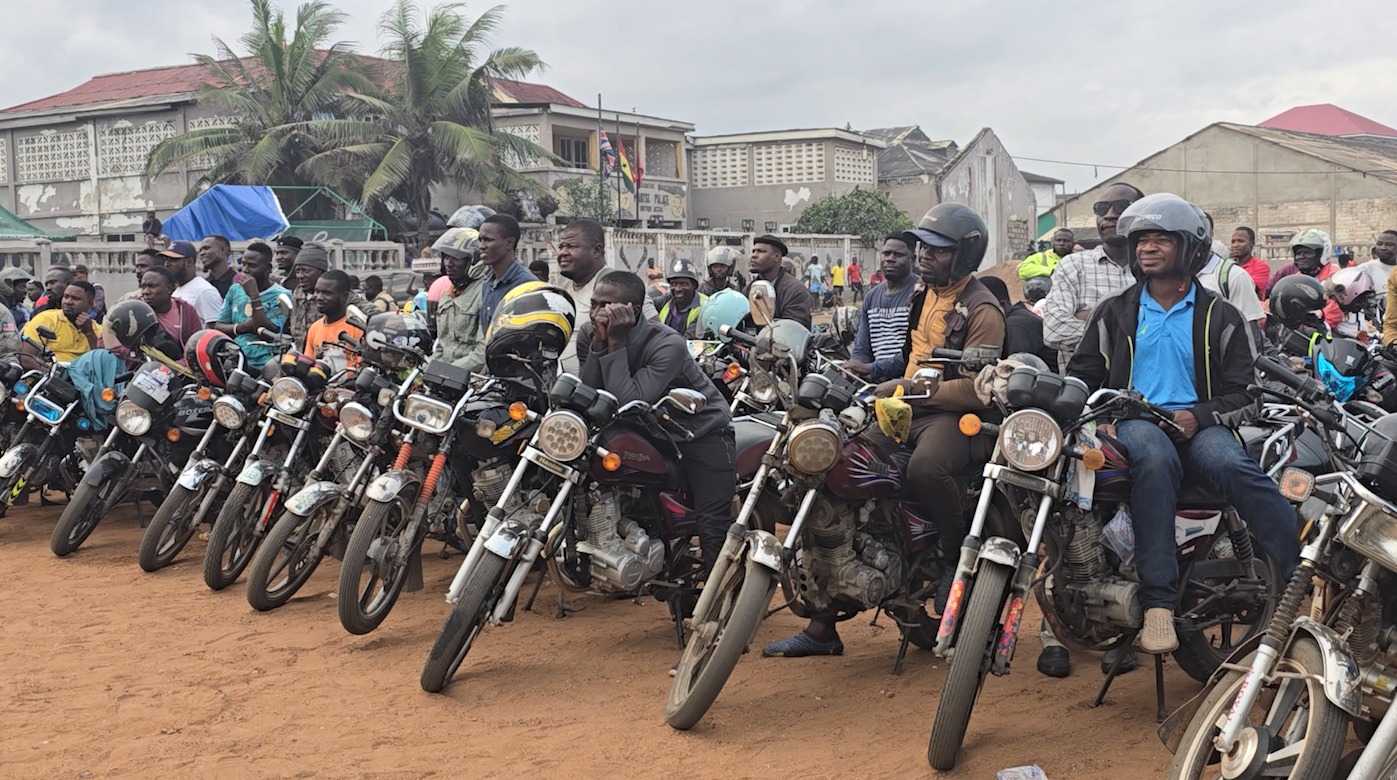
Specific Provisions: Further subsidiary legislation, such as amendments to the Road Traffic Regulations, 2012 (L.I. 2180), which previously prohibited commercial motorcycle use, is expected to set requirements for rider age (with 25 years having been proposed but objected to by riders), vehicle specifications (such as minimum engine capacity), franchise routes, helmet requirements, and compulsory union-affiliation for commercial riders.
MP’s Call for Responsible Implementation
While praising the bill as a “laudable idea” and a job creation intervention, Hon. Kpeli stressed that the success of the policy now rests heavily on the riders and regulatory stakeholders.
“If you look at the current trend, let’s say for in my constituency, if you go to a hospital, the accident victims you would find, about 90% of them had accidents due to motorbike crashes,” he noted, underscoring the severe safety concerns.
The MP called for a step-by-step measure in implementing the policy, not in haste. He cited examples from East Africa where successful implementation involves:
Mandatory psychological preparation and testing for commercial riders.
Association with a community association of riders that tracks and reports members who flout traffic laws, with specific identification numbers tagged to both the rider and their helmet.

Different licensing plates for private and commercial riders.
Hon. Kpeli stated that his immediate duty is to return to Afram Plains North to begin personally preparing and counseling the youth to embrace the business responsibly, ensuring they are psychologically prepared for the trade and its safety requirements.
The new regulations on Okada operations are expected to be enforced in collaboration with the National Road Safety Authority (NRSA) and the Motor Traffic and Transport Department (MTTD) of the Ghana Police Service.
This video discusses the legalization of okada and the proposed age restriction for operators under the new LI 2180: Okada Riders New Law: Operators must be at least 25 and union-affiliated under new LI 2180.
Source: Felix Nyaaba/expressnewsghana.com
About Author