

Sanctuaries Everywhere, Opportunities Nowhere : A question Ghana Must Confront
There is an uncomfortable truth many are hesitant to speak about, yet it confronts us daily in plain sight. When individuals and institutions with the financial strength to establish factories, agro processing centers, technology hubs, and other job creating ventures instead prioritize the expansion of church premises, a deep national contradiction emerges.
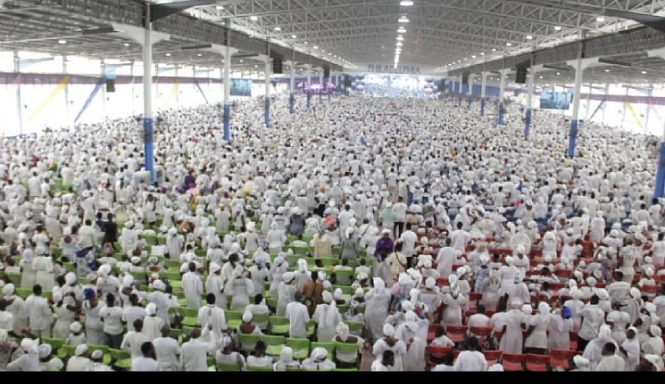
This contradiction becomes even more troubling when the same unemployed youth produced by weak industrial growth are the ones filling these vast auditoriums, praying fervently for jobs that the economic structure has failed to generate.
To begin with, it is important to state clearly that this is not an attack on religion. Faith remains a powerful force for moral guidance, social support, charity, and hope. Ghana’s religious institutions have played important roles in education, healthcare, and humanitarian work. Nevertheless, faith was never meant to replace productivity, nor was prayer designed to substitute deliberate economic planning. When spiritual spaces grow faster than productive enterprises, society begins to lean emotionally on religion while standing on an increasingly fragile economic foundation.

Against this backdrop, the issue of responsibility must be examined honestly. Wealthy religious leaders and institutions carry a significant moral burden in this conversation. Vast sums of money, largely contributed by ordinary citizens struggling with unemployment and rising living costs, are frequently invested in massive worship centers. Structures such as Adom Kyei Duah’s Second Chance Church auditorium, the Perez Dome, the Lighthouse Chapel cathedral, and several others stand as symbols of religious influence and architectural ambition. However, beyond weekly services and special programs, the critical question remains unavoidable. How many sustainable jobs do these projects create compared to the enormous capital invested in them?
At the same time, congregants themselves cannot be entirely absolved. Over time, many believers have been conditioned to equate physical church expansion with spiritual success. As a result, growth is measured by seating capacity rather than social impact. Applause often replaces accountability, while reverence discourages honest questioning. This culture makes it difficult for meaningful conversations about economic responsibility to take place within religious spaces.
Furthermore, the role of the state cannot be ignored. Weak industrial policy, limited incentives for large scale production, and an overly cautious approach to regulating powerful religious institutions have contributed to the imbalance. When governments fail to aggressively pursue manufacturing, technical education, and private sector expansion, churches inadvertently become emotional shelters for economic frustration. Prayer meetings then multiply where employment opportunities should have existed.
Looking outward provides valuable perspective. In many advanced countries, religion thrives peacefully without dominating the development agenda. Nations such as Germany, South Korea, China, and Singapore did not rise through the multiplication of worship halls. They developed through deliberate industrialization, investment in skills, innovation, and export driven production. Churches, mosques, and temples exist in these societies, yet they operate alongside factories, laboratories, and training centers, not in place of them. Faith and productivity coexist without confusion.
This leads to a truth that must be taught clearly and without fear. Prayer without production breeds dependency. Faith without industry produces frustration. A nation that builds auditoriums faster than it builds factories will inevitably generate more testimonies than jobs and more hope than opportunity. While hope is essential, it cannot feed families or stabilize economies on its own.
This does not suggest that churches must abandon physical expansion entirely. Rather, expansion must be redefined. A truly impactful modern church should view industrial ventures, vocational training centers, cooperative farms, startup incubators, and affordable housing as extensions of ministry. If even a fraction of the resources poured into mega auditoriums were invested in garment factories, food processing plants, renewable energy projects, or technology training hubs, the narrative would change dramatically. The same young people lining up for prayer would be lining up for employment.
In conclusion, the way forward requires balance, honesty, and courage. Religious leaders must boldly teach that God also works through planning, discipline, and productive systems. Congregants must find the courage to ask how their sacrifices translate into tangible social transformation. Government must reclaim development as a technical and policy driven responsibility rather than an expectation of divine intervention. Until these truths are confronted openly, the nation will continue to worship under magnificent roofs while opportunity remains painfully scarce.
Source:Curtice Dumevor -Public Health Expert and social analyst
curticedumevor25@gmail.com
About Author