ECOWAS Must Fast-Track Single Currency ‘ECO’ for Stronger Regional Trade- Hon. Eric Afful Urges
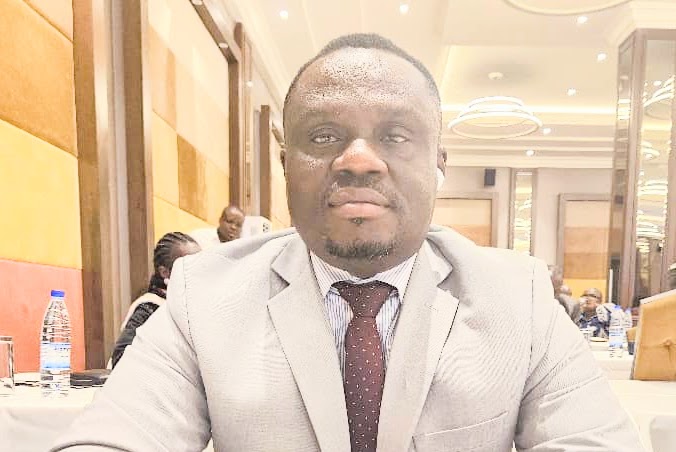
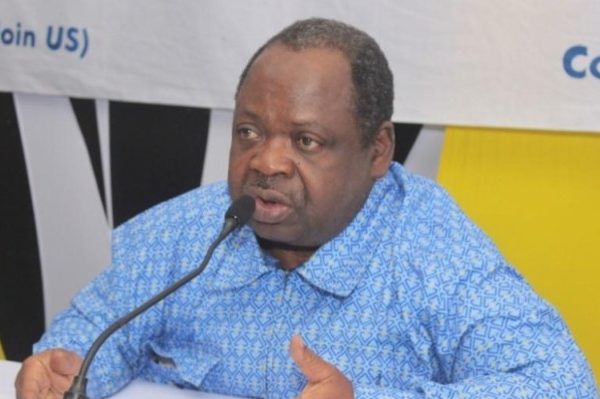
A member of Ghana’s delegation to the ECOWAS Parliament, Hon. Eric Afful, has called on leaders of the Economic Community of West African States (ECOWAS) to take decisive steps toward implementing the long-delayed single currency, the ECO, to enhance trade, economic integration, and regional development.
Speaking in an interview with ExpressNewsGhana after being sworn in as a member of the ECOWAS Parliament at its last sitting, Hon. Afful, who is a Member of Parliament for Amenfi West constituency in the Western Region of Ghana, emphasized that a single currency would strengthen the sub-region’s economic position globally, much like the Euro has done for the European Union.
“The single currency, just like the Euro for the European Union, gives Europeans high economic value in trade. It will be very helpful if ECOWAS adopts and implements the ECO to boost trade and commerce in West Africa,” he stated.
He lamented that despite decades of discussions and commitments, the ECO has remained on paper without concrete implementation.
“When I was in the university in 2000, ECOWAS had already begun talking about using one currency, the ECO. More than twenty years later, it has still not been realized. It’s time our Heads of State take a bold step and make it happen,” he urged.
Hon. Afful attributed the delay to stringent convergence criteria set for member states, which he believes should be reviewed to make implementation more achievable.

“We have to go back and review the convergence criteria. The few that all member countries can meet should be prioritized, and those that are too tight should be relaxed. Otherwise, we will continue talking about the ECO without progress,” he explained.
The Amenfi West MP, who was recently appointed Second Rapporteur on the ECOWAS Mines and Energy Committee, underscored the transformative potential of the ECO for regional integration and economic resilience.
“A single currency will help all member countries by ensuring the free flow of goods and services across borders. It will make West Africa a stronger economic bloc capable of competing with other markets around the world,” he said.
He added that the lack of a unified currency weakens the region’s bargaining power in international trade and diplomacy.
“Right now, the rest of the world treats us as individual countries. Despite having ECOWAS as a Parliament and Commission, we are still seen as divided. A common currency will unite us economically and make West Africa formidable,” he noted.
Hon. Afful, who is serving his third term in Ghana’s Parliament, expressed gratitude to his constituents and the national leadership for nominating him to represent Ghana at the ECOWAS level.
“I am very thankful to Parliament and my constituents for the trust they’ve placed in me. If you tell me to die for them, I will. To be part of Ghana’s delegation to ECOWAS and to the IMF and World Bank meetings is an honour I don’t take lightly,” he said passionately.
He also revealed that during his tenure at the ECOWAS Parliament, he intends to focus on advancing access to electricity across West Africa, leveraging the World Bank and IMF’s new initiative aimed at providing electricity to 1.2 billion people globally, including 300 million in Africa.
“I’ll use my position on the Mines and Energy Committee to push for West African countries to benefit from the IMF and World Bank’s energy programme. We must ensure that rural communities in our region also gain access to electricity,” he assured.
Touching on political stability in the sub-region, Hon. Afful expressed optimism that countries currently suspended from ECOWAS, including Niger, Mali, and Burkina Faso will soon return to the bloc.

“A mediation committee is being set up to engage these countries. We want to understand their concerns and help restore democratic governance so they can rejoin the ECOWAS family,” he revealed.
Hon. Afful further pledged to work diligently to uplift his constituency while representing Ghana and West Africa at the sub-regional level.
“I will not disappoint my people. I’ll work hard to ensure they benefit from development in areas like electricity, agriculture, healthcare, and human development,” he vowed.
The ECO, first proposed over two decades ago, aims to serve as the common currency for the 15 ECOWAS member states, promoting economic integration, reducing transaction costs, and enhancing intra-African trade.
However, repeated delays due to fiscal and policy divergences among member states have stalled its implementation.
Source: Felix Nyaaba/expressnewsghana.com
About Author