

OPEN LETTER TO THE SUPREME COURT OF GHANA

Subject: “No Contribution, No Chop” – A Married Woman’s Cry for Justice
To the Honorable Justices of the Supreme Court of Ghana,
I write to you today not only as a broadcast journalist but as a Ghanaian woman, a wife, a mother, and a witness to the silent, unpaid labour that holds our families and our nation together.
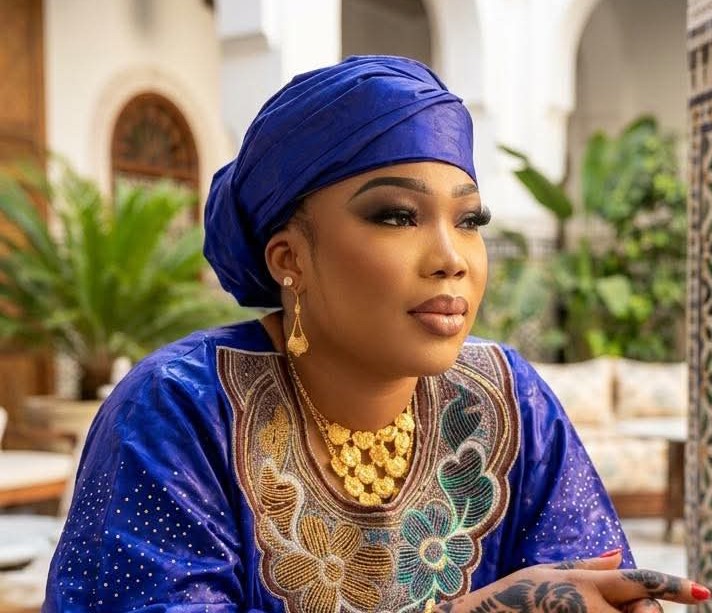
My name is Hajia Bintu Saana, and I am deeply troubled by the message being sent to women across this country following the Court’s recent rulings on marital property—a message being distilled into the now-famous phrase: “No contribution, no chop.”
With the greatest of respect for this Honorable Court, I must ask: Has marriage in Ghana been reduced to a mere financial transaction? And if only cash and receipts matter, what then becomes of the woman who sacrifices her career, her dreams, and her body to build a home?
I implore this Court to reconsider the broader implications of this ruling before marriage loses its worth entirely—and before Ghanaian women are left with no choice but to think otherwise.
The Invisible Ledger: What “Contribution” Really Means
The Court has stated that contribution may be financial or non-financial. Yet the loudest message reaching ordinary Ghanaian women is that if they cannot produce receipts, they own nothing.
But consider this: The 2020 Ghana Time Use Survey reveals that Ghanaian women spend an average of 6.4 hours daily on unpaid care and domestic work, compared to just 1.7 hours by men. A UN Women study further shows that women and girls aged 15 and above spend 15.5% of their time on unpaid domestic tasks—more than three times the 4.6% spent by men. Overall, women perform over 76% of all unpaid care work nationwide.
If this work were valued financially, unpaid care work in Ghana could represent up to 14% of our nation’s GDP. Yet it remains excluded from national accounts, invisible in our courts, and now, apparently, invisible in marriage.
Let me be direct: When a woman leaves her job to raise children—often at her husband’s request or under immense family pressure—when she cooks, cleans, fetches water, nurses the sick, and holds the family together, she is not “idle.” She is contributing 14% of this nation’s invisible economy. To suggest otherwise is not only unjust—it is economically blind.
The Woman Who Gave Up Her Dreams
Your Lordships, I have interviewed countless women across Accra and beyond who left promising careers—teachers, nurses, seamstresses, small business owners—because marriage demanded it. Their husbands said, “Stay home. Raise the children. I will provide.”
They obeyed. They sacrificed their passions, their dreams, their financial independence. They endured childbirth—a physical and emotional toll no receipt can capture. They raised generations. They kept homes.
And now, this Court tells them: “You own nothing. You contributed nothing.”
This is not justice. This is the legalization of economic abandonment.
Data from the Ghana Statistical Service shows that a typical Ghanaian woman works an average of 13 hours per day, yet only 40% of that work is paid. The remaining 60%—the cooking, the cleaning, the childcare, the care for the elderly and sick—is simply expected, demanded, and now, dismissed.
The Supreme Court itself has previously recognized, in cases such as Gladys Mensah v. Stephen Mensah, the value of non-monetary contributions to matrimonial property. And in Sarpong v. Sarpong, Justice Ackaah-Boafo explicitly included “non-monetary contributions such as domestic work, child-rearing, emotional support, and moral guidance” as factors courts must consider, according them “equal recognition”.
If that remains the law, then why has the public received a different message? Why are women across Ghana terrified that their decades of sacrifice count for nothing?
I respectfully submit that the Court must urgently clarify—publicly and unequivocally—that non-financial contributions are not merely “considered” but are given full, quantifiable weight in property distribution. A homemaker’s labor is not a gift; it is an investment. And every investment deserves a return.
When a Woman Raises a Child, She Raises a Nation
There is an African proverb: “When you educate a woman, you educate a nation.” I say: When you raise a woman, you raise a society. And when you undervalue a woman, you undermine that same society.
Every child raised in a stable home, every future citizen who learns values at their mother’s knee, every young person who becomes productive because someone was there to nurture them—that is the fruit of a woman’s unpaid labor.

To tell that woman that her sacrifice is not a “contribution” is to tell every mother in Ghana that her life’s work has no value. It is to tell every daughter that marriage is a trap, not a partnership. And it is to tell every young woman that if she must choose between career and family, she should choose career—because the law will protect only what she can prove with receipts.
Is that the kind of society we want to build?
A Call for Revision and Clarification Honorable Justices, I am not asking for special treatment. I am asking for equal treatment under the law.
I respectfully urge this Court to:
1. Issue a public clarification that non-monetary contributions—domestic work, child-rearing, emotional support, and the sacrifice of career opportunities—shall be given full and quantifiable weight in marital property distribution, consistent with Sarpong v. Sarpong.
2. Provide clear guidelines for lower courts on how to value such contributions, perhaps by reference to the market cost of domestic services, or by a presumption of equal partnership in long-term marriages where one spouse substantially sacrificed career for family.
3. Acknowledge that the marriage partnership is exactly that—a partnership—and that financial contribution, while important, is not superior to the labor of home and family.
I remind this Court that Ghana is a signatory to the Convention on the Elimination of All Forms of Discrimination Against Women (CEDAW) and the ILO Resolution on Decent Work and the Care Economy, both of which recognize unpaid care work as critical to sustainable development and call for its recognition and valuation.
A Final Plea
I am a journalist. I have seen the tears of women who gave everything to marriage and walked away with nothing. I have heard the stories of mothers who raised children alone while their husbands built careers, only to be told at divorce that they own no part of what they helped build.
I have watched Ghanaian women enter marriage with dreams—only to leave with scars and empty hands.
Do not let that be the legacy of this Court.
Marriage is not a transaction. It is a covenant. It is a partnership. And in every true partnership, the labor of both parties is valued—whether it produces a paycheck or a well-raised child.
I trust that this Honorable Court, in its wisdom, will hear the cries of Ghanaian women and act before marriage loses its worth entirely.
Respectfully submitted,
Hajia Bintu Saana
Broadcast Journalist
Accra, Ghana
About Author