


Chief of Staff Launches Book to Drive Public Service Reset

.... *Says Citizen Experience Must Define Governance*
The Chief of Staff, Dr Julius Debrah, has called for a bold transformation of Ghana’s public and civil service, urging state institutions to place citizens at the heart of governance in order to rebuild public trust and improve service delivery.
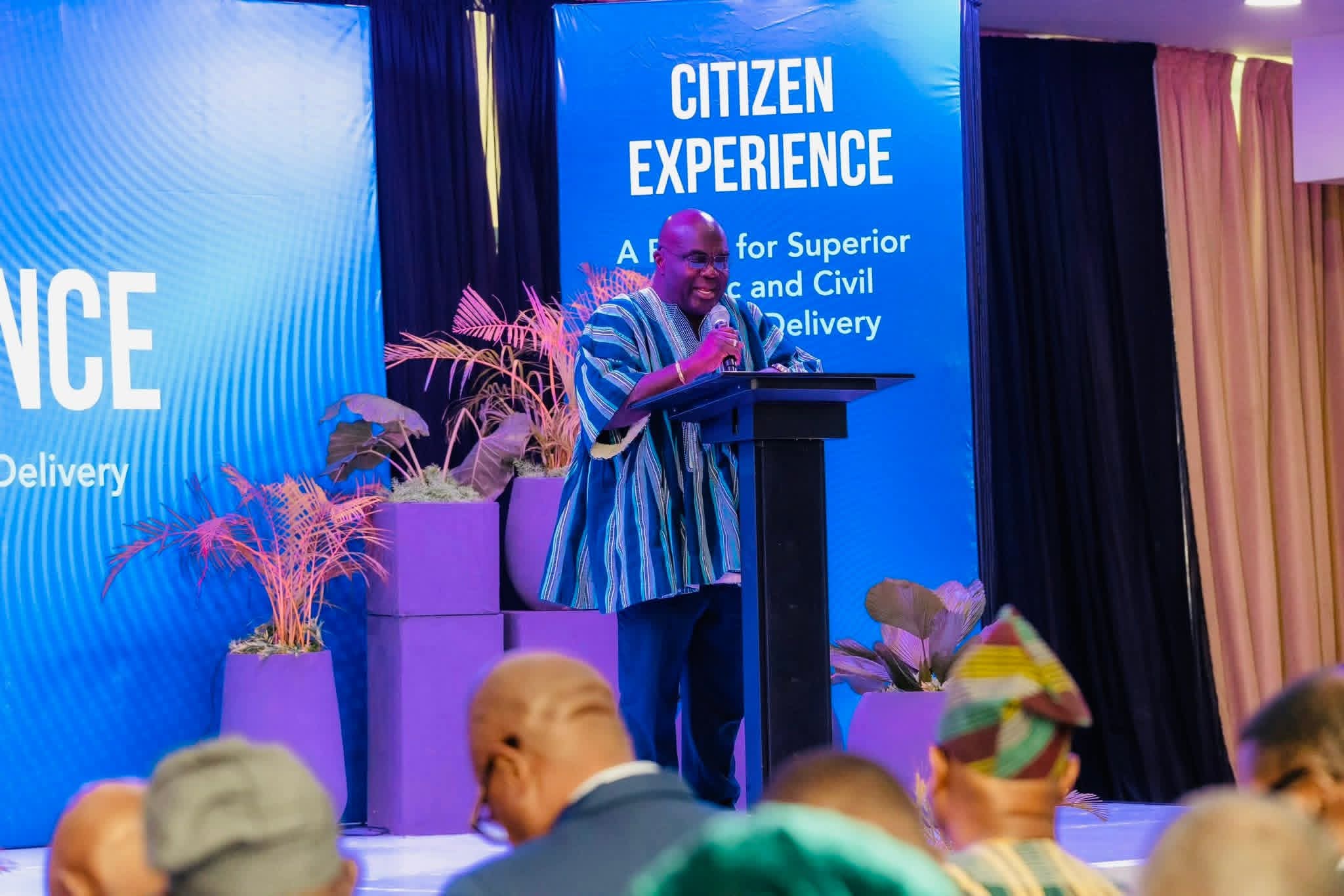
Speaking at the launch of the book, Citizen Experience: A Reset for Superior Public and Civil Service Delivery, which he co-authored with renowned academic Professor Robert E. Hinson, Dr. Debrah said the success of any government should not be measured by policies alone but by how ordinary citizens are treated when they seek public services.
The event was chaired by Mr. Ishmael Yamson and attended by Vice President Professor Naana Jane Opoku-Agyemang, who served as the Special Guest of Honour.
The ceremony also attracted ministers of state, senior public and civil servants, members of the diplomatic corps, development partners, academia, and civil society organisations.
*Putting Citizens at the Centre of Governance*
Addressing the gathering, Dr. Debrah said the inspiration behind the book was a deep conviction that public service exists solely to improve the lives of citizens.
“The titles are secondary. The motorcades are secondary. The memoranda and the meetings are secondary. All of them matter only to the extent that they make life better, fairer, easier, safer and more dignified for the people we serve.”
He noted that the real test of governance is experienced daily by ordinary Ghanaians at hospitals, schools, district offices and other public institutions.
Illustrating this point, he described the experiences of a mother travelling from a rural community to seek assistance, a young entrepreneur struggling to obtain business documents, and a pensioner seeking services after decades of national service.
“In each of these moments, the citizen is asking one quiet question: Does this country see me? That question is at the heart of this book.”
*Beyond Policies to Better Service Delivery*
Mr. Debrah disclosed that the publication originated from conversations with Prof. Hinson on how to make government institutions consistently responsive to citizens.
“The question was not how to inspire public servants for one afternoon, but how to make the machinery of the state behave every day as though the citizen matters.”
He described the collaboration as a blend of practical governance experience and academic research.
“I brought the memory of the Cabinet room and the frustration of good policies that fail at the point of delivery. Professor Hinson brought the rigour of frameworks. The tension between us made the book stronger.”
According to him, the book does not seek to apportion blame but rather offers practical solutions for improving governance.
Citizen Experience is a Governance Issue
The Chief of Staff stressed that public confidence in government is built through everyday interactions between citizens and frontline public officers.
“When a citizen is treated with fairness, clarity, speed and dignity, trust grows.
When a citizen is ignored or humiliated, trust erodes. Repeated over years, people do not just lose confidence in an office; they lose confidence in the promise of government itself.”

He emphasized that unlike customers in the private sector, citizens often have no alternative but to rely on public institutions.
“A customer can walk away. A citizen often cannot. The state therefore carries a higher moral responsibility. Citizen experience is not a customer service matter. It is a governance issue.”
Seven Standards for Public Institutions
Dr. Debrah explained that the book proposes seven key benchmarks that every public institution should use to assess the quality of its services:
Accessibility
Clarity
Speed
Dignity
Fairness
Consistency
Outcomes
“Every public institution should score itself honestly against these seven dimensions. If we cannot measure the experience, we cannot improve it.”
He also highlighted the crucial role of frontline public servants, describing them as the true face of government.
“The citizen may never meet a minister, but the citizen will meet the nurse at the desk, the clerk at the counter, and the teacher in the classroom. If that encounter is respectful, the state feels respectful.”
*Supporting President Mahama’s Reset Agenda*
Linking the publication to President John Dramani Mahama’s national Reset Agenda, Mr. Debrah said the government’s reform programme must be reflected in the quality and speed of services citizens receive.
*”A reset that the citizen cannot feel will remain incomplete* .”
He urged all public institutions to embrace innovation, accountability and empathy in serving Ghanaians.
*Tribute to Fallen Public Servants*
During his address, the Chief of Staff paid tribute to colleagues who lost their lives in last year’s helicopter crash while on official duty, describing their sacrifice as a reminder of the dedication required in public service.
“Service is not a slogan. It is a sacrifice.”
*A Call for a More Humane Public Service*
In his closing remarks, Mr. Debrah appealed to public servants across the country to recommit themselves to serving with integrity, compassion and professionalism.
“Let us build institutions that do not intimidate the citizen, but welcome the citizen. Let us make government less distant, less confusing, less indifferent. Let us make it more human.”
He reminded public officials that citizens may forget government programmes, but they will always remember how they were treated.
“The citizen will not remember every policy title. The citizen will remember how the state made them feel when they needed it most.”
Expressing hope that the book would inspire meaningful reforms across the public sector, he added:
“If this book helps one institution serve with greater dignity, it will have been worth writing. If it helps one citizen experience the state as a partner rather than an obstacle, then Professor Hinson and I will be grateful.”
He ended with a charge that encapsulated the central message of the publication:
“The highest honour in government is not to be served by the people. It is to serve them well. May God bless our homeland Ghana.”

Source: Felix NYAABA //expressnewsghana.com
About Author