

Building Peace in Bawku Beyond the Manhyia Peace Talks: Asserting the Role of Women
……….No peace agreement can endure without the involvement of women
Introduction
The climax of the ongoing Bawku peace talks on December 1, 2025, at the Manhyia Palace was marked by ululation from the youth, signalling renewed hope and optimism for the restoration of lasting peace in Bawku and its environs. However, beyond the successes of the peace talks brokered by the Asantehene lie the difficult task of reconciling broken relations, healing communities and rebuilding trust. Without a clear roadmap for these, the progress achieved now risks becoming more symbolic than a means to durable peace. The day after the conflict resolution is the day for peace building and healing, which must assert, not sideline, the role of women.
Unlike the peace talks, which were dominated by men, genuine and lasting peace in Bawku cannot be sustained without women’s involvement. For decades now, the women of Bawku have borne the heaviest economic, social, and emotional burdens of the conflict. They have in many situations, restrained their relatives from taking part in violence, consoled affected family members, and maintained social harmony in times of displacement, recurring fear, and school and market closures. Despite these efforts, their voices are marginalised in the ongoing formal peace talks.
Women’s central role in community stability and peace
Women are the anchors of peace and security at the household, community and intercommunity levels. A recent study of Grusi communities in the Upper East Region reveals that women play a pivotal role in mediating family disputes, calming tensions, and navigating complex situations to achieve peace. From their culturally and morally grounded roles, they control the inner courtyard, playing advisory and conciliatory functions within the household. The judgements passed by women are respected across generations. Women are more present than men at home and in the community, making them indispensable in early-warning systems and monitoring community peace, something which Bawku needs as it transitions from a ceasefire to social cohesion.
Women as natural bridges in peace building and community healing
The Bawku society is deeply interwoven ethnically, culturally, religiously through clan networks, marriages and families ties across both the Mamprusi and Kusasi lines. By virtue of marriage, some women belong to both sides of the divide, making them natural bridge-builders in peacebuilding. Compared to men, women are better placed to engender reconciliation, build trust, and reduce suspicion among parties. As a result, giving women a central role in a post-Manhyia peace plan would increase legitimacy and community ownership.
The contribution of women to sustainable peacebuilding has been widely acknowledged. In a recent conflict between Doba and Kandiga in the Upper East Region, women stood up when male-led formal mediation processes stalled. They organised themselves into intermarital networks, known as Poyaasi and Isi, carried out sensitisation exercises, facilitated cross-community dialogues, prayer sessions, peace festivals, and advocacy that culminated in the installation of Peace Queens to consolidate and institutionalise the roles of women in peacebuilding and conflict resolution. Through these, they were able to reopen communication channels, soften hostilities, reconnect broken relations, pave the way for the resolution of the dispute and lead the reconciliation process.

The Doba-Kandiga situation reflects the social realities (kinship ties, intermarriages, community-level leadership structures, etc.) present in Bawku. Their success clearly demonstrates how northern communities can foster peaceful relationships using women-led approaches in conflict situations. The Bawku peace initiative needs to incorporate some of these insights. Sustainable peace in Bawku will remain elusive without gender inclusion. There is a need to address systemic challenges and gender stereotypes that undermine women’s involvement in peace processes in violation of international frameworks such as the AU (Maputo Protocol) and the UN Resolution 1325. Additionally, there is a need to formalise or institutionalise the traditional, religious, and cultural roles of women in peace and conflict management and transform marital networks across Kusasis and Mamprusis into instruments for community reconciliation and peacebuilding.
Conclusion
Undoubtedly, the Manhyia Peace Deal is an important beginning – the first step, which demonstrates the commitment of the Mahama-led Government, the Asantehene, and the parties involved, to find lasting peace in Bawku. However, enduring peace dwells not in palaces or offices but in homes, kitchens, courtyards, spiritual spaces, markets, and among motherly networks where women keep alive, the flame of peace. True peace demands healing, restoration of trust and cooperation across parties. The road to achieving these runs through women. Let women lead the way to sustainable peace and security in Bawku.
Note on the Author:
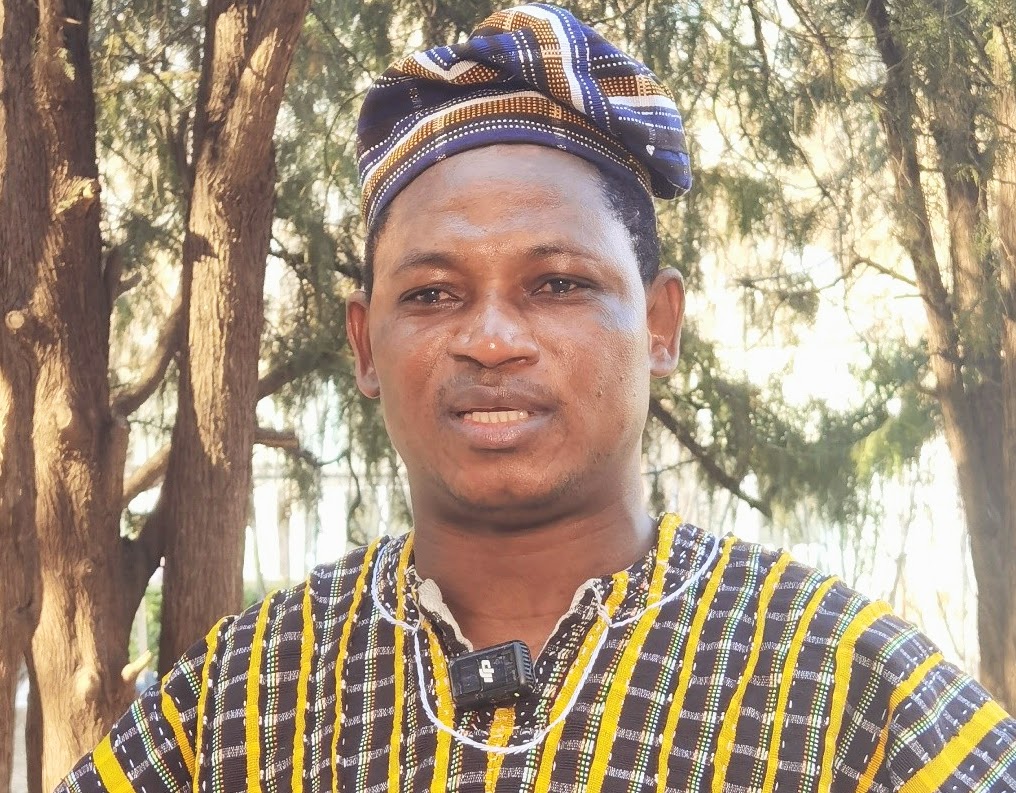
The author is a Lecturer, Researcher and Peace Advocate at the C. K. Tedam University of Technology and Applied Sciences, Navrongo, Ghana.
Source: Atanga Raymond Aitibasa, PhD
About Author