
Lawyer Ajet-Nasam and Family Donate Food and Promise More Support to Krachi Prisons

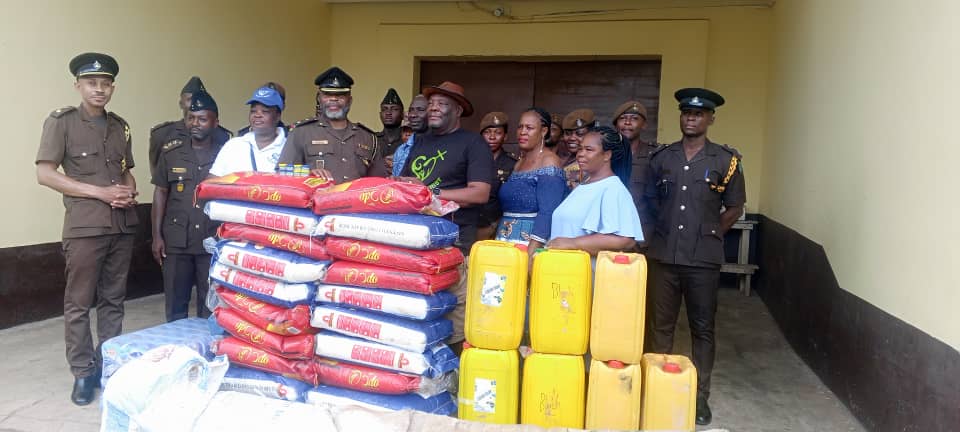
Out of compassion for the vulnerable in society, Lawyer John Ajet-Nasam, a private legal practitioner, together with his family, has donated assorted food items and toiletries to the Krachi Prisons in the Oti Region.
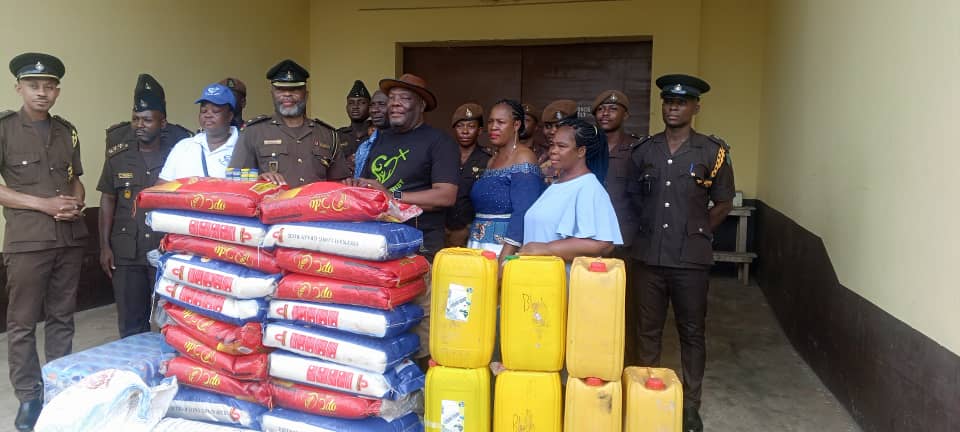
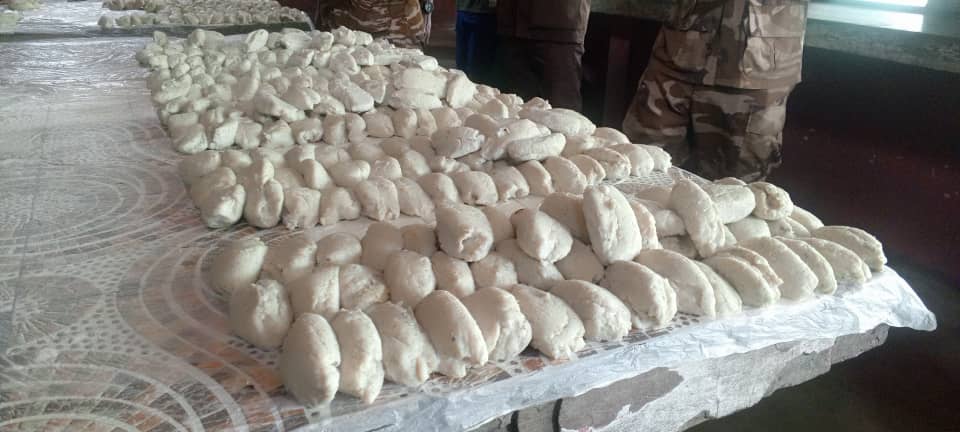
The donation included 20 bags of rice, seven large gallons of cooking oil, bags of corn and cassava dough, toiletries, and body ointments for the inmates.
Presenting the items to the Director of the Krachi Prisons, Mr. Ajet-Nasam explained that the gesture was part of his family’s long-standing commitment to periodically reach out to disadvantaged persons in society, particularly inmates who are often neglected.
“This donation is in response to God’s word to visit prisoners and feed the hungry. We have done this in other prisons, and today we are in Krachi. This will not be the last. We shall continue to mobilize resources and return because we can see this prison has been abandoned due to its location,” he said.
Mr. Ajet-Nasam further promised to provide industrial sewing machines and educational materials to the prison to equip inmates with employable skills.
He also pledged to donate a cow to supplement their meals, stressing that the government’s allocation of GHS 1.80pw per prisoner per day is woefully inadequate.
The lawyer, who once served as a judge, highlighted the plight of many prisoners, some of whom end up incarcerated because they lack legal representation.
He recalled his involvement in the Justice for All Program, which led to the release of several inmates.
He narrated a touching encounter with a former inmate who stopped him in traffic to proudly show him his shop, an achievement made possible after being released under the program.
According to him, this was evidence of the power of rehabilitation when support is given.

However, he also recounted instances where some inmates, without opportunities for reintegration, deliberately return to prison.
“I remember one man in the Tarkwa Circuit Court who, after serving his sentence, returned within a week because he stole cassava. He told me he felt more comfortable in prison than outside, as he had no work and no support,” Mr. Ajet-Nasam revealed.
Over the years, Mr. Ajet-Nasam and his family have supported various prisons across the country. Notably, they once donated 20 computers to the Nsawam Medium security prison, provided surgical support for female inmates, and supplied DSTV facilities for entertainment and education.
His consistent interventions have aimed at not only feeding inmates, but also providing tools and facilities to aid their reformation and reintegration into society.
He called on individuals, communities, and institutions, especially those from his native Chinderi and Kete-Krachi to support prisoners so they can return as useful citizens.
“Prisons should not just be a place of punishment but also a place of transformation. My family and I are committed to supporting this cause,” he added.
Krachi Prison Appeals for More Support
Chief Superintendent of Prisons (CSP) Emmanuel Nyatuame, Director of the Krachi Prison, expressed deep gratitude to Lawyer Ajet-Nasam and his family for their benevolent donation.
He assured that the items would be used for their intended purpose and described the gesture as timely, given the prison’s worsening food situation.
“The donation will go a long way to ease our deplorable food challenges. Government is doing its best, but it is not enough. We therefore encourage benevolent individuals, corporate institutions, and organizations to support us. Prisons are not comfortable places, and many of our inmates are here against their will. Any support makes a huge difference,” CSP Nyatuame said.
History and Capacity of Krachi Prison
The Krachi Prison, one of Ghana’s oldest correctional facilities, was built in 1963. It was designed to accommodate a maximum of 500 inmates, but currently houses 245 inmates, including eight on remand.
Despite being under capacity, the prison struggles with food shortages, lack of funding, and inadequate training facilities.
CSP Nyatuame noted that inmates are currently fed on a government allocation of GHS 1.80 per day, which he described as “woefully inadequate. Even the pets we keep in our homes eat better than that,” he lamented.
Challenges beyond Food
The Krachi prison’s challenges extend beyond feeding and facilities.
According to CSP Nyatuame, correctional facilities are meant to reform inmates and equip them with employable skills, but Krachi Prison lacks adequate vocational and educational facilities.
“We need workshops, carpentry tools, tailoring equipment, and educational support.
These inmates must leave here with skills that will help them live meaningful lives outside. Unfortunately, we don’t have the facilities to make that happen yet,” he explained.
He revealed that efforts were underway to collaborate with the Ghana Education Service to provide inmates with opportunities for formal education. However, since assuming office four months ago, the program is yet to take off.
Even more worrying, the prison infirmary is completely empty of drugs, leaving sick inmates struggling to access medical care. Common illnesses among the inmates include stomach disorders, asthma, hypertension, hepatitis B, stomach pain and malaria.
CSP Nyatuame appealed for more, saying, “Like Oliver Twist, we will always ask for more, because the needs are great. This gesture from Lawyer Ajet-Nasam and his family is very encouraging, and we pray that more people will follow their example to support this facility.”
He expressed grateful to the Ajet-Nasam family for the singular intervention to mitigate the suffering inmates from hunger and neglect.

Source: Felix Nyaaba / expressnewsghana.com
About Author