

Breaking: Cabinet Revokes EI 144, Restores Achimota Forest as Protected Reserve
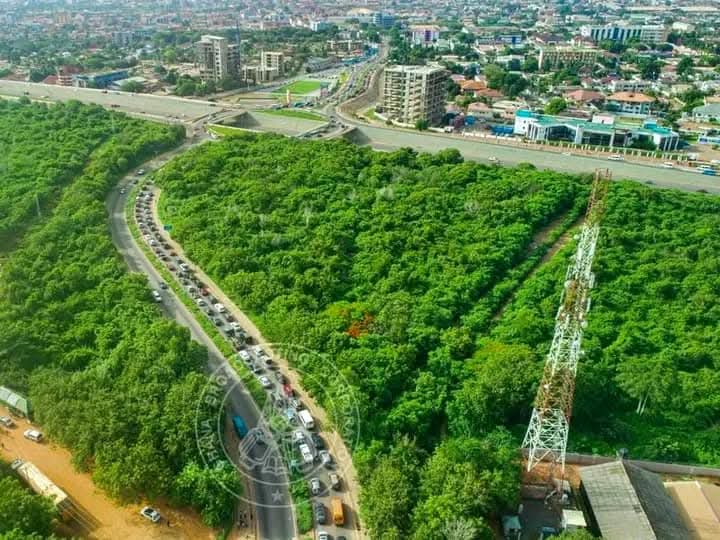
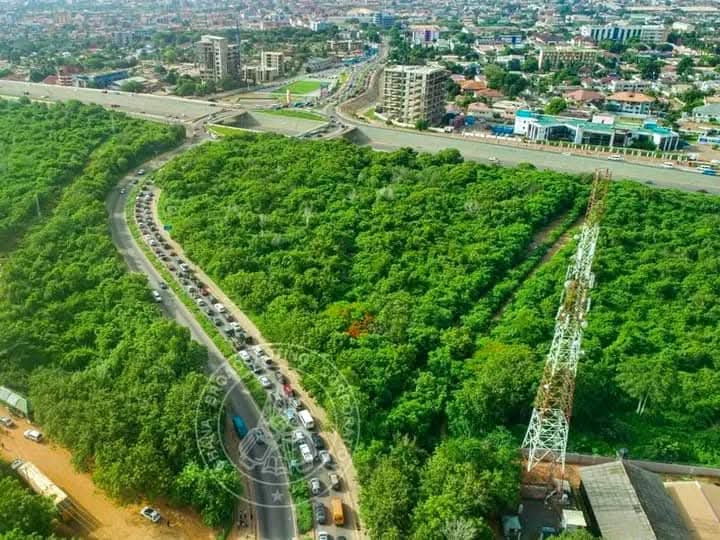
The Government has revoked the controversial Executive Instrument (EI) 144, restoring the Achimota Forest to its original status as a protected forest reserve in what is being hailed as one of Ghana’s most significant environmental conservation decisions in recent years.
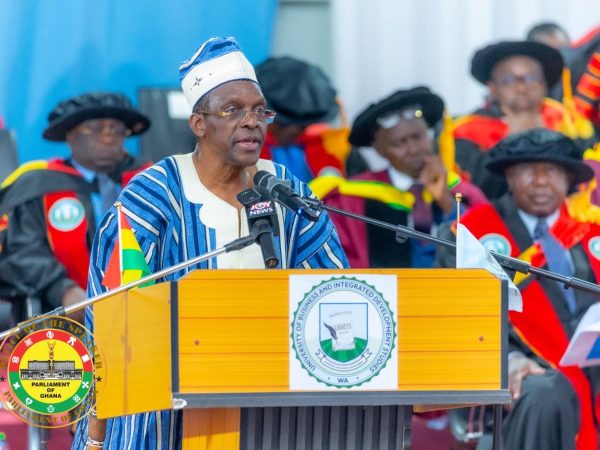
The landmark announcement was made on Wednesday by the Minister for Lands and Natural Resources, Emmanuel Armah-Kofi Buah, during the Government Accountability Series at Jubilee House.
According to the Minister, Cabinet approved the revocation on 24 June 2026, effectively overturning the legal instrument, as amended by EI 234, which had permitted portions of the forest reserve to be opened to competing land interests.
“I am happy to announce a historic Cabinet decision taken on 24 June 2026 to revoke Executive Instrument 144, as amended by EI 234, effectively ensuring that the Achimota Forest retains its original status as a forest reserve and continues to serve as an ecological safety zone for Accra and its surrounding communities,” Mr. Buah announced.
He described the decision as a clear demonstration of President John Dramani Mahama’s commitment to environmental protection and the sustainable management of Ghana’s natural resources.
“This is the last major standing forest cover in Greater Accra, and President Mahama is determined to protect it at all costs,” the Minister stressed.
The announcement was warmly received by participants at the accountability forum, reflecting growing public concern over the rapid loss of green spaces within the national capital.
The Achimota Forest Reserve has long been the subject of legal, political and environmental controversy. Located in the heart of Accra, the reserve serves as one of the city’s most important ecological assets, helping to regulate temperatures, improve air quality, conserve biodiversity and reduce flooding by functioning as a natural water catchment.
Environmental experts have consistently warned that continued encroachment and the conversion of protected forest lands into residential and commercial developments could expose Accra to worsening floods, rising temperatures and irreversible biodiversity loss.
With the revocation of EI 144, the Government says conservation will now take precedence over competing commercial interests as part of a broader national strategy to restore degraded forests and strengthen Ghana’s resilience against climate change.
Mr. Buah explained that the restoration of the Achimota Forest complements several major environmental interventions being pursued by the Ministry of Lands and Natural Resources.
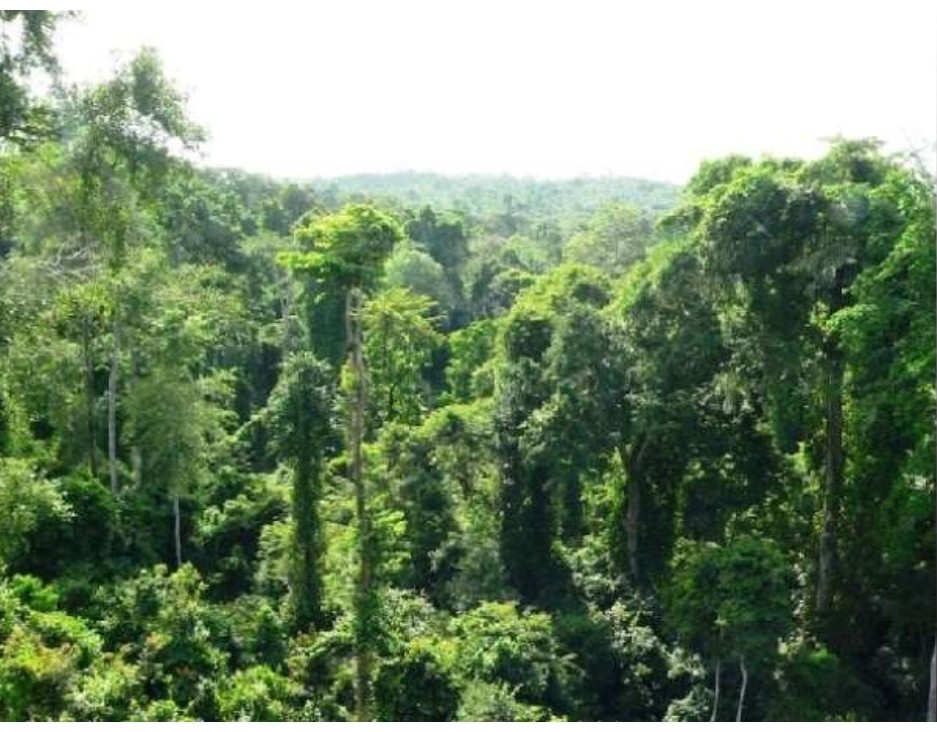
Among them is the Tree for Life Reforestation Initiative, launched by President Mahama, which surpassed its inaugural target in 2025. Instead of the projected 30 million seedlings, approximately 31 million seedlings were planted nationwide, restoring an estimated 23,600 hectares of degraded forest reserves and mined-out lands.
The Minister disclosed that the programme recorded survival rates ranging between 50 and 78 per cent in the Savannah ecological zone and 65 to 85 per cent in the High Forest Zone.
He added that the initiative has created employment opportunities for 2,719 Youth Forest Champions, who are engaged in nursery establishment, seedling production, tree planting, maintenance and wildfire prevention.
According to him, Government has now set a fresh target of planting an additional 13 million seedlings this year, with implementation already underway across the country.
Mr. Buah also highlighted significant progress in the fight against illegal mining within forest reserves, revealing that intensified operations by the Forestry Commission and the security agencies have yielded encouraging results during the first half of 2026.
He disclosed that authorities arrested 258 suspected illegal miners, immobilised six excavators, seized 1,225 pumping machines, dismantled 765 illegal mining machines, destroyed 35 tricycles, confiscated 212 motorbikes, demolished 430 illegal structures, and recovered 40 gold detectors from forest reserves.
Most notably, the Minister announced that for the first time in several years, no forest reserve in Ghana is currently classified as a “red zone”—areas previously considered to be under severe illegal mining invasion.
“I’m happy to report today that we no longer have any red zones in our forest reserves. This demonstrates that Government’s interventions, working together with the Forestry Commission, are gradually bringing our forests under effective control,” he said.
Environmental analysts believe the restoration of the Achimota Forest could become one of the defining conservation achievements of the Mahama administration if accompanied by sustained enforcement against encroachment and illegal development.
The decision is also expected to strengthen Ghana’s commitment to international climate obligations by protecting biodiversity, expanding forest cover and reducing carbon emissions while preserving one of Accra’s last remaining ecological buffers against the effects of rapid urbanisation.
Reaffirming the Government’s commitment to safeguarding the country’s natural resources, Mr. Buah declared that Ghana’s forests and rivers would no longer be sacrificed for private interests.
“Our rivers are not for sale. Our forests are not expendable. The era of impunity is over,” he stated.
The restoration of the Achimota Forest is widely seen as a powerful signal of the Government’s renewed determination to protect public lands and ensure that environmental sustainability remains at the centre of Ghana’s national development agenda.
Source: Felix NYAABA/ ExpressNewsGhana.com
About Author