
Strengthening Climate Governance: Ghana’s Parliamentary Delegation Shines at ChangeNOW Summit 2026 in Paris
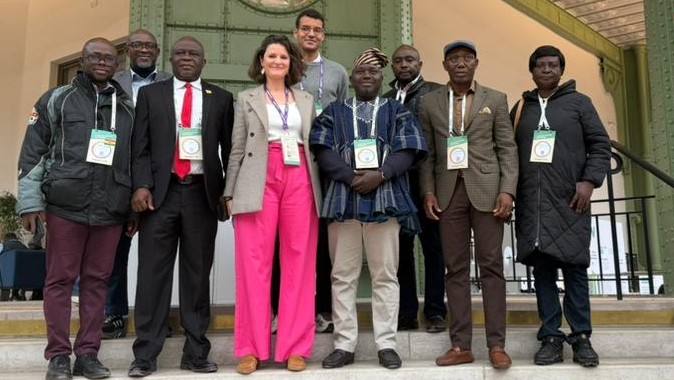
Climate Communications and Local Governance ,Africa (CCLG-Africa) has facilitated the participation of a seven-member delegation from the Parliament of Ghana at the prestigious ChangeNOW Summit 2026 in Paris, marking a significant milestone in the country’s efforts to strengthen parliamentary engagement in global climate governance and policy dialogue. The summit, which kicked off on March 30, 2026, is the 9th edition of the annual gathering, renowned as one of the largest events dedicated to accelerating environmental and social impacts.
The delegation, comprising representatives from the Select Committee on Environment, Science and Technology, the Office of the Clerk to Parliament, Media Relations, Parliamentary Relations and Diplomacy, as well as the Parliamentary Press Corps, engaged with global leaders, innovators, and development partners on practical responses to climate change and sustainable development. The delegation’s participation in the summit is a testament to Ghana’s commitment to addressing the pressing challenges of climate change and promoting sustainable development.
According to CCLG-Africa, the initiative forms part of its broader mission to enhance climate communication, strengthen local governance responses to environmental challenges, and promote stronger collaboration between policymakers and civil society groups across Africa. “The participation of Ghana’s Parliament at the summit is a significant step towards strengthening the role of legislators in shaping climate-responsive policies and oversight responsibility mechanisms,” said CCLG-Africa.
The summit brought together policymakers, investors, entrepreneurs, civil society actors, and scientists from around the globe, showcasing solutions capable of addressing the climate crisis while advancing sustainable development. This year’s event placed strong emphasis on climate resilience, energy transition, biodiversity protection, and the transformation of economic systems to align with SDG goal 13. Delegates participated in high-level discussions, thematic forums, exhibitions of climate innovations, and collaborative activities aimed at scaling practical, real-world solutions.
The areas of focus included renewable energy expansion, climate finance, nature-based solutions, sustainable cities, circular economy, and the protection of oceans and forests. These initiatives are aimed at reducing emissions, restoring ecosystems, and supporting communities already affected by climate change. The Media Relations department of Parliament, Parliamentary Relations and Diplomacy, and the Parliamentary Press Corps played a crucial role in showcasing Ghana’s commitment to climate action and promoting awareness of the country’s climate initiatives.

For CCLG-Africa, the participation of Ghana’s Parliament at the summit is seen as an important step towards strengthening the role of legislators in shaping climate-responsive policies and oversight responsibility mechanisms. The engagement is also increasing opportunities for dialogue with international partners on climate financing, policy innovation, and collaborative initiatives that can support Ghana’s environmental sustainability agenda.


The summit provided a platform for Ghana’s delegation to share perspectives from Africa on pressing environmental challenges such as coastal erosion, flooding, deforestation, and the need for stronger local governance systems to address climate impacts. Beyond the policy discussions, the gathering served as a hub for partnerships that can accelerate climate solutions, innovation, and support start-ups to showcase technologies aimed at decarbonising industries, improving food systems, and supporting climate-resilient communities.
The event attracted thousands of participants from governments, development institutions, businesses, and advocacy groups, offering a strategic opportunity for alliances that could shape global climate action in the years ahead. Ghana’s participation in the summit highlights the country’s commitment to sustainable development and climate-responsive governance, and demonstrates the potential for African countries to play a leading role in addressing the global climate crisis.


About Author